Photocentric scales resin 3D printing with automated Jeni production cell
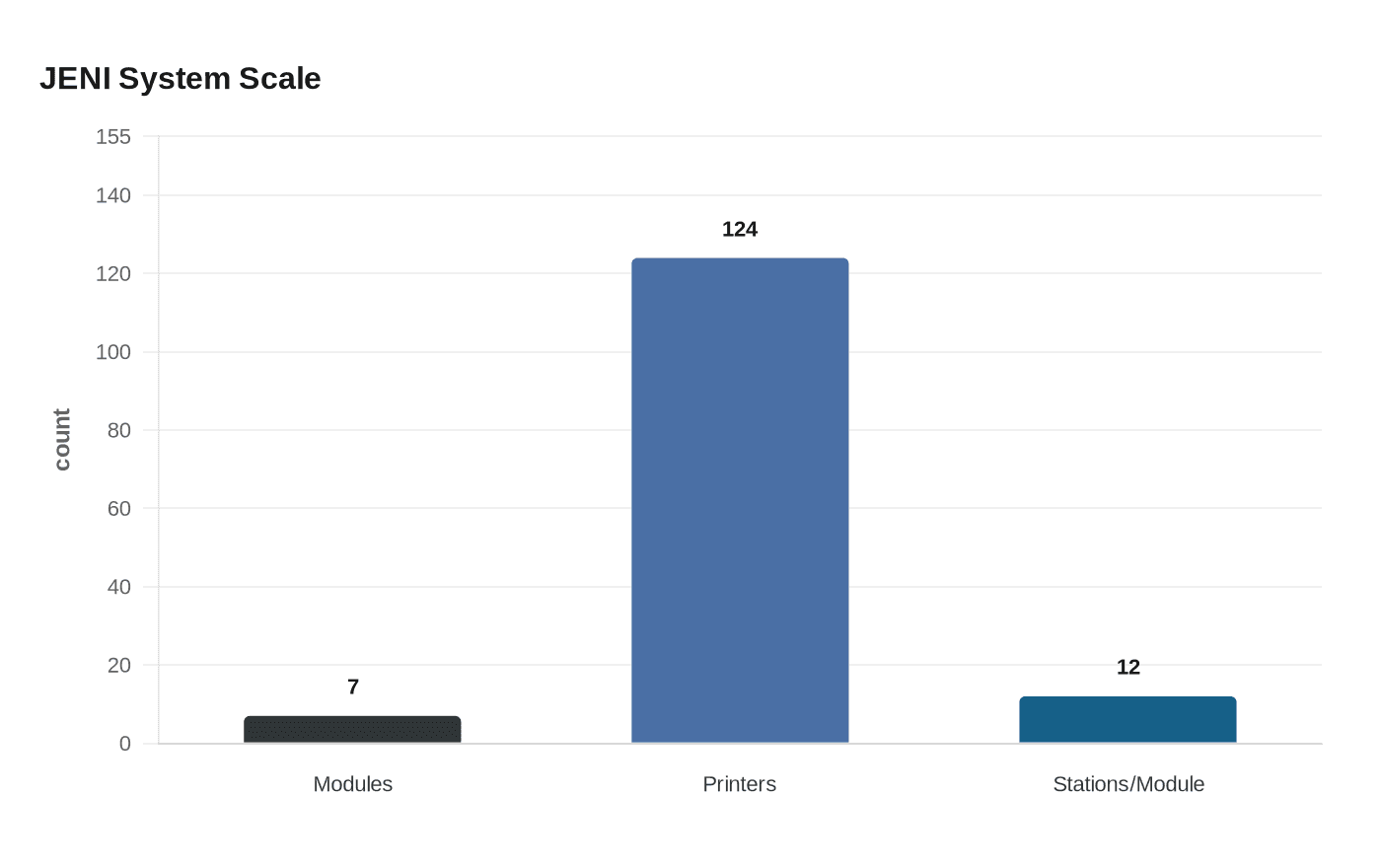
Photocentric’s JENI moved from trade-show concept to factory line, with seven modules, 124 resin printers and output above 1.2 million parts in eight hours.
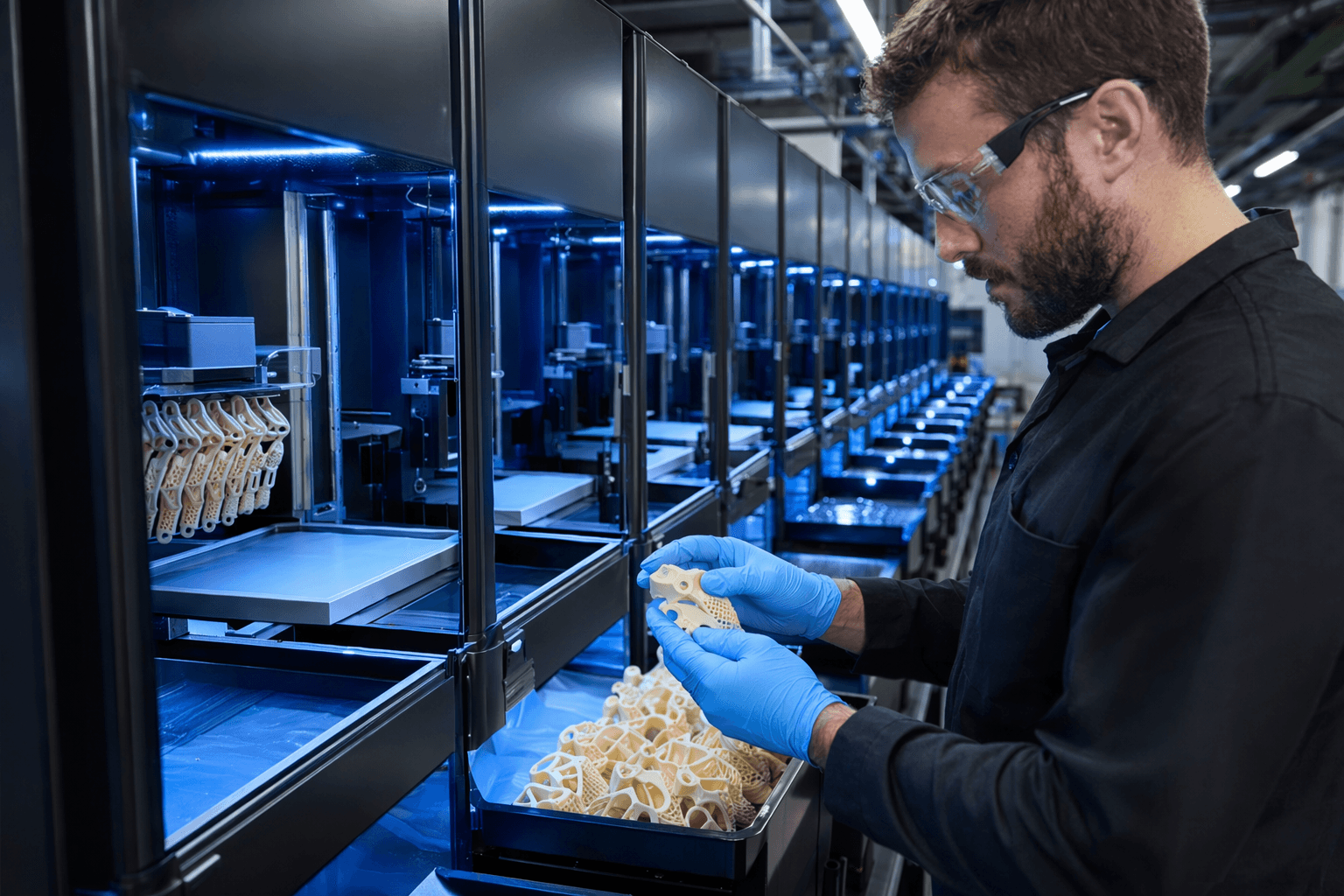
Photocentric is no longer talking about resin printing as a maker tool. With JENI, the Peterborough, UK company has pushed LCD printing into a production cell built for serial manufacturing, and one expanded configuration was described as spanning seven modules and 124 resin 3D printers, with capacity for more than 1.2 million small parts in eight hours and output as high as 90 kg per hour.
That scale matters because JENI is not a single printer. Photocentric positioned it as a modular system with 12 customizable stations per module for printing, washing, curing and rinsing, all handled by an internal gantry system. The modules can sit side by side, which gives the line redundancy so repairs do not necessarily halt production. In practice, that changes the center of gravity for resin work: handling, cleaning and curing become part of the automated workflow, not a labor-heavy afterthought.
The company has spent years widening that ambition. Photocentric traces its own path from polymer stamp-making to LCD 3D printing, and now to what it calls robotic digital manufacturing machines and digital mass manufacturing. JENI debuted at Formnext 2024, then moved into real deployment quickly. In April 2025, Photocentric said it sold and installed its first JENI unit at a U.S. production site for a multinational manufacturing business. By March 2025, Project Nexus had launched as a two-year collaboration focused on biopharma applications for the platform. In September 2025, Photocentric brought in Sam Bernard as CTO to lead the JENI roadmap. Bernard had spent 17 years at Dyson as global category and product development director.
Photocentric’s commercial pitch goes well beyond throughput. The company says JENI is meant to support reshoring, cut tooling costs, reduce inventory and enable local on-demand production. It has also built an ordering portal that lets customers upload CAD files, receive real-time pricing and place jobs into a production queue. That calculator is also being extended to estimate carbon footprint, giving manufacturers a second metric to weigh alongside cost.
The message is clear: Photocentric wants resin printing judged less like a desktop process and more like an industrial system. For short-run parts, spare parts and custom production, the competition is no longer just other 3D printers. It is the broader factory floor, and JENI is built to live there.
This article was produced by Prism’s automated news system from verified source data, official records, and press releases, then run through automated quality and moderation checks before publishing. The system is built and supervised by the people who set the standards it runs under. Read our full AI policy.
Did this article answer your question?