PrintDry Pro4 promises tighter temperature control for moisture-sensitive filaments
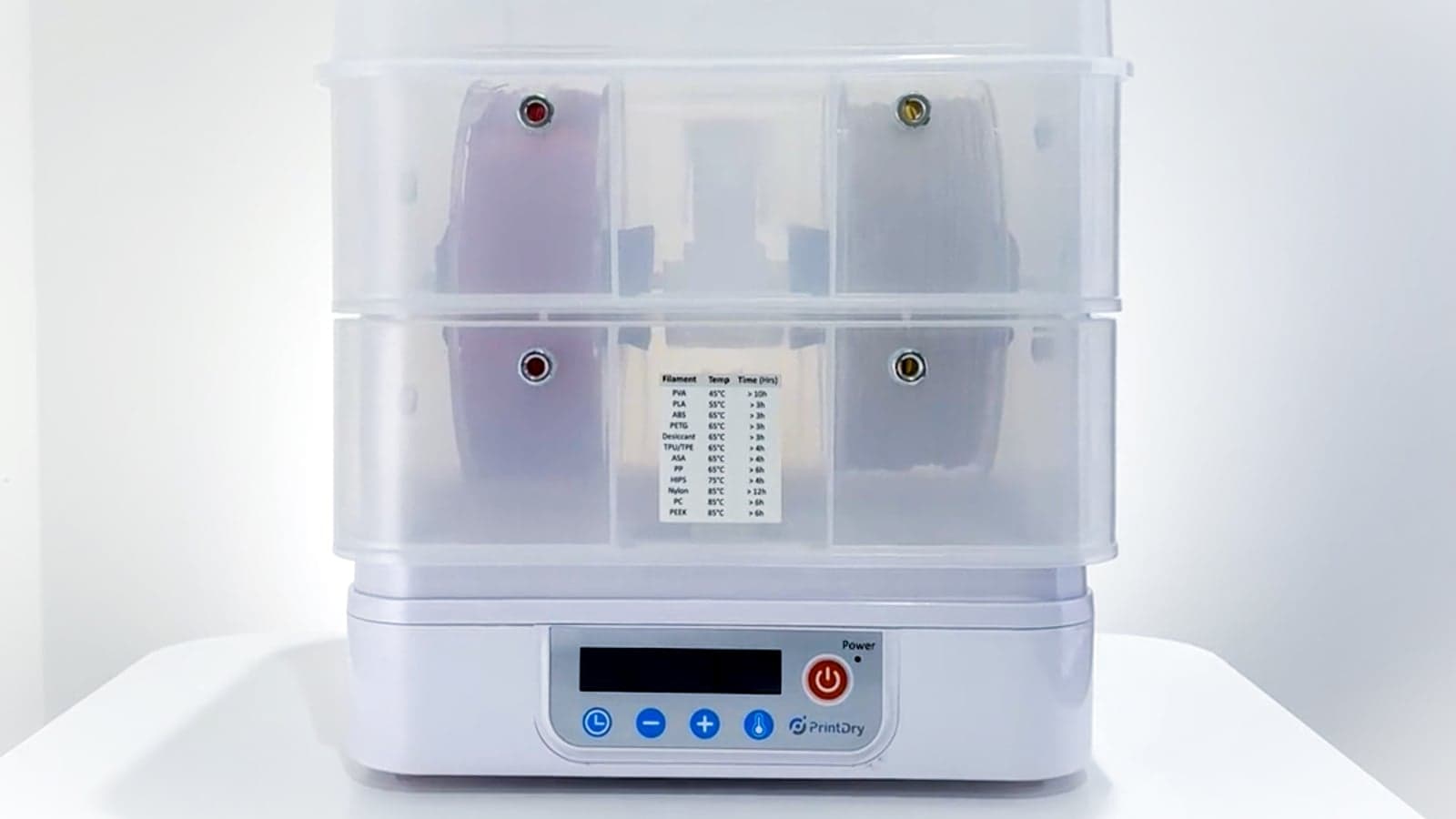
PrintDry’s $85 PRO4 base unit aimed at Pro3 owners with 85C drying, live humidity readings, and a 48-hour timer for damp-spool headaches.
The clearest reason to buy PrintDry’s PRO4 is not novelty. It is control. For Pro and Pro3 owners who have spent too many late nights blaming PETG stringing, nylon pops, or a mystery layer split on damp filament, the upgrade pitch landed hard: a dryer that could hold steadier heat, show chamber humidity in real time, and actually fit into an existing filament workflow.
PrintDry priced the PRO4 base unit at $85.00 and positioned it as a direct upgrade path for older PRO and PRO3 users, not a fresh start for newcomers. The base unit offers six temperature presets, 35C, 45C, 55C, 65C, 75C, and 85C, plus a timer that runs from 1 to 48 hours. It also displays relative humidity from less than 15% to 99%, a small feature that matters when you are trying to decide whether a spool has dried enough for an overnight print or still needs more time in the chamber.
That temperature ceiling is the big practical change. 3Druck reported that PrintDry set the 85C maximum specifically to handle technical filaments such as nylon and PVC, while the new humidity sensor lets users see drying progress instead of guessing. That matters because nylon is highly hygroscopic, meaning it pulls moisture out of the air fast, and that moisture can wreck print reliability, surface quality, and interlayer strength. For home shops that print engineering parts as well as everyday brackets and fixtures, a dryer that makes moisture management repeatable can save more time than a new nozzle or another spool of filament.
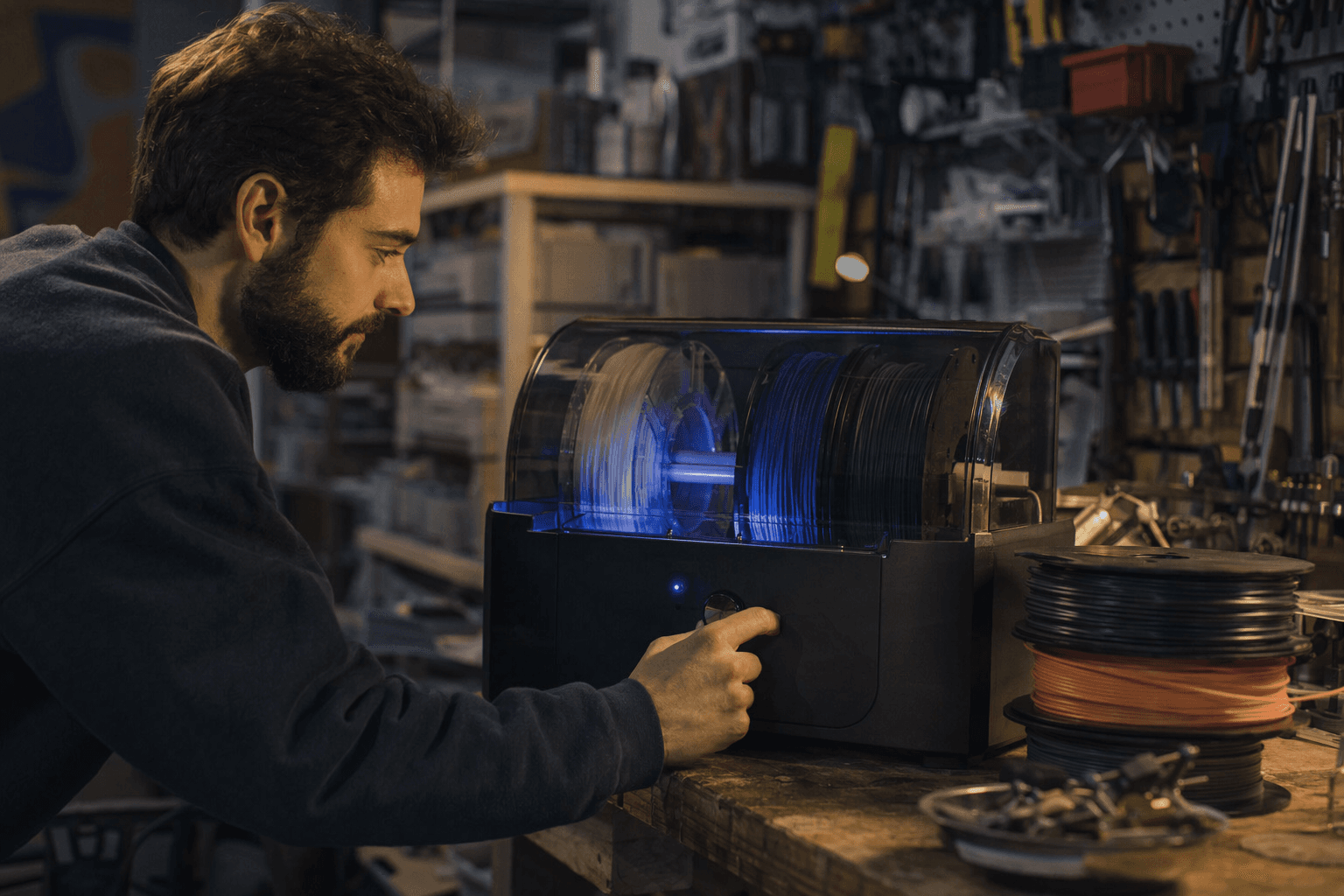
The hardware itself was also overhauled. 3Druck reported a revised heater and double-walled side panels designed to hold heat in the chamber, and it said PrintDry’s own tests showed humidity falling from above 60% to below 15% in about five minutes. That is the kind of number that turns a filament dryer from a nice-to-have accessory into part of the quality-control chain. The company said the dryer has been independently tested by Intertek and TUV for applicable product safety standards in North America and Europe, and PrintDry is based in Windsor, Ontario, Canada.
All of that puts the PRO4 in a stronger position than a simple refresh. A recent market report estimated the global 3D printer filament dryer market at $665.6 million in 2024, with growth projected to $2,144.8 million by 2032. That growth makes sense: as more makers print with moisture-sensitive materials, the real question is no longer whether drying matters. It is whether the dryer saves enough failed prints, warped edges, and ruined overnight runs to pay for itself. For Pro3 owners fighting damp-spool problems, the PRO4 made a convincing case.
This article was produced by Prism’s automated news system from verified source data, official records, and press releases, then run through automated quality and moderation checks before publishing. The system is built and supervised by the people who set the standards it runs under. Read our full AI policy.
Did this article answer your question?