MIT Revives 40-Year-Old Y-Zipper, 3D Printed Fastener Switches Stiffness
A 1985 three-sided zipper idea finally worked because 3D printing could build the geometry, turning flexible strips into a rigid rod-like fastener.
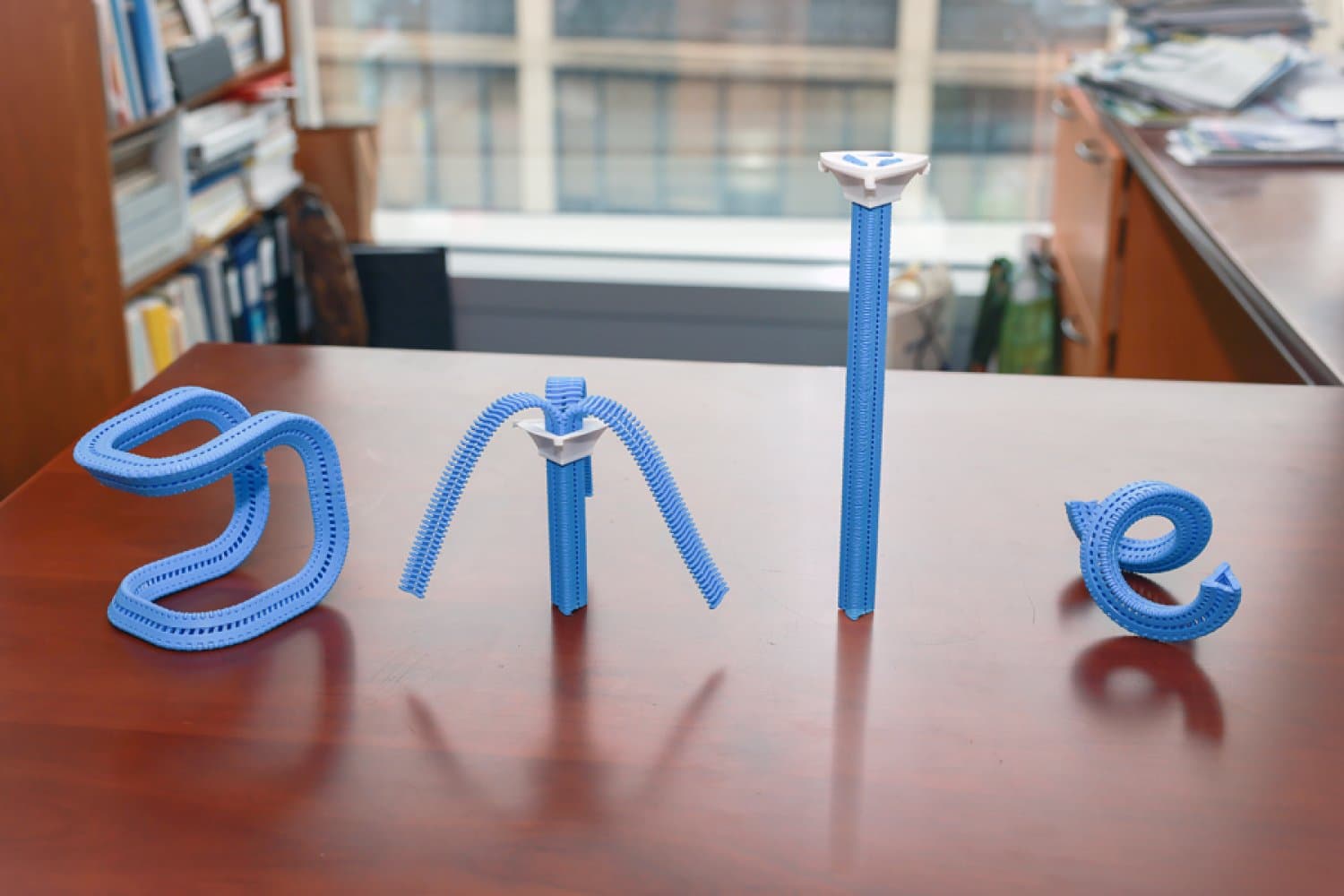
A three-sided zipper idea that sat in a garage for nearly 40 years finally became a working 3D-printed mechanism, and the payoff is bigger than novelty. MIT CSAIL researchers turned the old concept into the Y-zipper, a fastener that can switch three flexible strips into a rigid, rod-like form and then reverse back again without manual reassembly.
The story starts in 1985, when William Freeman, then an electrical engineer at Polaroid, saw a Scientific American ad from the Innovative Design Fund offering up to $10,000 for clever prototypes in clothing, home decor and textiles. Freeman sent in a triangular zipper concept. It was rejected, and the prototype wound up stored in his garage for nearly four decades. Freeman is now an MIT professor, and the idea has finally caught up with the tools needed to build it.
That toolchain mattered. The MIT team used software to generate the zipper geometry and a 3D printer to fabricate it in plastic, which made the unusual interlocking shape practical instead of just theoretical. Users can set strip length and bend angle, then choose from four motion primitives, straight, bend, coil and screw. The specialized slider also supports three actuation methods: manual, dynamic mechanical and static mechanical. In plain maker terms, that means this is not just a one-off demo part. It is a design system for building things that move, lock and release on command.
The paper, published in the Proceedings of the 2026 CHI Conference on Human Factors in Computing Systems, showed prototype uses that will sound familiar to anyone designing real hardware: a medical wrist brace, a kinetic art installation and a rapidly deployable tent structure. The researchers also ran controlled tests on mechanical properties, repeatability and actuation speed. In one durability test, a Y-zipper survived 18,000 open-and-close cycles before failure.

Material choice changed the result, too. PLA tolerated higher loads, while TPU gave the mechanism more pliability. That split points to a useful rule for desktop fabrication: rigid-flex parts do not just depend on geometry, they depend on the filament you load and the failure mode you can live with. The team says stronger materials such as metal could improve durability later, but larger-scale versions are still beyond its current 3D printing platform.
For makers, the real value here is not just a resurrected patent. It is proof that a 1985 mechanism design, the kind that once lived as a rejected garage prototype, can now become a printable building block for hinges, closures, transformable props and other parts that need to be flexible one moment and locked solid the next.
This article was produced by Prism’s automated news system from verified source data, official records, and press releases, then run through automated quality and moderation checks before publishing. The system is built and supervised by the people who set the standards it runs under. Read our full AI policy.
Did this article answer your question?