Prompt2CAD Turns Text Descriptions Into Editable Parametric 3D Models
Prompt2CAD's Claude-powered platform converts plain-text descriptions into parametric STEP and STL files, with self-correcting geometry and $5 entry pricing.
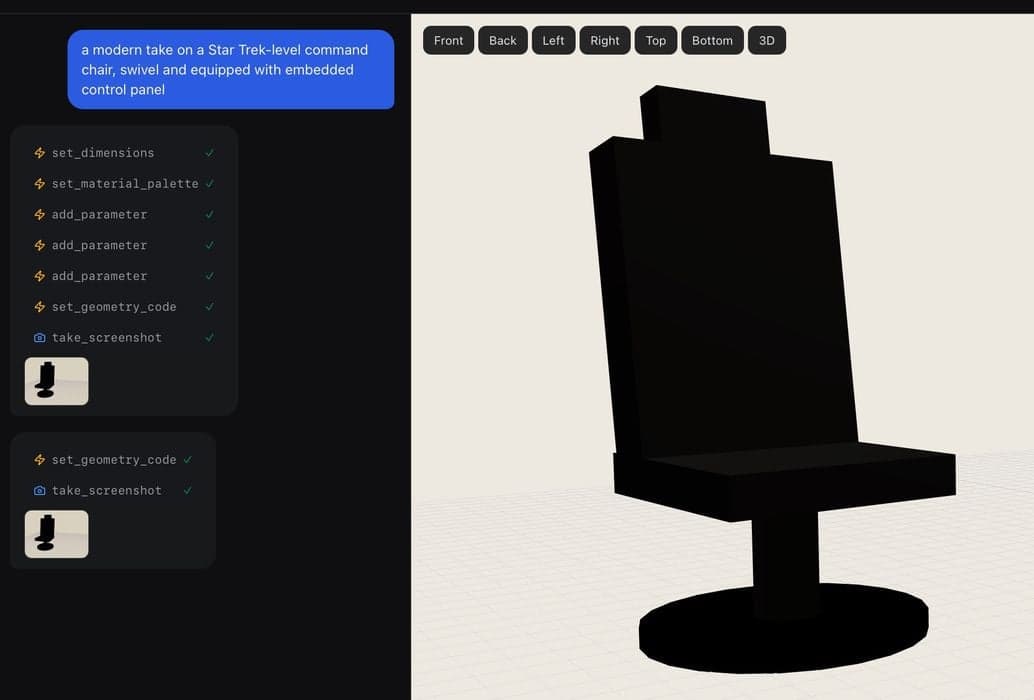
Type "a minimalist bookshelf with four adjustable shelves and hidden cable channels" and Prompt2CAD hands you back a parametric 3D model ready to slice or mill. That's the core promise from the startup that launched its text-to-CAD platform on April 2, and it's a more specific claim than most AI design tools have made: not a static mesh, but editable parametric geometry in formats that CAD software and CAM workflows can actually use.
The platform runs Anthropic's Claude as its language model backbone, which handles plain-English descriptions and translates them into geometry in real time. Previews render through Three.js in the browser, and when the model is ready, export options cover STEP, DXF, OBJ, STL, or GLB depending on what your workflow demands. STEP goes to Fusion 360 or FreeCAD; STL drops straight into PrusaSlicer or Bambu Studio; GLB serves web-based viewers.
What separates Prompt2CAD from the mesh-dumping crowd is parametric output paired with conversational refinement. If your shelf comes out 20mm too narrow or you decide mid-session to add a drawer, you don't rebuild from scratch. You describe the change in the chat window and Claude updates the geometry. Parametric sliders then let you push dimensions numerically once the model is generated, bridging the gap between "I described it wrong" and "I need to tweak this precisely."
The self-correction behavior is worth calling out specifically. Prompt2CAD analyzes its own generated geometry through what the team calls "self-screenshot and self-correct" logic: the tool reviews what it produced, detects geometric problems, and attempts automated fixes before handing the model off. That's a meaningful quality-of-life feature when you're targeting a printable STL or a STEP file headed to a CNC router, though validating wall thickness and critical dimensions before sending anything to the machine is still on you.

Pricing runs pay-as-you-go with entry points at $5 and signup credits that let you test the workflow before committing. The platform targets interior designers, hobby woodworkers, and architects, but the core utility for the maker community is blunt: if you can describe what you want in plain language, you can now generate a parametric model without writing a single line of OpenSCAD or FreeCAD script.
The competitive context matters here. AI-assisted CAD has been crowded territory, but most tools in the category output meshes rather than parametric geometry. Meshes are hard to edit precisely. A STEP file with parametric history is not. For makers who want both a fast prototype and a milled or printed final part, that distinction is the entire value proposition.
The likely trajectory from here involves tighter slicer integration, mesh-to-CAD conversion pipelines, and expanded object categories beyond the furniture and simple objects the current version handles. If you have a custom cable management bracket or enclosure panel on your to-do list and no appetite for learning constraints-based CAD this week, Prompt2CAD is worth burning the $5 to see how close "describe it and print it" has actually gotten.
This article was produced by Prism’s automated news system from verified source data, official records, and press releases, then run through automated quality and moderation checks before publishing. The system is built and supervised by the people who set the standards it runs under. Read our full AI policy.
Did this article answer your question?