ROBOZE buys Dimanex assets to build physical AI platform
ROBOZE bought Dimanex assets to merge print software, inventories, and AI into one workflow aimed at spare parts and uptime.
ROBOZE is betting that the next leap in additive manufacturing will not come from a new machine alone, but from software that knows which part to print, when to print it, and where it needs to land. The company announced on May 7, 2026, that it had acquired key assets from Dimanex and would fold them into its Pandora and SlizeR software to build what it calls a Physical AI layer for distributed manufacturing.
The move points straight at the use cases that matter most in production, not showroom demos. ROBOZE said the combined platform is aimed at maritime, defense, oil and gas, and aerospace customers, where long lead times and hard-to-source spare parts can stall operations. In practical terms, the company is describing a system that can connect machines, factories, and digital inventories through cloud-based data exchange, then use that data to decide what gets made and how fast it can move into service.
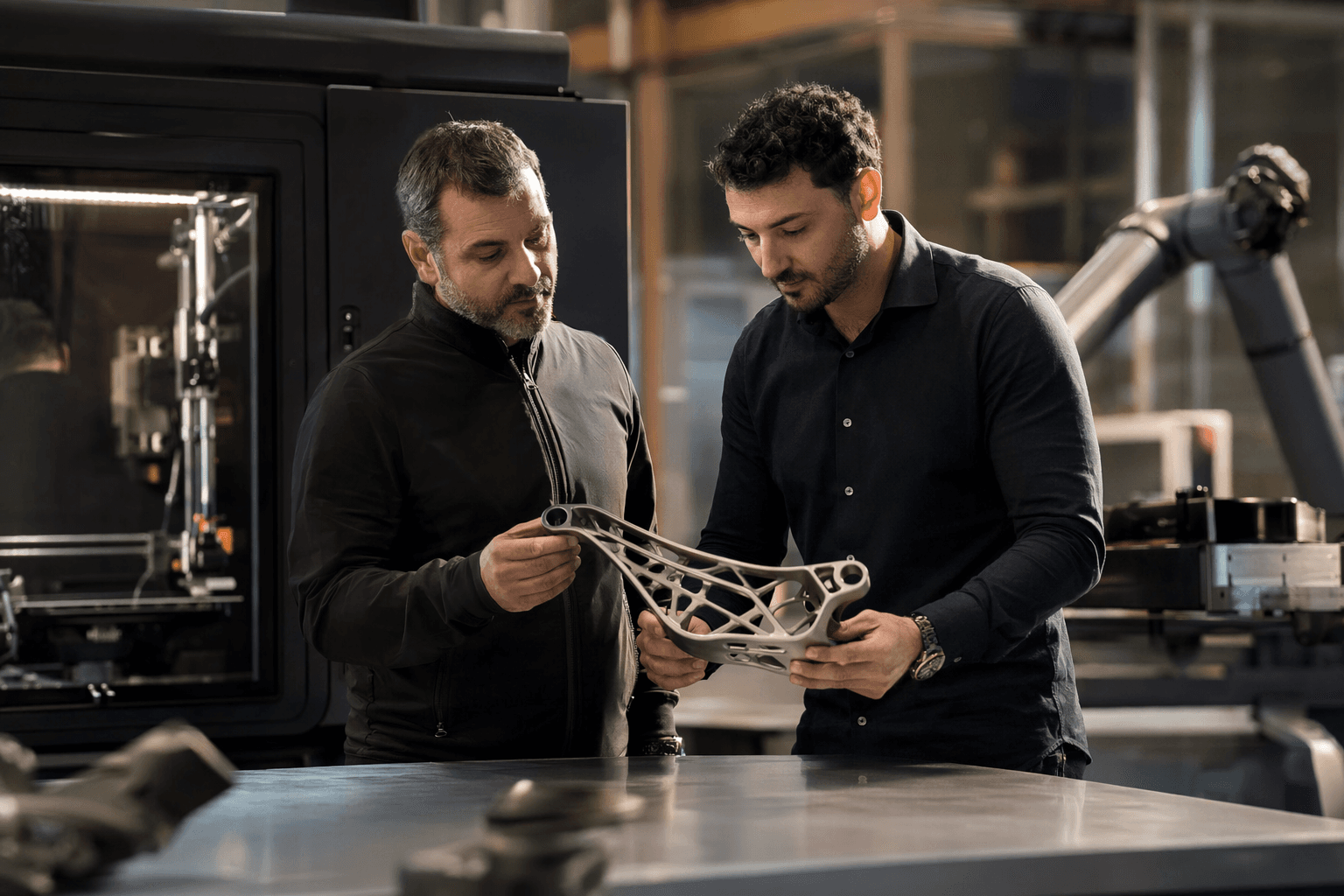
Alessio Lorusso, ROBOZE’s founder and chief executive, framed the acquisition as a step beyond standalone printers. He said the goal is to connect the identification of a part in a warehouse, its qualification, and its production anywhere in the world into one intelligent workflow. For the 3D printing market, that is the real question behind the Physical AI pitch: whether the software can shorten decision-making enough to make on-demand manufacturing meaningfully faster, or whether it is just a new label on the same workflow stack.
Dimanex brings a background that fits the claim. The Dutch company started as an MRO platform for the railways and later worked with the Dutch Army in 2018 and with Nederlandse Spoorwegen, better known as NS. That history matters because rail and defense are both environments where uptime, traceability, and spare-parts availability can matter as much as machine throughput. TCT Magazine reported that Dimanex had been declared bankrupt earlier in 2026, and ROBOZE said it bought key assets rather than the whole company.
The acquisition also follows a March 5, 2026 investment from Rule 1 Ventures, the defense and national security-focused firm led by James A. Winnefeld Jr., a retired four-star admiral and former vice chairman of the Joint Chiefs of Staff, and Todd Ehrlich, a former U.S. Navy SEAL and defense entrepreneur. ROBOZE said its broader platform combines additive manufacturing hardware, materials science, software-driven process intelligence, and embedded Physical AI, with expansion planned across the United States, Europe, and the Middle East.
That broader context helps explain why the deal matters now. The Dutch Defence organization buys about €1 billion worth of new materiel each year, and the Dutch defense and security industry exports roughly €1.5 billion annually. ROBOZE is trying to tie that kind of industrial demand to a more resilient, on-demand manufacturing network. The test now is whether Physical AI can actually make parts faster, or whether the industry is still watching a smarter wrapper around familiar tools.
This article was produced by Prism’s automated news system from verified source data, official records, and press releases, then run through automated quality and moderation checks before publishing. The system is built and supervised by the people who set the standards it runs under. Read our full AI policy.
Did this article answer your question?