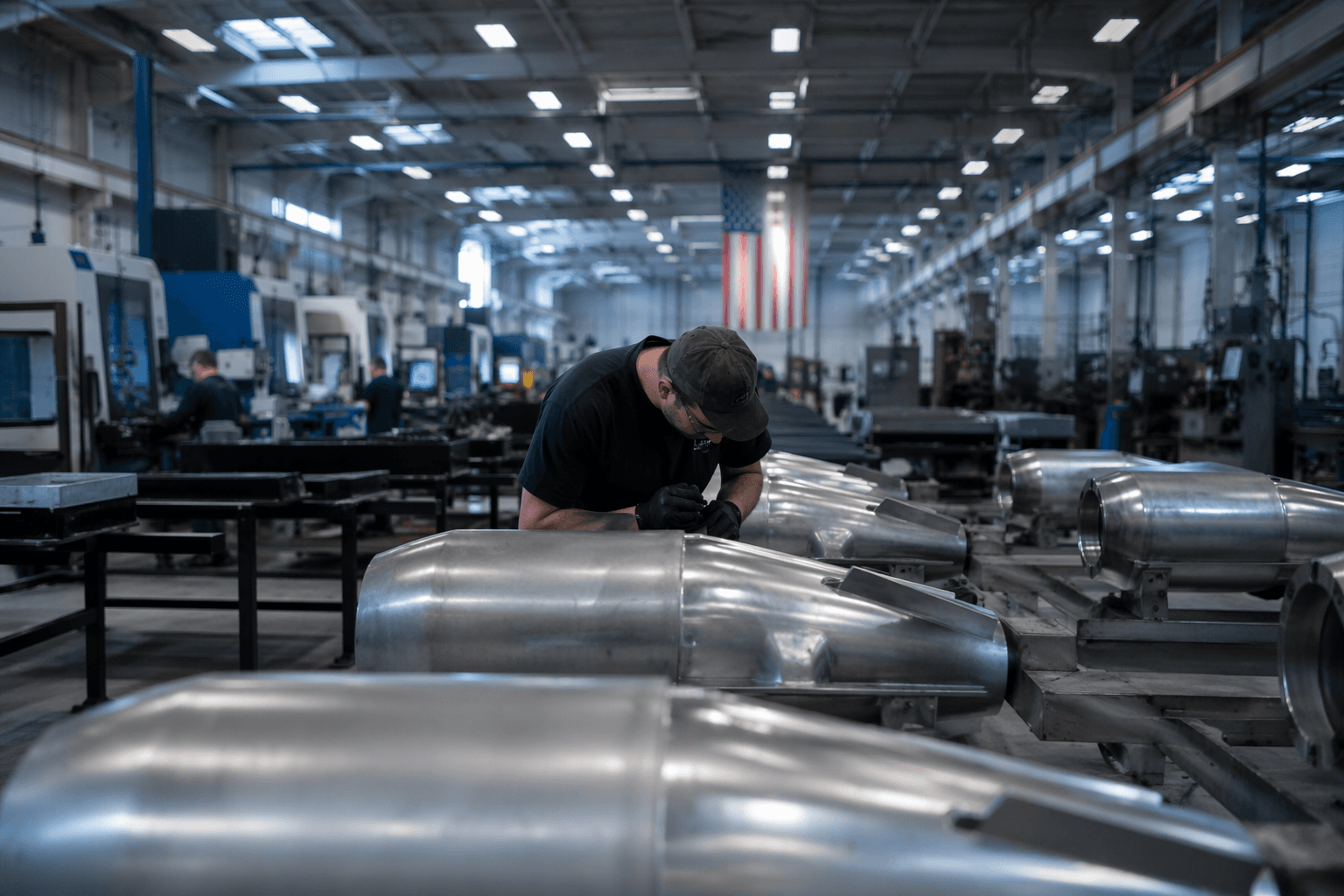
Rocket Lab Closing In On 1,000 Launches of 3D-Printed Rutherford Engines
Rocket Lab has flown over 800 3D-printed Rutherford engines to space and plans to cross 1,000 this year, with its next-gen Archimedes engine already 90% printed by mass.
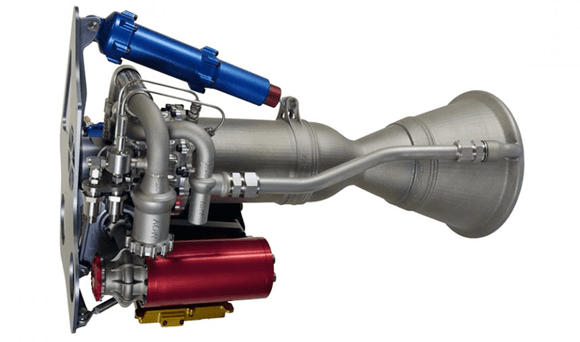
Electron has successfully completed over 75 missions as of January 2026, and every single one of those flights carried a cluster of engines that were essentially grown, layer by layer, in a factory in Long Beach. Rocket Lab now says more than 800 Rutherford engines have flown to space, and the company plans to break the 1,000-engine mark this year. That milestone, if it lands on schedule, will be one of the most concrete demonstrations of additive manufacturing's maturity in mission-critical aerospace hardware.
Rutherford engine production makes extensive use of additive manufacturing and has since the earliest flights of Electron, which allows the capability to scale production in a relatively straightforward manner by increasing the number and capability of 3D printers. The numbers back that up: as of the end of 2024, Rocket Lab had flown over 600 Rutherford engines. The jump to 800-plus came quickly, reflecting a launch cadence that saw 16 launches in 2024 and a target of around 20 in 2025.
The Rutherford is almost entirely printed. The major components are produced via additive manufacturing, including the regeneratively cooled thrust chamber, injector, two pumps, and main propellant valves. The engine is fabricated largely by 3D printing, using electron beam melting, whereby layers of metal powder are melted in a high vacuum by an electron beam. Production runs out of Rocket Lab's Long Beach facility, which uses machines from EOS, Nikon SLM Solutions, and Renishaw, and sources metal powder from Carpenter Technology.
The process takes around 24 hours to complete, which has the potential to help support a high launch cadence. That speed matters enormously when you're trying to fly 20 missions a year.
Peter Beck has been outspoken about why 3D printing unlocked performance advantages that conventional subtractive manufacturing simply can't match. In an earlier interview, he said: "The Rutherford rocket engine is, to our knowledge at least, the highest-performing liquid oxygen-kerosene engine in America, with slightly hotter performance than the [SpaceX] Merlin 1D. And that is in part due to 3D printing. We 3D-print all of our injectors, and we're able to 3D-print geometry within the injector that allows for superior mixing and superior performance that you couldn't do with other manufacturing processes." He also described the company's early approach as decidedly hands-on: "When we started we bought 3D printers, and we hacked into them. We modified it to suit our requirements. We printed geometry that even today, if you take to most 3D-printing shops, they'll tell you that's not a printable geometry."
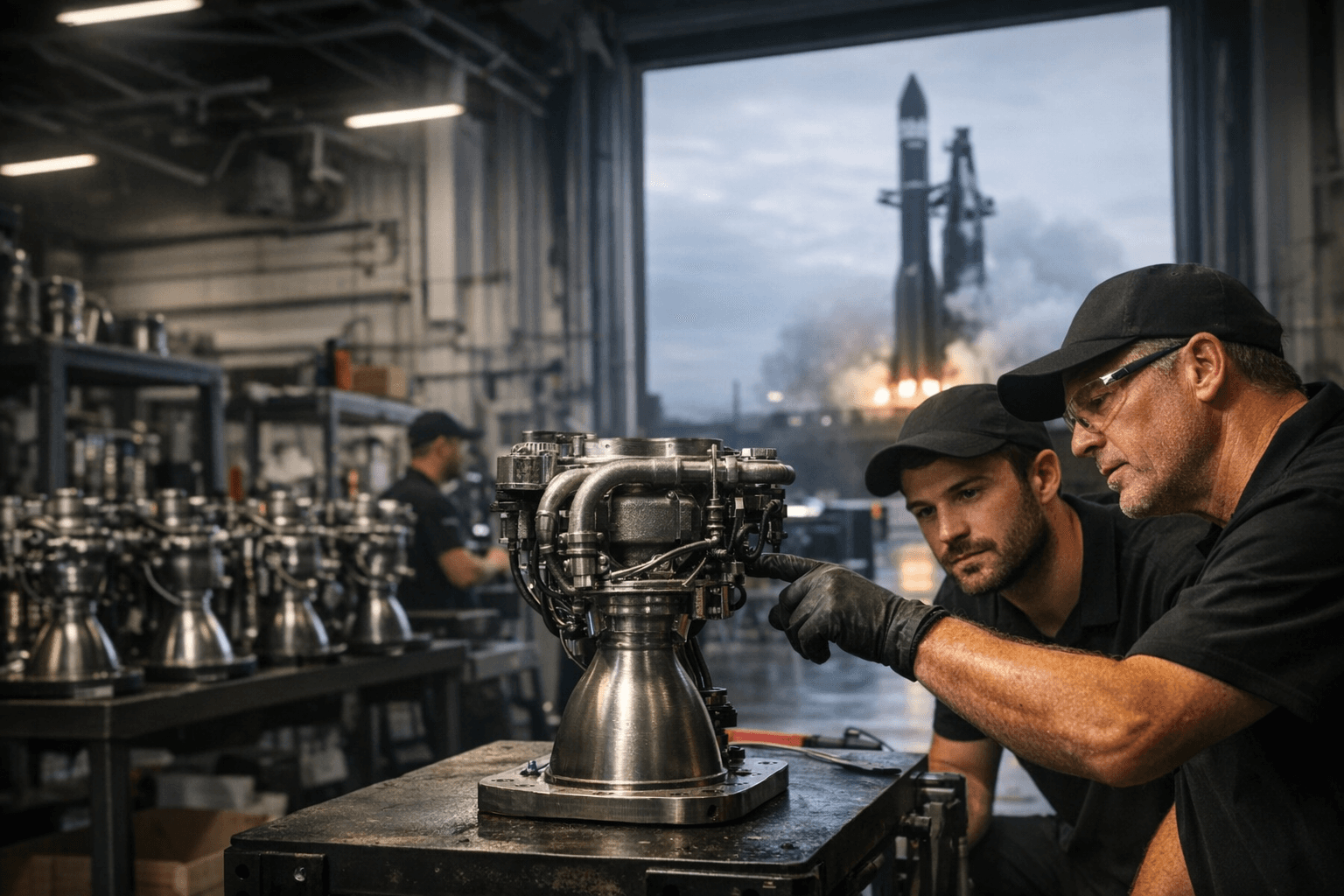
Rocket Lab isn't stopping at Rutherford. The company has completed the first full assembly of its Archimedes engine, the new 3D-printed, reusable rocket engine for the Neutron medium-lift launch vehicle, and has begun an intensive test campaign. Archimedes uses a cryogenic propellant mix of liquid oxygen and LNG to enable higher reusability and performance, and many of its critical components are 3D printed, including turbo pump housings, pre-burner and main chamber components, valve housings, and engine structural components. Rocket Lab has noted that approximately 90% of the Archimedes engine's mass is 3D-printed material. The engine is designed for maximum reusability, with a minimum reuse target of up to 20 launches.
Production of subsequent Archimedes engines is continuing in parallel with the ongoing test campaign, with long-lead 3D-printed components already manufactured and undergoing checkouts and analysis ahead of integration and engine full assembly at Rocket Lab's Engine Development Complex in Long Beach, California. That 144,000-plus square-foot site supports both the development and production of Archimedes and the high-rate production of Rutherford for Electron.
The commercial story is hard to argue with. Rocket Lab posted $436.2 million in revenue in 2024, up 78% from 2023, with the final quarter alone contributing $132.4 million, a 121% year-over-year jump. The company still logged a net loss of $190.2 million for the year as it continued investing heavily in R&D, Neutron infrastructure, and new spacecraft platforms. Record 2025 revenue came in at $602 million, representing 38% year-over-year growth.
Since its maiden launch in 2017, Electron has delivered over 200 spacecraft to orbit for clients including NASA and the National Reconnaissance Office. Crossing 1,000 printed engines in space would be a landmark that few manufacturing technologies of any kind can claim, and Rocket Lab's entire production architecture is built to make that number look routine.
This article was produced by Prism’s automated news system from verified source data, official records, and press releases, then run through automated quality and moderation checks before publishing. The system is built and supervised by the people who set the standards it runs under. Read our full AI policy.
Did this article answer your question?