ROE Dental scales 3D Systems jetted denture production across sites
ROE Dental Laboratory tripled denture capacity by rolling out 3D Systems' NextDent 300 across multiple sites, a sign the jetted workflow is ready for production scale.
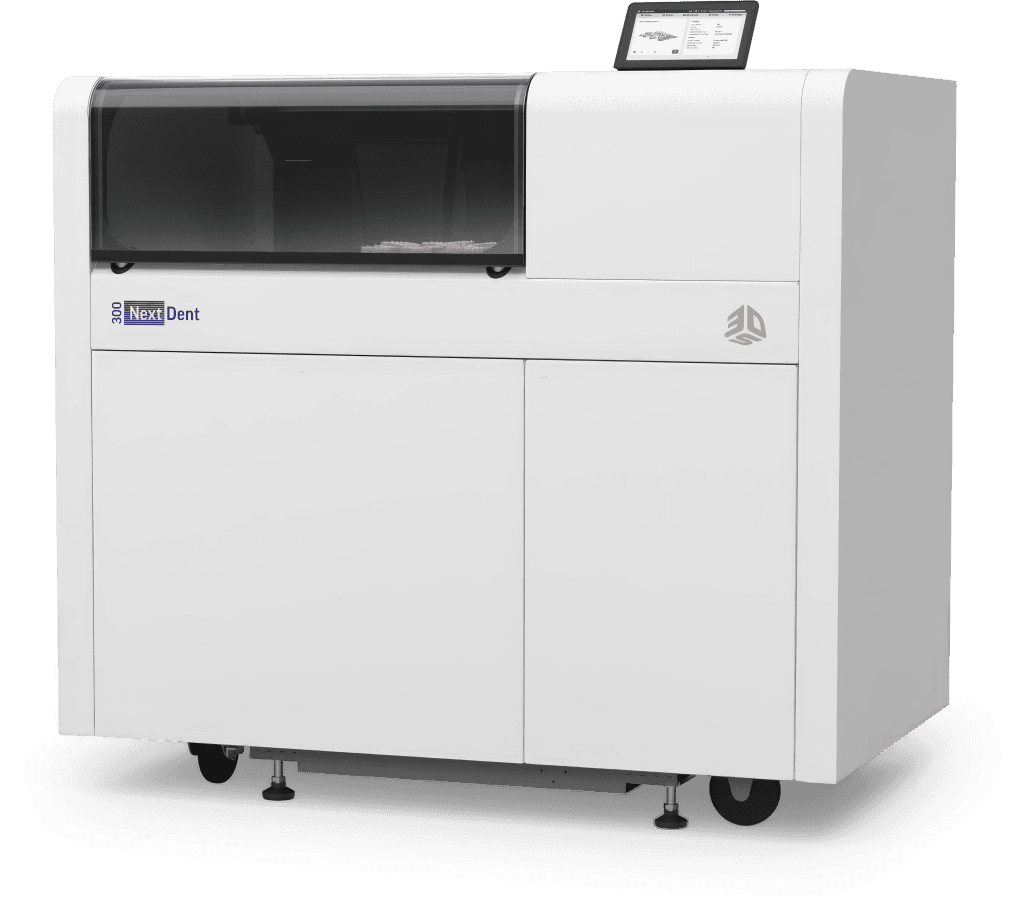
ROE Dental Laboratory just made a very specific kind of 3D printing statement: it did not buy one shiny machine for a demo cell, it spread 3D Systems’ NextDent 300 jetted-denture systems across multiple sites and tripled its denture manufacturing capacity. That is the kind of move that tells you a platform has crossed from showroom talk into the boring, profitable business of repeatable output.
The appeal is in the workflow, not the novelty. 3D Systems says the NextDent 300 is part of an FDA-cleared complete workflow solution for high-volume denture production, and that the system can produce a full build of 15 arches in as little as nine hours. The platform prints monolithic dentures, with the base and teeth formed in one build using NextDent Jet Base and NextDent Jet Teeth materials. For labs, that means less handwork and a tighter CAD-to-delivery pipeline. For patients, it means faster turnaround and color-matched results that fit a fully digital process.

ROE’s early experience appears to have been strong enough to justify expansion before the system had even become a routine fixture in the wider market. ROE said the NextDent 300 exceeded expectations in production efficiency, dentist acceptance, and patient satisfaction. Dr. Jeffrey Graves, 3D Systems’ CEO, framed the rollout as validation of a technology that is turning denture production into a scalable digital workflow rather than a craft process that depends on individual bench skill. That matters because the real test for additive manufacturing is usually not whether it can make a part, but whether it can make that part all day, every day, with predictable labor and material inputs.
The commercialization path has been steady. 3D Systems introduced the multi-material monolithic denture concept at LMT Lab Day 2024, previewed the NextDent 300 at LMT Lab Day 2025, and announced full U.S. commercial release on July 29, 2025. In February 2025, the company said the broader dental 3D printing market was expected to reach $14.6 billion by 2032, and it later put the U.S. replacement market for its denture strategy at about $600 million by 2029. By April 28, 2026, the NextDent 300, Jet Base, and Jet Teeth had also received EU MDR Class IIa certification, with European availability beginning May 4, 2026, two months ahead of schedule.
That is why ROE’s expansion across sites stands out. It is not just another dental lab adoption story; it is a sign that the jetted denture workflow is being organized like production infrastructure. In 3D printing, that is often the moment when a platform stops being interesting and starts being durable.
This article was produced by Prism’s automated news system from verified source data, official records, and press releases, then run through automated quality and moderation checks before publishing. The system is built and supervised by the people who set the standards it runs under. Read our full AI policy.
Did this article answer your question?