Sheffield Forgemasters installs large-format hybrid 3D cell for casting patterns
Sheffield Forgemasters installed a large-format hybrid 3D cell to produce complex casting patterns, cutting lead times, reducing waste and enabling autonomous, repeatable production.
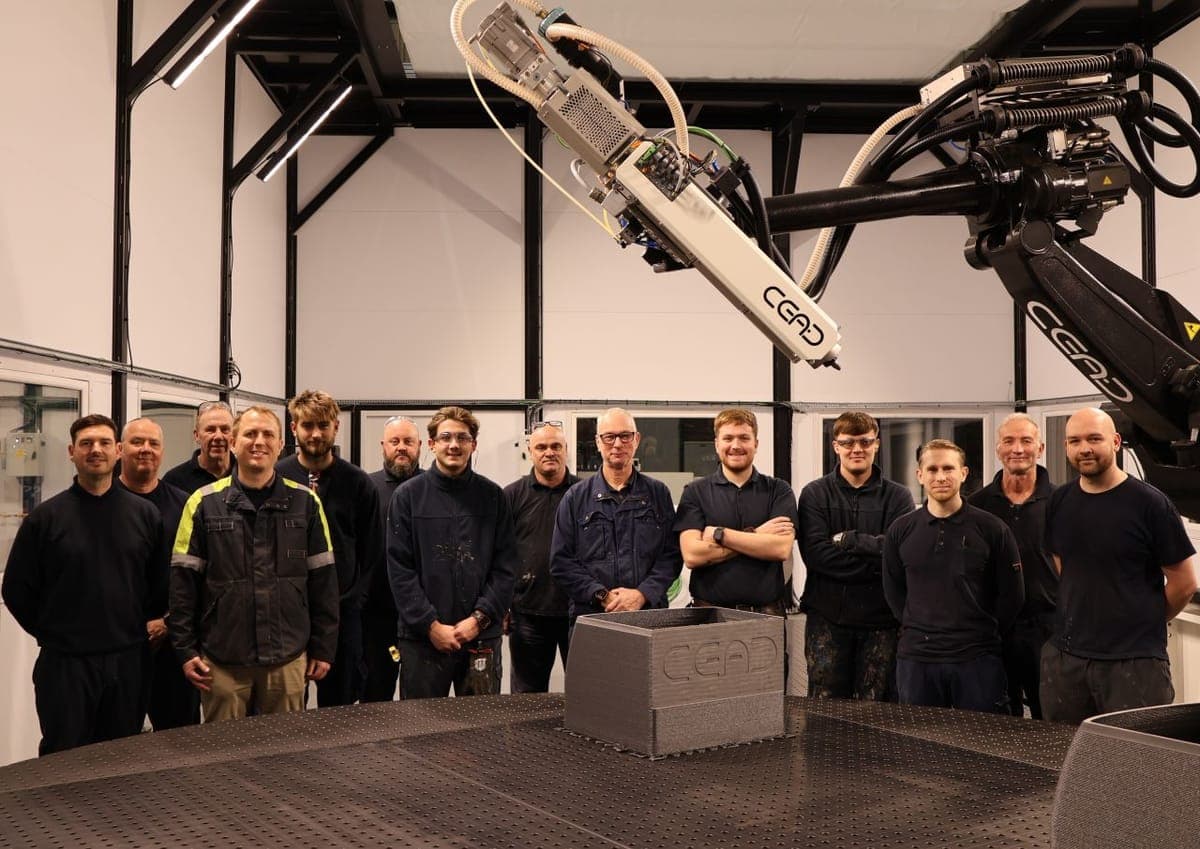
Sheffield Forgemasters has installed a large-format hybrid additive and subtractive cell to produce complex casting patterns, a move that promises shorter lead times and less material waste for heavy-industry pattern work. The CEAD Flexbot system now sits inside a 14 m × 8 m × 5 m enclosure at the Sheffield site and combines high-throughput material deposition with CNC milling to deliver ready-to-use patterns at scale.
The robotic cell mixes high-deposition extrusion with conventional machining. Material deposition can run at up to about 60 kg per hour and accepts fibre-reinforced polymers, while CNC milling operates across two worktables - one fixed and one rotating - to finish printed geometry to the tolerances needed for casting patterns. The hybrid workflow enables net-shape patterning, which reduces the volume of waste material and opens recycling pathways for used feedstock.
Sheffield Forgemasters positioned the system to improve repeatability for complex castings and to free up experienced patternmakers. With autonomous shift operation planned, the company expects the cell to run unattended production windows so patternmakers can be reassigned to complementary tasks and skills development. The installation is intended to support next-generation pattern makers as well as to speed up the delivery of tooling and patterns for foundry work.
For the 3D printing community the practical gains are clear: higher throughput allows larger batches of patterns to be produced in-house rather than contracted out, and accepted use of fibre-reinforced polymers expands material options for engineers aiming for stiffer, more robust patterns. Net-shape capabilities mean less post-processing and lower consumable costs, while integrated CNC finishing addresses the perennial challenge of surface quality and dimensional accuracy for cast parts.
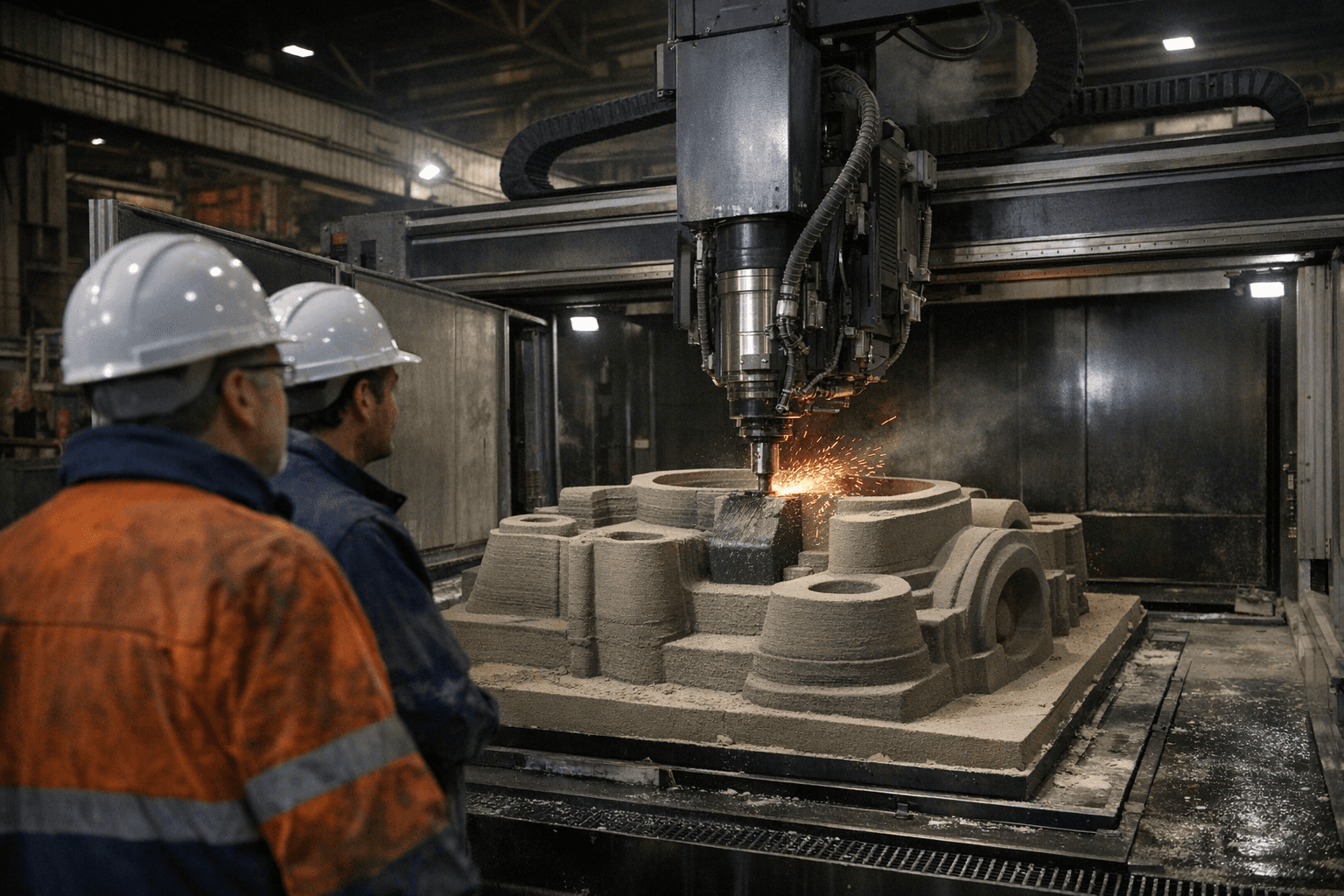
Operationally, housing a CEAD Flexbot inside a dedicated 14 m by 8 m by 5 m enclosure signals a commitment to industrial-scale additive manufacturing rather than trial installations. The two-table milling arrangement provides flexibility for simultaneous operations and should reduce cycle times on multi-part jobs. For local manufacturers and pattern shops, that means faster turnaround on complex cores and moulds and potentially lower overall casting lead times.
Installed on January 22, 2026, the hybrid cell marks a practical step toward blending robotics, high-rate extrusion and subtractive finishing in heavy-industry patternmaking. Expect more foundries and pattern shops to monitor results from Sheffield Forgemasters as evidence of whether hybrid cells can reliably deliver repeatability, lower waste and the workforce transition needed for wider adoption.
Know something we missed? Have a correction or additional information?
Submit a Tip