Single Low-Effort Safety Trick Hobbyists Can Use on FFF Printers
Keep an enclosed FFF/FDM printer’s door closed for at least one hour after a print, nanoparticles will settle and the print will often release from the bed as it cools.
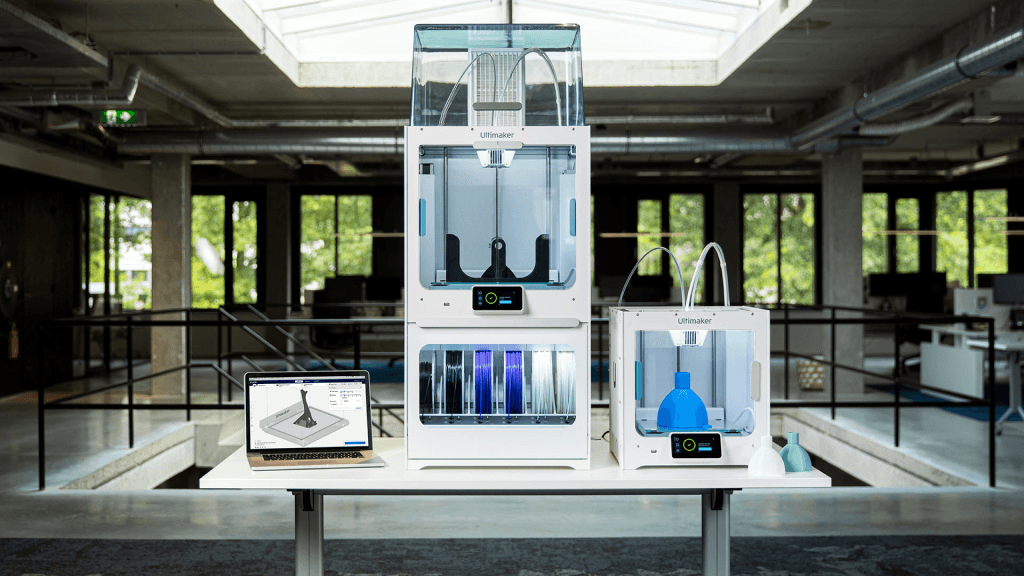
If you run an enclosed desktop FFF (FDM) printer, there’s one low-effort habit that Kerry Stevenson (aka "General Fabb") recommends: "Don’t open the door." Fabbaloo’s short, practical piece expands that into a clean rule, "Well, I actually mean don’t open it for at least an hour." Below I break that single trick into the facts, limits, and simple actions you can adopt tonight.
1. The rule: don’t open the door, wait at least an hour
Kerry Stevenson’s exact wording is simple and blunt: "Don’t open the door." He clarifies, "Well, I actually mean don’t open it for at least an hour." That single behavior, closing the enclosure and resisting the urge to peek, is the entire mitigation: it’s immediate, requires no extra equipment, and applies to most modern desktop machines classified as enclosed.
2. Why it works: heat creates airborne particles, and enclosure traps them
Fabbaloo summarizes the emission mechanism plainly: "It’s all from the heat. Normally, the filament material is quite stable, but in the process of being heated while passing through the hot end, both nanoparticles and VOCs are generated." Those nanoparticles are "very tiny bits of the material" and, because "the 3D printer is enclosed, the nanoparticles remain inside until you open the door." Letting the enclosure sit gives those particles time to settle away from the breathing zone, Fabbaloo notes that "This allows the nanoparticles to settle to the bottom where they are not airborne."
3. The evidence claim, useful but currently unnamed
Fabbaloo states that "According to recent studies, this step actually substantially reduces the amount of nanoparticles that are released into the nearby air." That’s a strong claim that turns a behavioral nudge into an evidence-backed practice, but the post does not name the studies or provide numbers. Treat the Fabbaloo phrasing as a directional claim: it cites research support, but the studies themselves need to be checked for quantities, conditions, and filament types before you call this a measured exposure control.
4. What this does not do: VOCs and open gantry printers
The post is explicit about limits: "There are two forms: nanoparticles, which are simply very tiny bits of the material; and VOCs, which are volatile organic compounds, some of which are toxic." The trick targets nanoparticles settling, not gaseous emissions, "It also doesn’t deal with the VOCs, but at least you’re doing something positive." Likewise, "Of course, this approach won’t work at all with an open gantry 3D printer, where the nanoparticles freely leave the vicinity as soon as they are emitted." If you run an open‑frame machine, this one-hour hold won’t trap particles for you.
5. Where it’s practical: most new desktop printers are enclosed
Fabbaloo points out the practical reach of the tip: "Fortunately, the majority of new 3D printers are indeed enclosed, so this is an easy step to take." For hobbyists and small shops buying modern consumer or prosumer units, the behavioral change is low-friction: you’re not retrofitting filters or buying PPE, you’re simply changing when you open the enclosure.
6. The tidy bonus: prints often fall free when fully cooled
There’s a small workshop win beyond air quality. Fabbaloo explains the mechanical benefit: "the plate will cool and shrink at a slightly different rate than the print, so when totally cooled off, the print will often come loose automatically." That makes the one-hour habit doubly attractive, fewer pried-up parts, fewer scrapes, and sometimes a clean eject without tools.
7. The human problem: resisting curiosity and habit
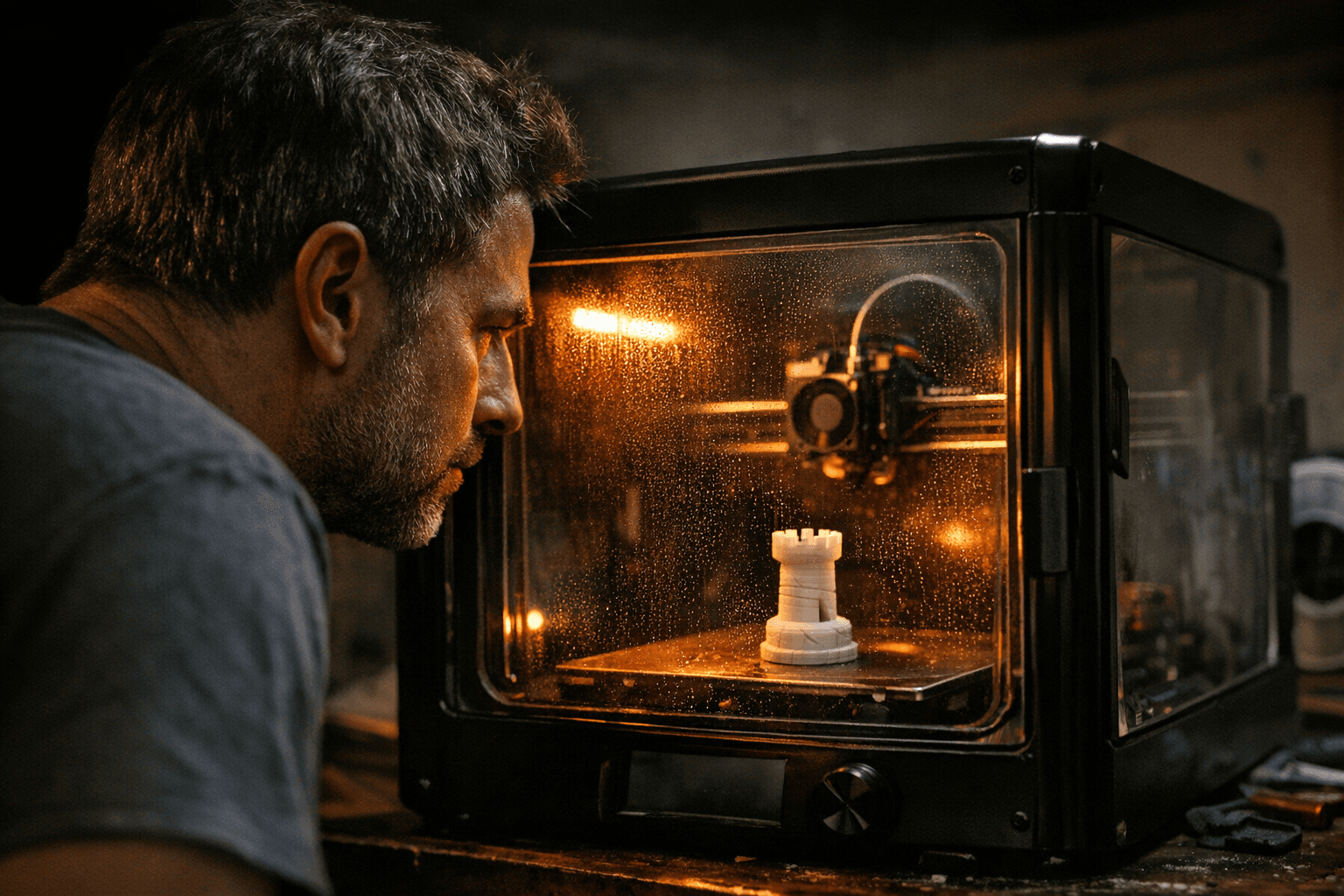
Stevenson’s final exhortation is as much about psychology as physics: "Resist the urge to open that 3D printer door!" The trick asks you to break the reflex of checking prints mid-process or immediately after completion. For many of us who learn by watching, that restraint will be the biggest barrier, but it’s precisely the low-effort lever that delivers measurable upside if you accept it.
8. Practical, cautious implementation notes and the gaps you should mind
Fabbaloo gives the time (at least an hour) but leaves some procedural details unspecified, for example, the piece does not say whether the hour starts at the exact end of extrusion, final nozzle movement, or when the enclosure temperature reaches ambient. The post also doesn’t list which filaments or temperatures produce more nanoparticles or how much settling time different materials require. Use the one-hour floor as a conservative, easy rule of thumb, and treat it as the first layer of a safety routine rather than a final workplace standard.
9. If you want to take this further: verify the studies and add controls
Fabbaloo’s phrasing, "According to recent studies...", is a prompt: if you want numbers, track down those studies. The article’s recommended next steps are the same ones I’d take on the beat: read the cited research for quantitative reductions, ask an occupational hygienist about exposure levels in hobby settings, and confirm whether your specific printer model and filament blend match the study conditions. Those follow-ups turn a single behavioral trick into evidence-based practice.
10. A realistic framing for hobbyists and small shops
This is low friction: it costs nothing, takes a small change in habit, and works on the "majority of new 3D printers" that are enclosed. It does not replace ventilation, filtration, or professional hygiene controls, and it does not mitigate VOCs or help open-gantry setups. But as Kerry Stevenson writes in a short, pragmatic post aimed squarely at desktop operators, the single low-effort move of waiting "at least an hour" is an immediate, defensible step you can start using tonight.
Closing thought Small behavioral nudges stack: closing the enclosure and waiting is one practical, author-backed step you can adopt in minutes that reduces one pathway of particle exposure and often makes post-print cleanup easier. Keep using your enclosure as a containment tool, just close the door, leave it closed for an hour, and let physics do some of your safety work.
This article was produced by Prism’s automated news system from verified source data, official records, and press releases, then run through automated quality and moderation checks before publishing. The system is built and supervised by the people who set the standards it runs under. Read our full AI policy.
Did this article answer your question?