SprintRay Midas Capsule Workflow Lets Desktop Printers Produce Ceramic Crowns
SprintRay unveiled the Midas chairside system at AEEDC Dubai, a capsule-based Digital Press SLA workflow that enables desktop-style printers to produce high-filler ceramic crowns safely and quickly.

SprintRay introduced a compact chairside system called Midas that replaces open resin vats with sealed single-use capsules, enabling desktop-style 3D printing of ceramic dental restorations in practice. The announcement at AEEDC Dubai on January 19, 2026 highlights a workflow designed to handle highly filled ceramic resins that conventional printers struggle to process.
Midas is built around a Digital Press stereolithography approach and ships with sealed capsules that include the resin, the build platform, and an optical window. That capsule architecture lets the printer work with materials that have high ceramic loadings without the need for operators to pour, measure, or otherwise manage open vat resin. SprintRay positioned the system for chairside production of definitive crowns, inlays and onlays, and veneers, offering what it says are multi-restoration batch cycles and a simplified capsule-based dosing and identification process.
Central to the system is a new Ceramic Crown HT resin reported to contain more than 60 percent ceramic filler by volume. High filler content aims to bridge the mechanical and aesthetic gap between 3D printed restorations and traditional ceramics, while pushing resolution and precision in a desktop-sized workflow. SprintRay framed the combination of hardware and material as a way to bring clinical-grade ceramic restorations into practices without the footprint or handling complexity of industrial systems.
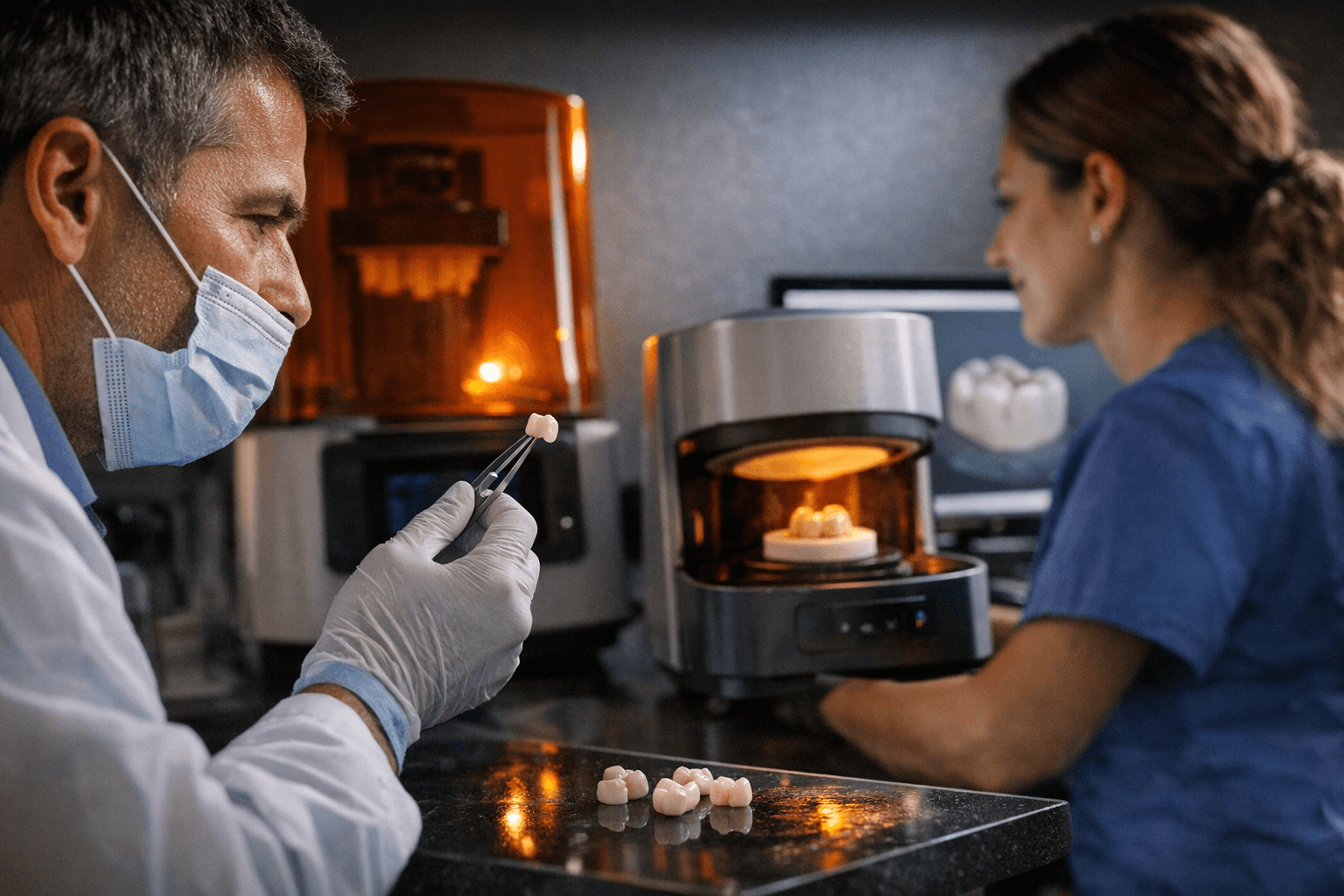
For makers and small lab operators who follow dental and precision resin printing, the practical value is twofold. First, sealed capsules reduce exposure to messy or hazardous open resins and streamline inventory tracking through single-use dosing and identification. Second, the ability to run multiple restorations in a single batch shortens turnaround for chairside or same-day workflows, shifting some restorative work that would otherwise go to external labs back into the clinic or small-scale production shop.
This development also signals material and system innovations that often trickle into the wider resin community. Improvements in high-filler chemistries, optical interfaces, and sealed consumable design can influence high-resolution hobby and prosumer printing for jewelry, microfabrication, and other precision applications where filled resins offer mechanical or visual advantages.
Practical adoption will hinge on compatibility with local clinical rules, post-processing and sintering steps required for ceramic restorations, and independent validation of long-term performance. Verify vendor claims and check workflow requirements before integrating chairside ceramic printing into clinical or commercial operations.
SprintRay’s Midas shows how printer architecture and consumable design can expand what desktop-style systems can do. For the 3D printing community, the immediate takeaway is that materials-driven innovation plus smart consumable engineering are lowering the barrier to more demanding resin applications, and that the next wave of desktop printers may be defined as much by their consumables as by their optics.
Know something we missed? Have a correction or additional information?
Submit a Tip