Student projects from NC State to RIT Dubai recycle plastic into filament
Students and faculty at NC State turned PLA 3D printing scrap into usable filament with a closed-loop pilot, and other campuses including RIT Dubai are pursuing similar recycling projects.
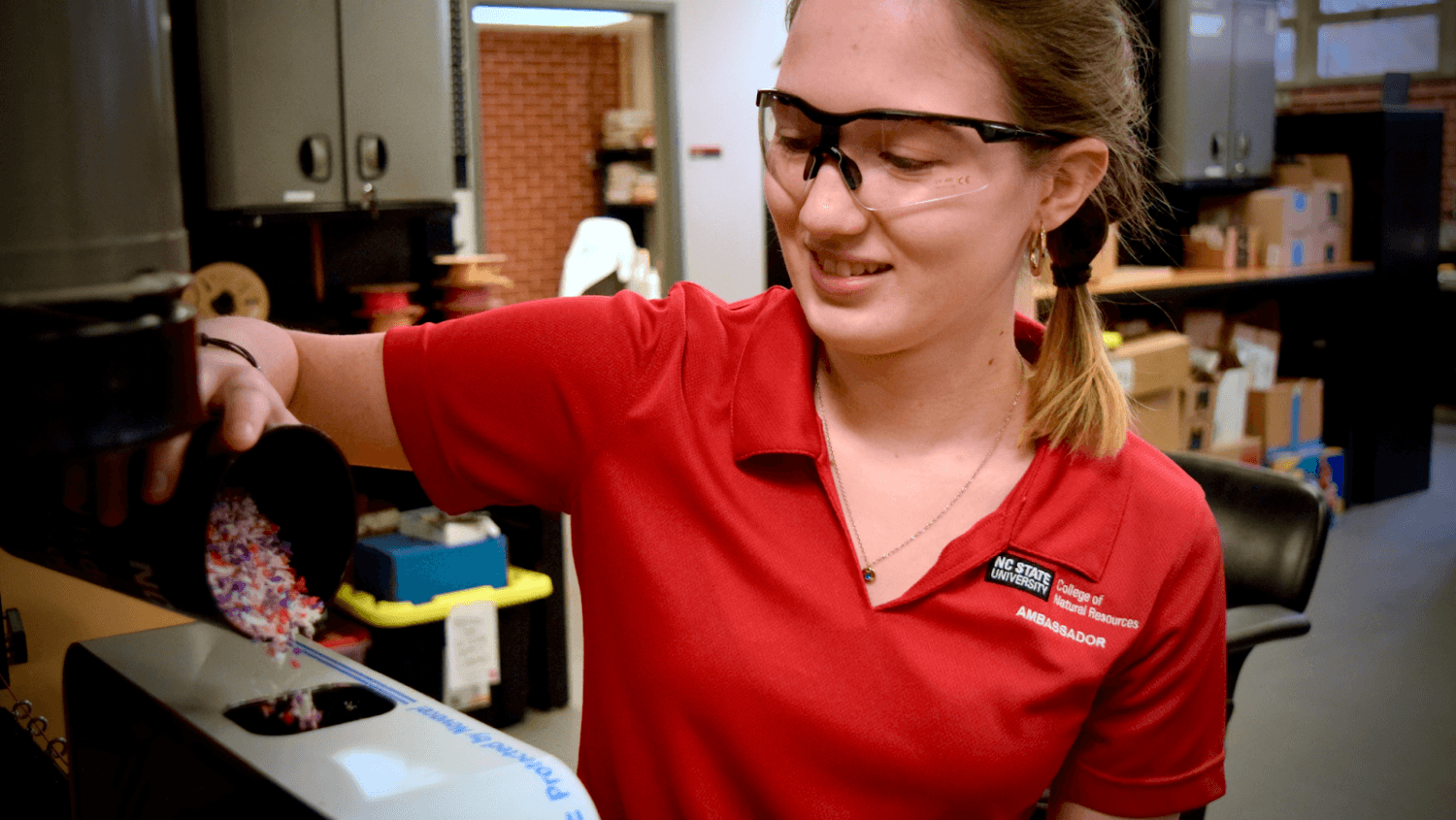
North Carolina State University has a working pilot that intercepts 3D printing scrap and re-extrudes it into usable filament, offering a concrete model for campus-scale circularity. The effort, developed within the Sustainable Manufacturing Lab at the Hodges Wood Products Lab and in collaboration with the D.H. Hill Makerspace, uses a four-step workflow of "collection, sorting, grinding, and extrusion" to turn failed prints, support structures, and design errors back into feedstock. Project writing and outreach appear under the BioResources editorial title "Closing the loop: Recycling PLA waste from 3D printing into value-added filament at NC State University."
The pilot grew from student innovation at the Make-a-Thon in Spring 2024, where Catherine Kirch and recent graduate Bella McInnes proposed recycling polypropylene coffee cups and PLA printing scraps. Catherine Kirch, a current junior, continued development of the PLA stream and now produces recycled PLA keychains to promote the Sustainable Materials and Technology Student Association and spread awareness about sustainable materials. Dr. Daniel Saloni, who leads the Sustainable Manufacturing Lab, is a faculty collaborator and co-author on the editorial. A departmental write-up credits Jack Zimmerman for covering the work for the Department of Forest Biomaterials.
The program reports practical results: by using campus-collected waste in a closed-loop process, the team achieved "over 90% material efficiency." The project materials emphasize that "Although PLA is a bio-based and recyclable thermoplastic, most of this material currently ends up in landfills." Beyond the technical proof of concept, organizers position the pilot as a campus-ready template: "campus-scale circular systems can reduce waste, lower costs, and serve as educational models for sustainable manufacturing," and the initiative "provides a replicable framework for universities and small-scale fabrication facilities seeking to incorporate circular economy principles into their operations."
Similar activity is surfacing elsewhere. A regional example notes that "a team at RIT Dubai developed a process to convert discarded PET water bottle" but the available text is truncated and lacks details about the RIT Dubai team's methods and outputs. That gap highlights where follow-up reporting or direct contact will be needed to compare approaches and recovery metrics across campuses.
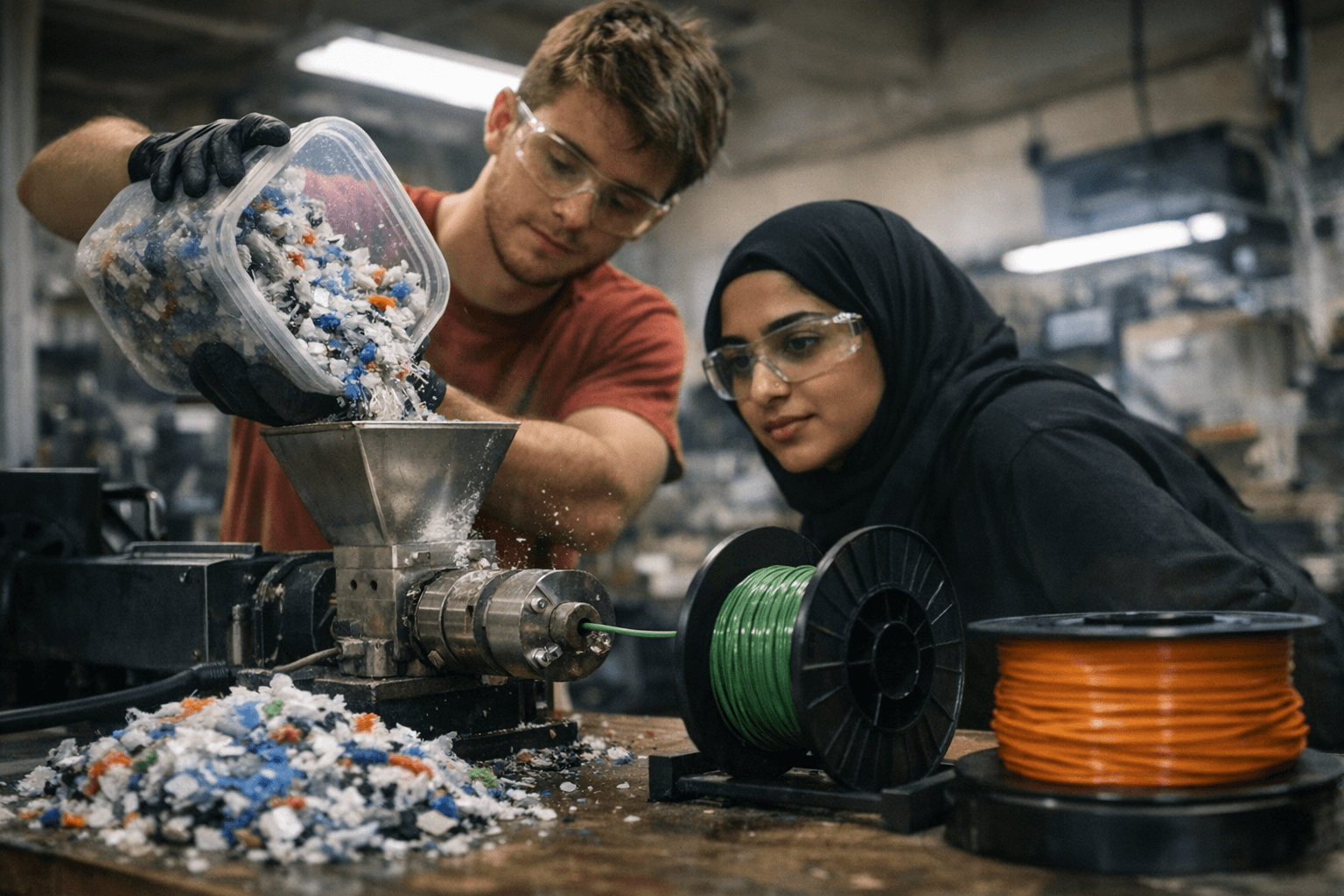
For makers, lab managers, and campus sustainability coordinators, NC State's pilot demonstrates a low-barrier route to capture printing scrap and produce filament on-site while providing hands-on learning for students. Those seeking more information or looking to replicate the program can contact NC State's Department of Forest Biomaterials at 2820 Faucette Drive Campus Box 8001 or call Academic & Student Services at 919.515.6191.
As student projects scale, expect more campus makerspaces to test mechanical recycling loops and to publish operational details. Verify the "over 90% material efficiency" definition with project leads and follow up with RIT Dubai for a full description of their PET work; together, these efforts could shift small-scale fabrication away from single-use filament toward closed-loop material practices.
Know something we missed? Have a correction or additional information?
Submit a Tip