Study reveals cyclic deformation mechanisms in LPBF 3D-printed high-entropy alloy
Researchers probed cyclic deformation in an LPBF 3D-printed high-entropy alloy, mapping microstructure changes that shape crack initiation and advance toward predictable fatigue life.
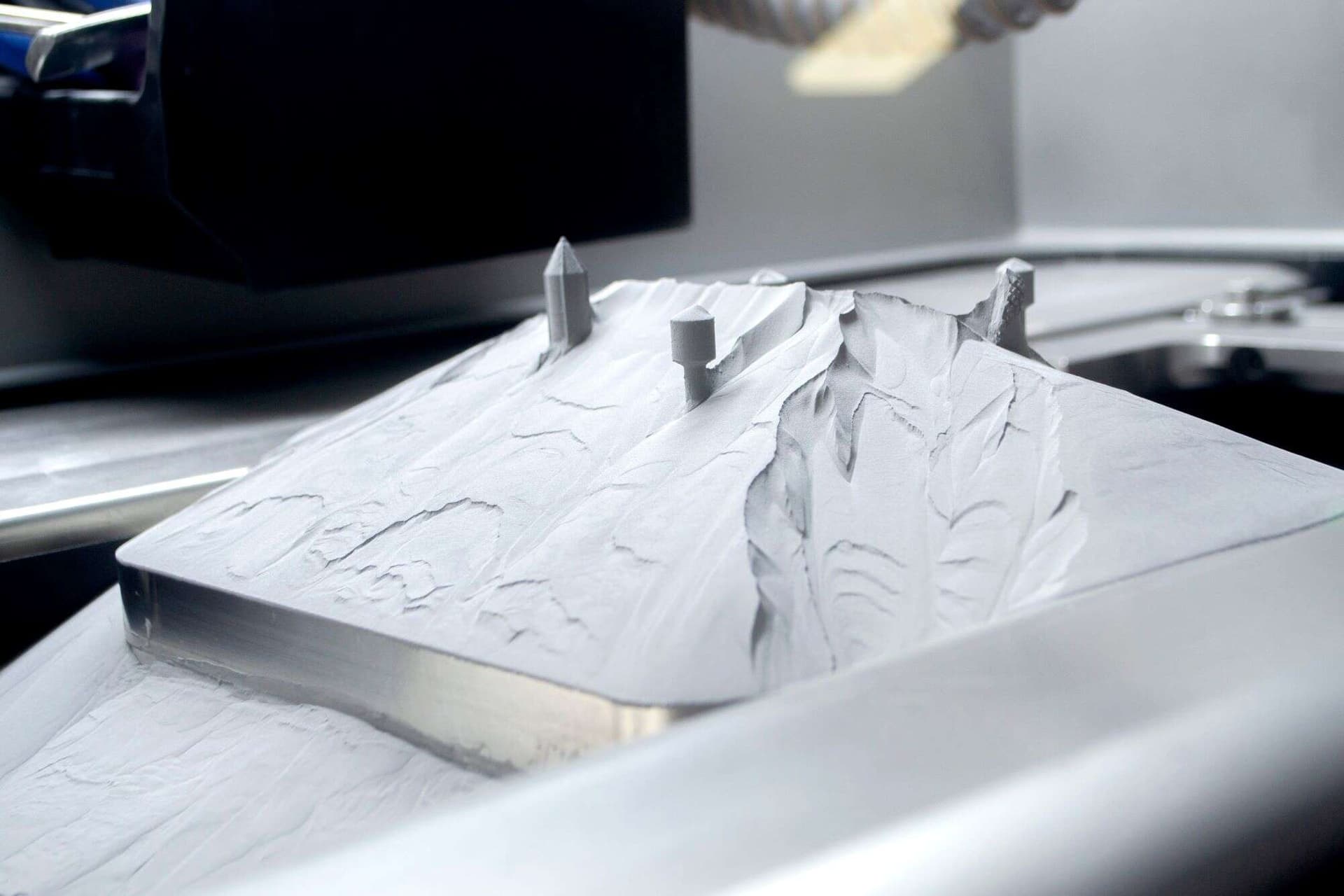
A recent study probed how cyclic loading reshapes the microstructure of a high-entropy alloy (HEA) made by Laser Powder Bed Fusion (LPBF), a step that brings metal additive manufacturing closer to predictable fatigue performance. The investigators focused on how as-printed rapid-solidification features, element segregation and porosity evolve under repeated stress and where cracks begin.
High-entropy alloys have drawn attention for roughly a decade because complex chemistries can deliver unusual mixes of strength, ductility and damage tolerance. LPBF adds another layer of complexity by imprinting melt-pool substructures and pockets of porosity that complicate fatigue life compared with static strength metrics. The new work examines cyclic deformation mechanisms in an LPBF HEA to understand how those microstructural fingerprints turn into crack-initiation sites during repeated loading.
The report’s technical notes describe a battery of high-resolution characterization methods commonly used in fatigue and microstructure studies. Optical and electron microscopy on mirror-polished specimens and Kalling’s reagent etching reveal melt-pool boundaries and laser scan tracks. Electron back-scattered diffraction mapping with a step size of about 100 nm exposes crystallographic texture and local misorientations that develop under cycling. Chemical analyses used inductively coupled plasma atomic emission spectroscopy and interstitial measurements by combustion infrared detection and inert gas fusion to profile global composition and light-element content.
Atom probe tomography and focused-ion-beam lift-out were applied for nanoscale compositional detail. Micro-tip specimens with apex radii near 50 nm were prepared by annular milling on a dual-beam FIB and analyzed on a CAMECA LEAP 3000X HR at 40 K using a green 532 nm laser at 200 kHz, 0.9 nJ per pulse and a target evaporation rate of 0.30 percent; data were handled in IVAS 3.8.4. Sample thinning by twin-jet polishing at minus 20 degrees Celsius under a stable current of roughly 25 mA produced disks about 100 micrometers thick for transmission and site-specific work.
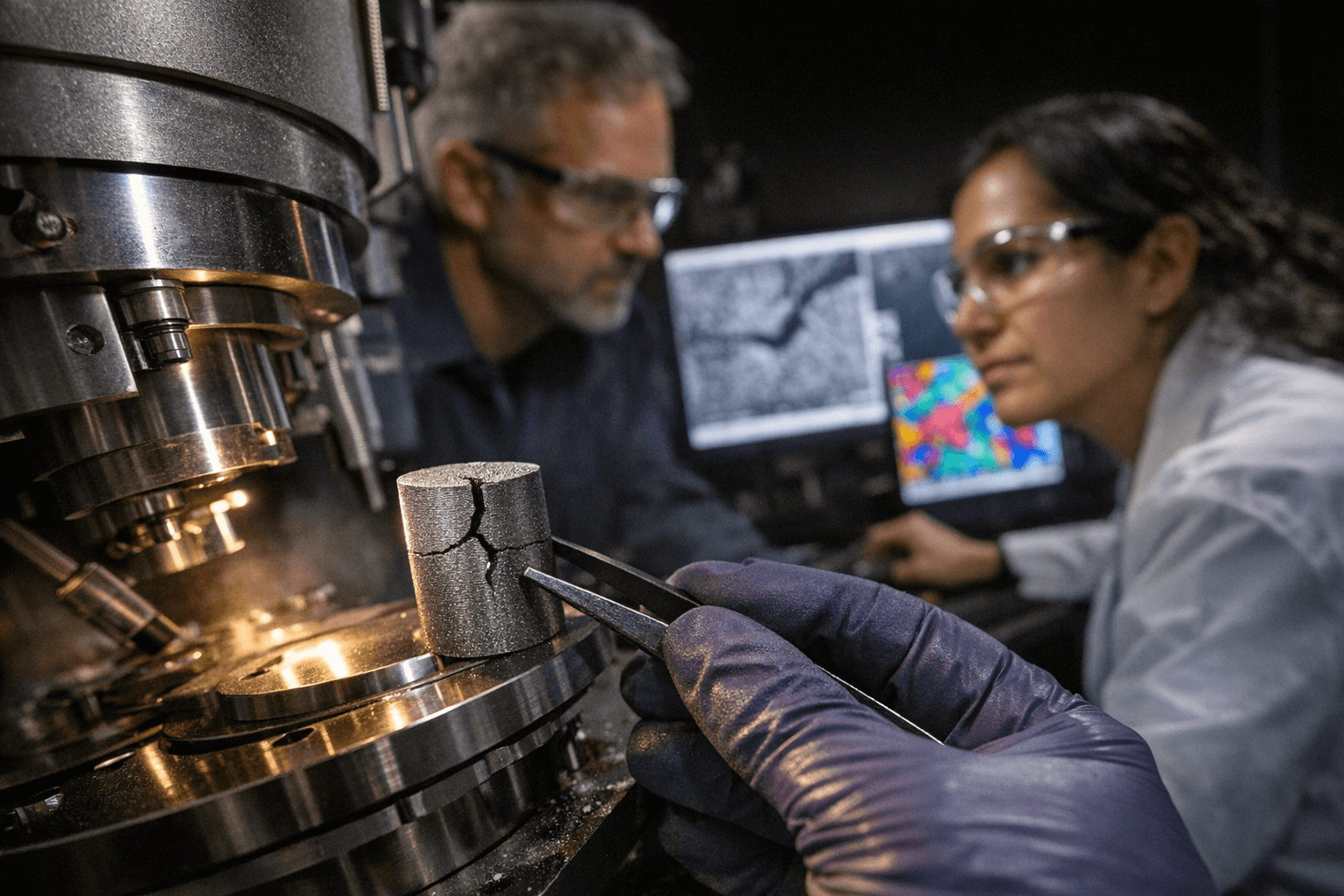
These methods join a growing literature that links microstructural features to fatigue behavior. A 2025 study on an additively manufactured titanium alloy reported unusually high fatigue resistance across all stress ratios, and other teams have shown that near-void-free processing can dramatically shift fatigue outcomes in Ti-6Al-4V. On that front, researchers at the Institute of Metal Research led by Prof. Zhang Zhefeng and Prof. Zhang Zhenjun reported producing an approximate void-free Ti-6Al-4V by regulating microstructure and defects separately. "This research has revised people's previous understanding of the low fatigue performance of 3D printing materials and is expected to advance such materials' application in aerospace and other fields," said Zhang Zhefeng of the Institute of Metal Research.
For the 3D-printing community this work matters because understanding the chain from LPBF scan strategy to nanoscale segregation to crack nucleation is the only path to predictable S–N behavior and reliable part life. Verify methods and data when you evaluate claims: look for EBSD maps, fractography showing initiation sites, APT composition profiles, and the fatigue test details that produce S–N curves. Expect follow-up studies to pin down alloy chemistry, LPBF parameters and statistical fatigue numbers; those specifics will be the practical levers that let designers, print operators and shop-floor engineers reduce surprises in metal AM parts.
This article was produced by Prism’s automated news system from verified source data, official records, and press releases, then run through automated quality and moderation checks before publishing. The system is built and supervised by the people who set the standards it runs under. Read our full AI policy.
Did this article answer your question?