Synera uses agentic AI to automate additive manufacturing workflows
Synera’s pitch is simple: automate the messy steps between CAD and a build-ready job so fewer prints fail before they ever hit the machine.
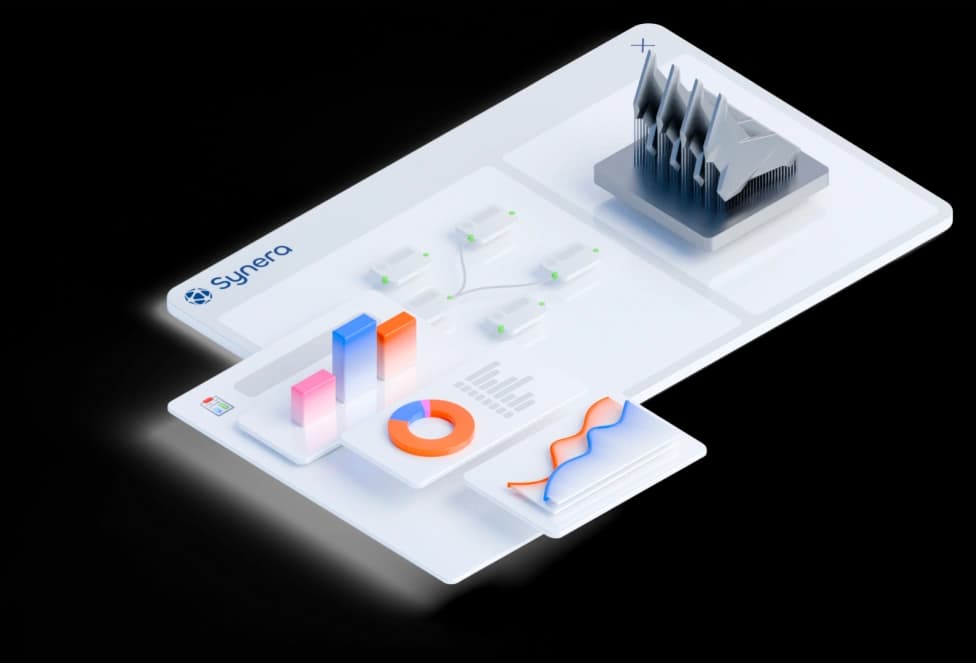
Synera is pushing additive manufacturing toward the part everyone loves to ignore: the prep work. Instead of treating AI as a shape generator, the Bremen-based company is using agentic software to handle the tedious decisions that sit between a CAD file and a successful build, which is where a lot of real-world production time disappears.
What Synera is trying to automate
Synera, formerly known as ELISE, describes its platform as an engineering operating model, not just another design app. The company says its AI agents execute work rather than merely suggest it, which is a meaningful distinction in AM because the bottleneck is usually not imagination, it is preparation.
That preparation stack is broad. According to Synera and VoxelMatters, the platform connects more than 80 engineering tools and more than 70 CAx integrations, with partners including Altair, Autodesk, Hexagon, PTC, and Siemens. The company says the agents now automate DfAM, simulation, and build preparation, which puts it squarely in the part of the workflow where most of the repetitive, error-prone labor lives.
For a desktop maker, that is the useful test. If the software can reliably decide orientation, propose support strategy, repair a bad STL, and queue up slicing without five manual passes, then it is not just “AI in manufacturing.” It is a shortcut through the stuff that usually gets a part killed before the first layer.
The real promise is in the prep, not the hype
The biggest value here is not that Synera can dream up clever geometry. The value is that it can help turn a messy chain of handoffs into a reproducible process. In the AM world, that means fewer moments where one person exports a file, another person checks wall thickness, another tweaks supports, and somebody else finally decides the part is ready.
Synera says that kind of automation can cut multi-day processes down to hours. That claim matters because production teams do not lose time in one dramatic failure, they lose it in dozens of small decisions: which face should go down, where the supports will scar the surface, whether the model needs repair, whether the build plate can be packed tighter, and whether the part should be reoriented to reduce risk.
The company is aiming at aerospace, defense, automotive, consumer electronics, and industrial engineering, and those are exactly the sectors where the tedious parts matter most. In those environments, the goal is not just to make a printable model. It is to make a job that is traceable, repeatable, and economical enough to run again.
The workflow shift hobbyists should actually care about
If you strip away the enterprise language, the next wave of agentic AM software is about four jobs:
- Orientation: choosing the print direction that balances strength, surface finish, and support volume
- Support strategy: placing only what is needed, where it is needed, and avoiding ugly scars or wasted material
- Build nesting: packing parts efficiently so a plate, tray, or chamber is used well
- File repair: fixing broken meshes, bad normals, and other geometry issues before they waste machine time
Those are not glamorous tasks, but they are where a lot of prints succeed or fail. Anyone who has watched a supposedly simple file chew through an hour of prep knows the pain: the model looked fine in CAD, then the slicer exposed every weak spot in the workflow. If Synera’s agents can automate even part of that grind consistently, the impact is bigger than a flashy generative design demo because it changes how many builds make it from idea to machine-ready output.
That is also why the company’s claim lands better than generic “AI design” talk. A clever shape is nice. A build that starts correctly, survives prep, and needs less operator babysitting is what actually pays.
The Materialise collaboration is the clearest sign of where this is headed
The July 2025 collaboration with Materialise is where Synera’s pitch becomes concrete. The integration connects Materialise’s Magics SDK with Synera’s agentic AI platform, and Synera says that lets users automate tasks such as file repair, orientation, support generation, slicing, and build preparation directly inside Synera.
That matters because it closes one of the ugly gaps in additive manufacturing software: the handoff between geometry prep tools and workflow automation tools. A lot of AM software can do one piece well. Very few systems make the whole chain feel connected enough that an operator is not constantly rechecking exports, remaking supports, and stitching together separate utilities.
Synera’s argument is that this closes a critical gap by reducing errors, failed builds, manual effort, and production costs. That is not an abstract software promise. In AM, fewer manual touchpoints usually means fewer surprises, and fewer surprises usually means more parts actually make it through the machine.
Why the funding and customer list matter, but only secondarily
Synera’s momentum is not built on software talk alone. The company announced a $40 million Series B in April 2026, led by Revaia with participation from Capgemini through ISAI Cap Venture, and said the money would accelerate U.S. and international expansion. It also says its customers include NASA, BMW, Airbus, Volvo Trucks, and Hyundai, which tells you the workflow automation pitch is already being tested in serious industrial environments.
The company was founded in 2018 in Bremen, Germany, by Dr. Moritz Maier, Sebastian Möller-Lafore, and Daniel Siegel, and has since expanded to Boston, Massachusetts. That move mirrors the broader shift in the story itself: AM software is no longer just a European niche tool or a lab curiosity. It is becoming a production system, and Synera wants to sit where the work is actually coordinated.
The company also cites an EDAG case study in which automated design for additive manufacturing cut development time for serial-production-ready parts by 40%. That is the kind of number that gets attention because it speaks to cycle time, not just convenience. If your process is faster and more reproducible, that is the sort of gain that changes what gets printed in the first place.
Synera’s own framing is that its agents act like a digital workforce that can think, decide, and execute like skilled engineers. Strip the slogan down to the useful part, and the point is clear: the company wants to remove the friction between intent and build file. If it works the way Synera says it does, the real win is not another clever CAD tool. It is a shorter, cleaner path from design idea to a job that actually prints.
This article was produced by Prism’s automated news system from verified source data, official records, and press releases, then run through automated quality and moderation checks before publishing. The system is built and supervised by the people who set the standards it runs under. Read our full AI policy.
Did this article answer your question?