Tripo adds in-app editing and 3MF export for print-ready models
Tripo’s new in-app editing and 3MF export aim at the real bottleneck: getting AI models slicer-ready without a cleanup marathon.
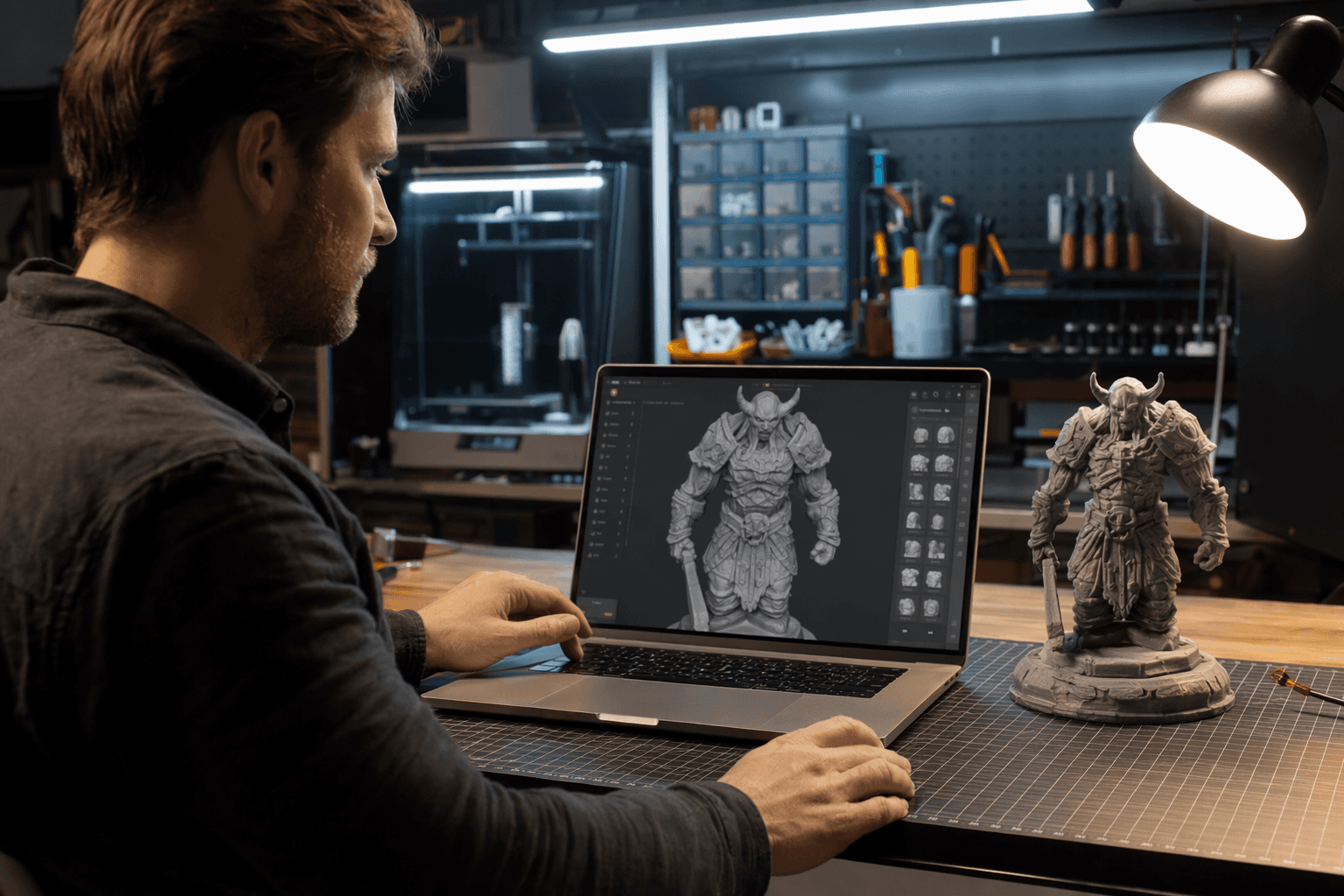
Tripo is starting to look less like a flashy image-to-mesh toy and more like a workflow tool for people who actually print. Its latest updates, including Nano Banana 2 integration and in-platform editing, let users tweak, fix, and export 3MF files without hopping between apps, and that matters because the real test is not whether a model looks good on screen, but whether it survives slicer prep, wall-thickness checks, and support generation.
That shift puts Tripo in a more useful lane for makers who want something they can send to Ultimaker Cura, PrusaSlicer, or a Bambu Lab workflow with minimal cleanup. Tripo’s 3D-print pages say the platform supports one-click export to STL, OBJ, and 3MF, while its export guide lists six core formats: USD, FBX, OBJ, STL, GLB, and 3MF. In other words, Tripo is not just chasing desktop printing. It is trying to sit between concept art and production handoff.
The company is also folding more of the traditional Blender-plus-slicer chain into one place. Tripo Studio is billed as an all-in-one workspace for generating, segmenting, retopologizing, texturing, rigging, designing, editing, and sharing models. For hobby printing, that is the part that matters most. A generated bust, cosplay part, miniature, or enclosure only becomes useful when you can correct the mesh, check the thickness, and get a file that does not fall apart the moment you load it into a slicer.
That is where the comparison with Meshy and Hitem3D, branded as Hi3D on its site, gets interesting. Meshy markets printer-ready formats and says its 3D-print workflow can export as 3MF and feed into tools such as Bambu Studio. Hi3D pitches high-precision image-to-3D generation with fine-structure output, thickness optimization, and support-accuracy tools. Meshy’s own 2026 guidance on AI tools for 3D printing says the real evaluation points are watertightness, STL quality, repair time, and slicer compatibility, which is exactly the right yardstick here.
Tripo’s bet is that more of that cleanup can happen before the file leaves the app. That is also why 3MF matters. It carries more print-ready context than a bare STL and can reduce some of the conversion friction that slows projects down before a nozzle ever heats up. Tripo’s billing changelog shows updates on April 12, 2026 and April 17, 2026, so the platform is still moving fast. The useful question now is simple: does it save enough repair time to beat the best of Meshy and Hi3D? For everyday makers, that is the only benchmark that counts.
This article was produced by Prism’s automated news system from verified source data, official records, and press releases, then run through automated quality and moderation checks before publishing. The system is built and supervised by the people who set the standards it runs under. Read our full AI policy.
Did this article answer your question?