Tripo raises $200 million to simplify printable 3D model creation
Tripo just banked nearly $200 million to attack the weakest link in hobby printing: turning ideas into watertight STL files. Its pitch is simple, make the model as easy to get as the printer.

The bottleneck in hobby 3D printing is still not the printer itself. It is the model that has to exist before the first layer ever goes down, and Tripo AI just raised nearly $200 million to make that step a lot less painful.
Tripo said the money came through combined Series A+ and Series A++ financing backed by INCE Capital, building on a $50 million round it announced on March 25 with Alibaba and Baidu Ventures. That earlier round was aimed at research into large-scale 3D foundation models and the company’s global developer platform. The new capital is meant to expand research teams, accelerate algorithm development, and strengthen data and infrastructure systems.
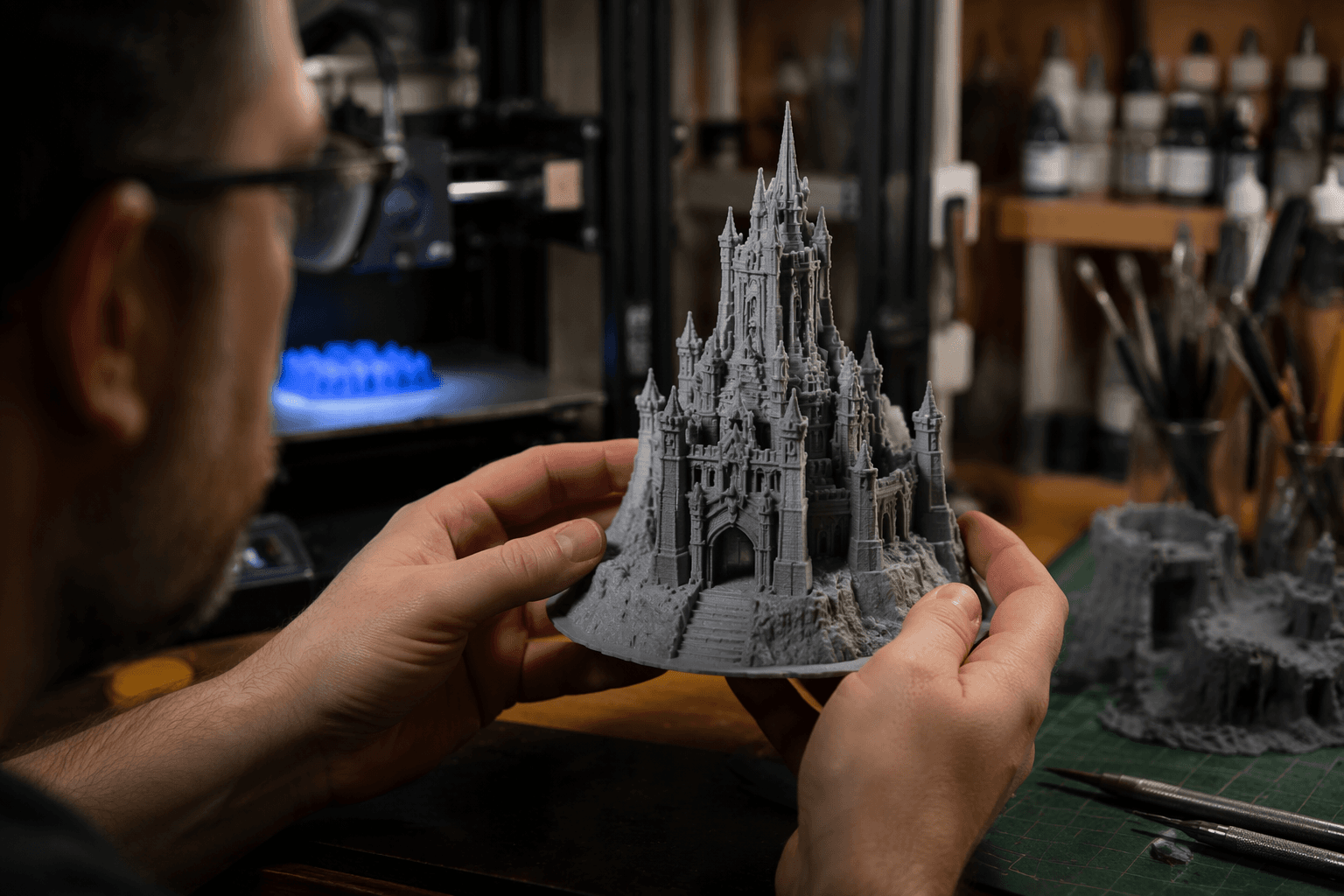
For makers, the pitch lands in a very specific place. Tripo says its platform can turn text, images, or sketches into production-ready 3D assets in seconds, and it leans hard into printability with watertight meshes and clean STL exports. That matters because raw AI meshes are often a mess for printers. Tripo’s own educational material says they can come with non-manifold edges, holes, self-intersections, flipped normals, and thin walls, all the familiar traps that turn a promising prompt into a repair session.
That is why this story matters to the desktop crowd more than a generic AI funding splash usually would. A lot of people never get far enough into CAD to become power users. They can describe a bracket, show a reference photo, or sketch a replacement part, but getting from that idea to a watertight printable mesh still takes time, judgment, and cleanup. If Tripo and tools like it keep improving, the front door to printing gets wider for casual users, small creators, and anyone who wants to skip the modeling grind.
Tripo says the scale is already real. Its website claims nearly 100 million 3D models generated for 6.5 million creators, which helps explain why investors are treating it as more than a novelty generator. The company is also pushing beyond pure asset creation with Project Eden, a world-model research effort focused on persistent, reusable, multiplayer interactive environments.
For 3D printing, though, the practical takeaway is simpler than the AI branding. If software can reliably spit out clean, watertight geometry, then the next wave of printer adoption may come from easier content creation, not better hardware alone. That is the part worth watching.
This article was produced by Prism’s automated news system from verified source data, official records, and press releases, then run through automated quality and moderation checks before publishing. The system is built and supervised by the people who set the standards it runs under. Read our full AI policy.
Did this article answer your question?