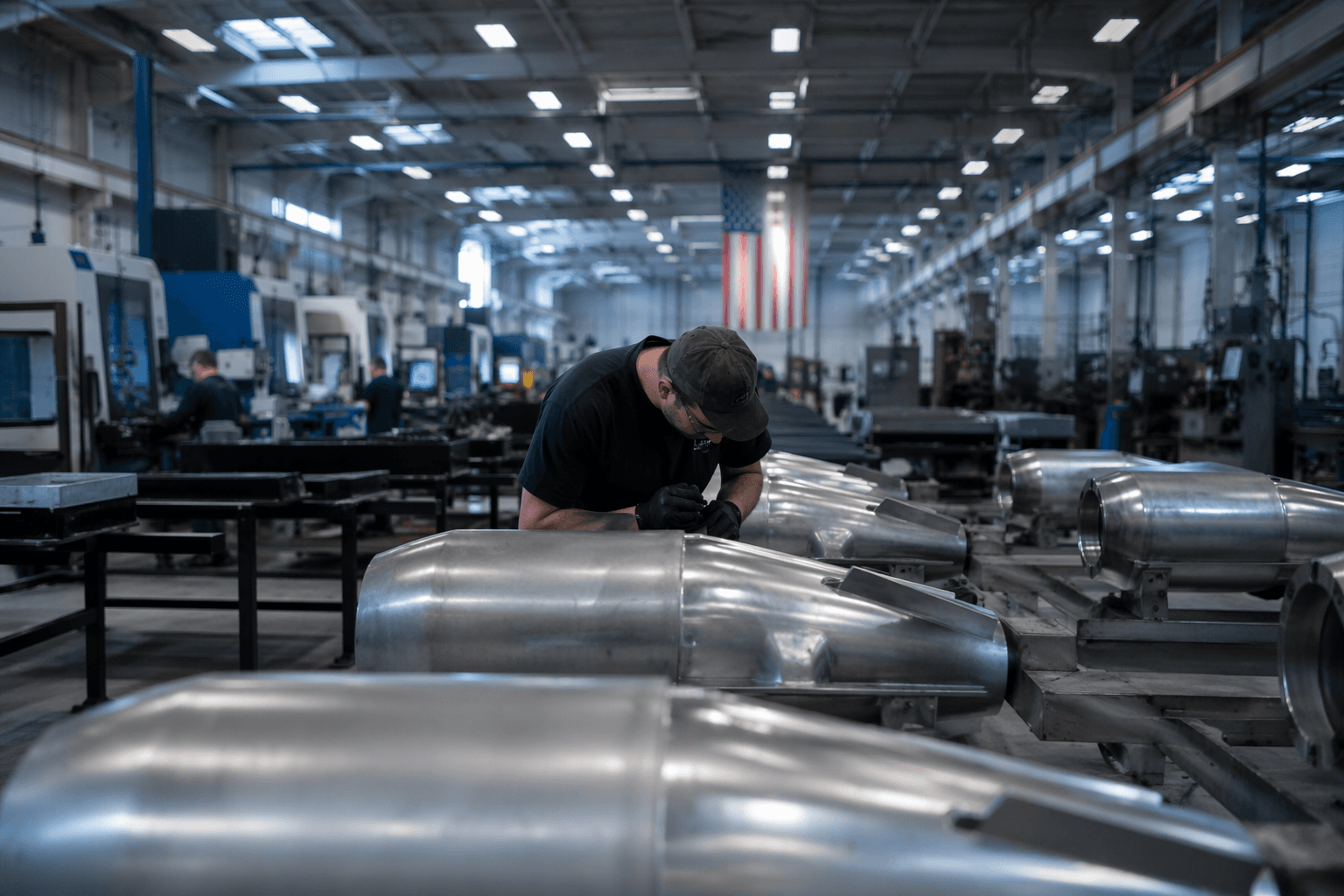
Ukraine's DrukArmy Unites 10,000 Printers to 3D Print Frontline Military Parts
DrukArmy's 10,000-printer volunteer network has fulfilled 180,000 frontline orders — at 230% capacity and still a month behind demand, it needs more printers now.
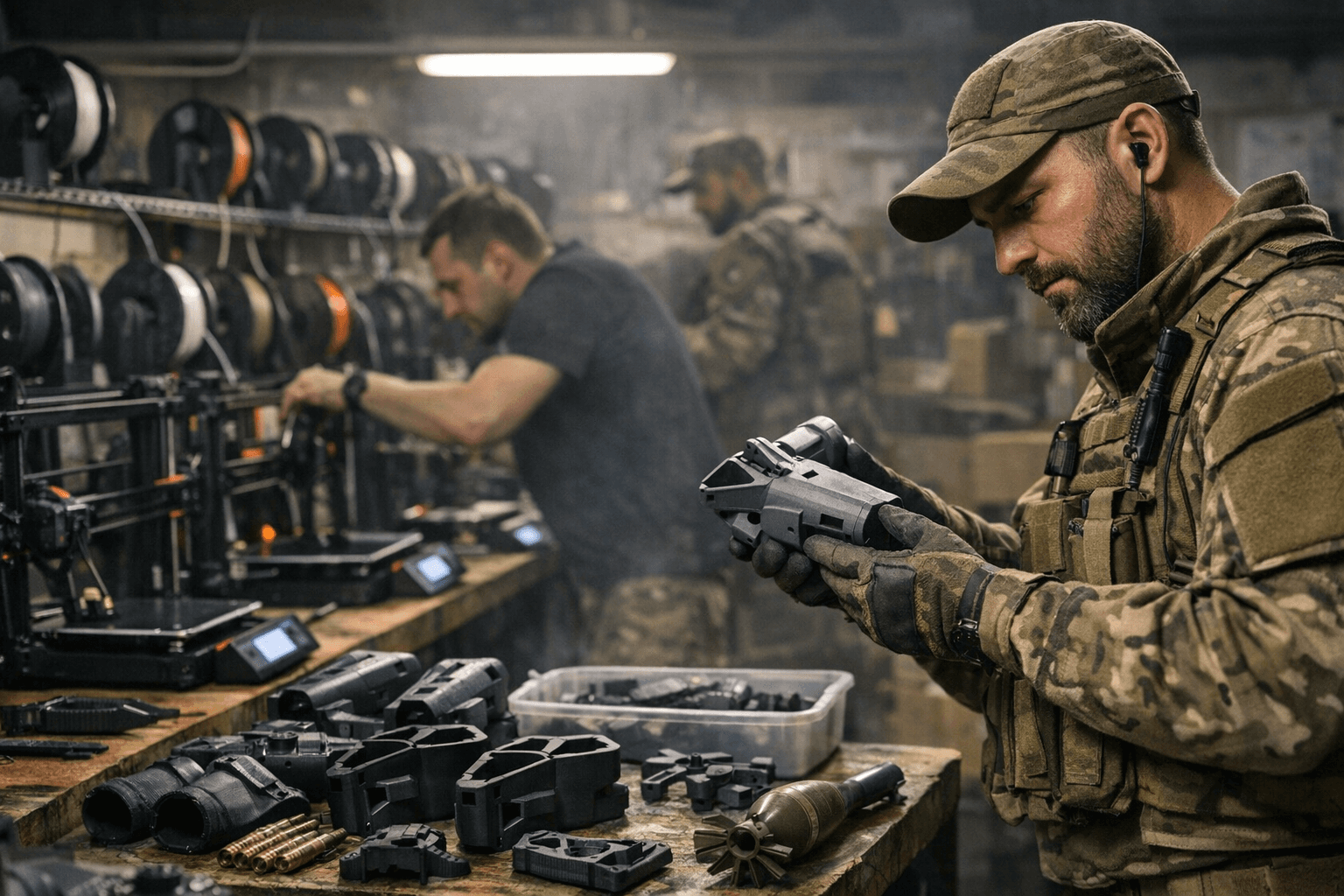
One kilogram of PETG filament costs roughly $7 and yields 15 grenade tail fins for Ukraine's front line. That is the arithmetic behind DrukArmy, the self-described largest volunteer 3D-printing initiative for any active conflict, which has united over 10,000 printers and completed more than 180,000 orders for the Armed Forces of Ukraine, field medics, and rescue workers since its founding.
The initiative was built by Yevhen Volnov, whose legal name is Mykyta Kuvikov, around the premise that civilian printers could function as a decentralised factory. Volunteers produce drone shells, stabiliser tail fins, grenade casings, bomb-dropping drone hardware, scope mounts, medical equipment, and rifle parts, all delivered free of charge to the military. Donors cover material and equipment costs entirely, so printers contribute only time and electricity. In March 2025, the Ukrainian IT community DOU awarded DrukArmy its prize for Most Powerful Initiative by IT Specialists Bringing Victory Closer.
The unmet demand is severe: the network operates at approximately 230% of capacity, with a 1.5-month order backlog. Every printer that comes online directly shortens that queue.
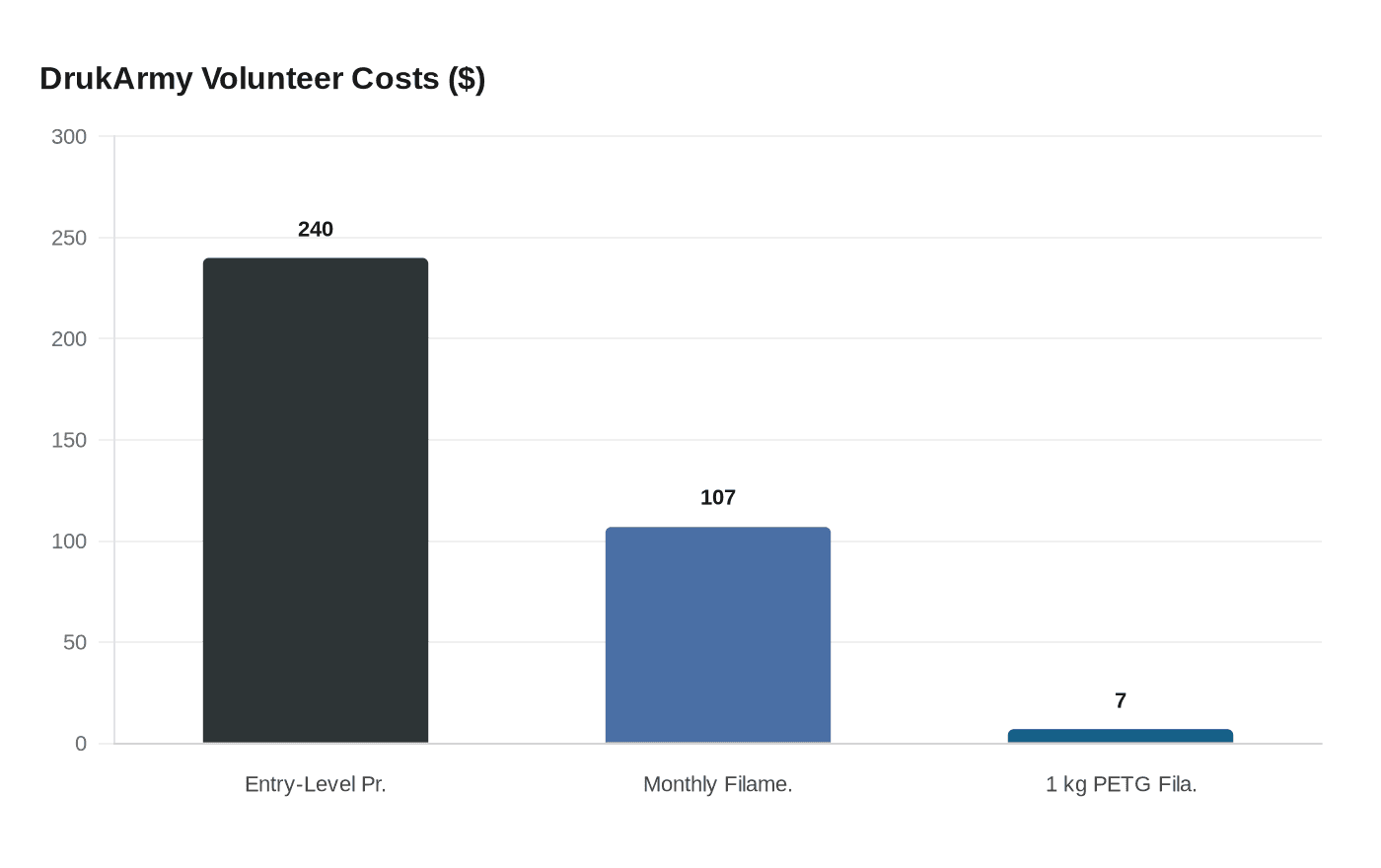
For those ready to contribute, the hardware and material requirements are specific. Prusa printers are the recommended platform, partly because Prusa Research, the Czech company founded by RepRap pioneer Josef Prusa, shipped roughly 100 Original Prusa machines to Ukraine before the February 2022 invasion and published a community support call that March. An entry-level printer runs approximately $240. The required filament is PETG, not PLA. Drone tail fins, scope mounts, and munition casings all demand PETG's toughness, thermal resistance, and dimensional stability at larger print sizes, where PLA warps and fails. At DrukArmy's standard 0.5 kg-per-day cadence, monthly filament costs run approximately $107 per printer, an amount donors typically offset.
To join, register at drukarmy.org.ua. Approved volunteers unlock a model-file bulletin board inside a personal dashboard, populated with active frontline requests, print configuration instructions, and per-order quality specifications. DrukArmy's internally built CRM system tracks every order through production, quality checks, and handoff, a pipeline designed specifically to reduce defect rates across thousands of simultaneous volunteers. For printers outside Ukraine, the network operates hubs in dozens of countries, so completed parts ship to a regional collection point rather than across a war zone. International volunteers printing military-specific components, such as munition parts or drone hardware, should confirm their country's dual-use export regulations before shipping: both EU Regulation 2021/821 and the U.S. Export Administration Regulations classify goods with civilian and military applications under export controls that may require authorisation.
The international footprint is already substantial. A German plumber identified in a Der Spiegel profile only as Chris G. runs four printers around the clock in a converted garage. German filament company Fiberthree GmbH has publicly backed the collective. The U.S. Department of Defense sent large industrial 3D printers to Ukraine for battlefield-adjacent parts manufacturing, while Ukrainian drone maker Wild Hornets runs Elegoo and Bambu Lab FDM print farms to mass-produce components for its Sting interceptor drones.
Volnov frames the civilian effort in explicitly historical terms: "During the Second World War, women and children stood at the machines and made ammunition. We are not in a better situation now, so a 3D printer should be in every Ukrainian house."
With 3D Tech ADDtive alone producing 3,019 individual parts in the first 16 days of the war and an estimated 30,000 drone munition casings manufactured between March and August 2023, the pipeline's output is already documented. DrukArmy's backlog guarantees there is no shortage of work for any printer willing to take on an order.
This article was produced by Prism’s automated news system from verified source data, official records, and press releases, then run through automated quality and moderation checks before publishing. The system is built and supervised by the people who set the standards it runs under. Read our full AI policy.
Did this article answer your question?