University of Mississippi Develops 3D-Printed Biodegradable Scaffold for Chronic Wound Healing
Ole Miss researchers 3D-printed a chitosan patch loaded with p-coumaric acid that dissolves into skin over time, targeting diabetic ulcers and pressure sores that can linger for years.
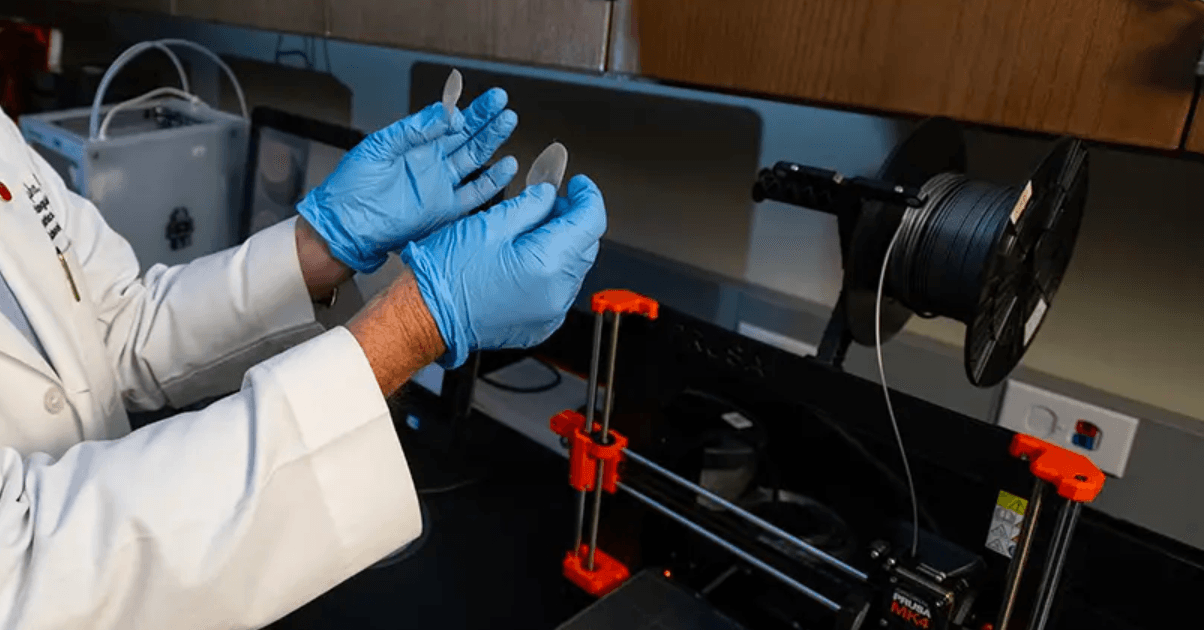
A team of University of Mississippi researchers has been developing a way to use 3D-printed medicated patches to help close persistent sores and ulcers, building a customizable wound scaffold that delivers natural, biodegradable antibacterials over time to encourage healing. The work, published in the European Journal of Pharmaceutics and Biopharmaceutics, centers on a specific pairing of materials that the 3D printing community will find immediately recognizable: chitosan as the print substrate, and a plant-derived compound called p-coumaric acid as the active antimicrobial agent.
The clinical problem the scaffold addresses is stubborn. "People with limited mobility or diabetes often have wounds with reduced oxygen supply," said postdoctoral researcher Sateesh Vemula. "This can slow the body's normal repair process and make wounds more likely to become long-lasting, while also increasing the chance that bacteria can grow and lead to infection." Chronic wounds, including diabetic ulcers and pressure sores, can linger for months or even years.
Distinguished professor Michael Repka and his team are 3D-printing a breathable, patch-like structure that can be placed directly over the wound. The patch is built using chitosan, a natural material found in crustaceans, insects, and fungi. Chitosan helps accelerate the growth of skin cells while reducing inflammation and preventing infection, and the structure acts as a scaffold encouraging tissue growth while protecting the wound from outside contamination.
Repka was pointed about what the design deliberately avoids. "A lot of bandages are made with organic solvents, which actually hurt the wound-healing process, especially when applied intimately on the wound," he said. "With the materials and technique we're using, you don't have organic solvents. We're also not using traditional antibiotics over a long period of time, because that can often cause the bacteria to become resistant. That's the advantage of using natural products."
The full journal citation identifies the plant compound directly: the paper is titled "Development of 3D-printed chitosan/p-coumaric acid scaffolds for wound healing: antibacterial properties and drug release kinetics." P-coumaric acid is a hydroxycinnamic acid found widely in plants, and its use here sidesteps the antibiotic resistance concerns that shadow conventional wound-care treatments.
The biodegradability of the scaffold opens up a clinical use case that goes beyond surface wounds. Because the scaffold is biodegradable, it absorbs into the skin without requiring removal, eliminating the need for a secondary procedure when used on internal wounds. Doctoral candidate Nouf Alshammari put the safety case plainly: "The materials we used are also biodegradable. With time, the scaffold is going to be absorbed into the skin. And it's an inactive material, so we don't have to worry about side effects or toxic residuals."
Using a 3D printer to create the scaffold means the patch can be tailored to fit any wound on any part of the body. Repka extended that logic to scenarios well outside a hospital setting. "Depending on what kind of wound it is, a regular bandage might work well and this wouldn't be necessary," he said. "But there are a lot of applications for this technology. These could be printed in the field for, say, military applications. If you have a generator that can run these 3D printers, you can print the scaffold you need based on what kind of wound has occurred."
The scaffold still requires further testing and FDA review before clinical use. "The goal is translating this from research to patients," Repka said. The team at the University of Mississippi School of Pharmacy in Oxford, Miss., led by Repka alongside Vemula and Alshammari, has laid a materials and process foundation that uses technology already sitting in thousands of makerspaces and labs to address a wound-care challenge medicine has struggled with for decades.
This article was produced by Prism’s automated news system from verified source data, official records, and press releases, then run through automated quality and moderation checks before publishing. The system is built and supervised by the people who set the standards it runs under. Read our full AI policy.
Did this article answer your question?