UTRGV Professor Wins NSF CAREER Award to Speed Defect‑Free Metal 3D Printing
UTRGV assistant professor Farid Ahmed won a five-year NSF CAREER grant of about $570,160 to speed up defect-free metal 3D printing using tailored thermal inputs and AI-based defect prediction.
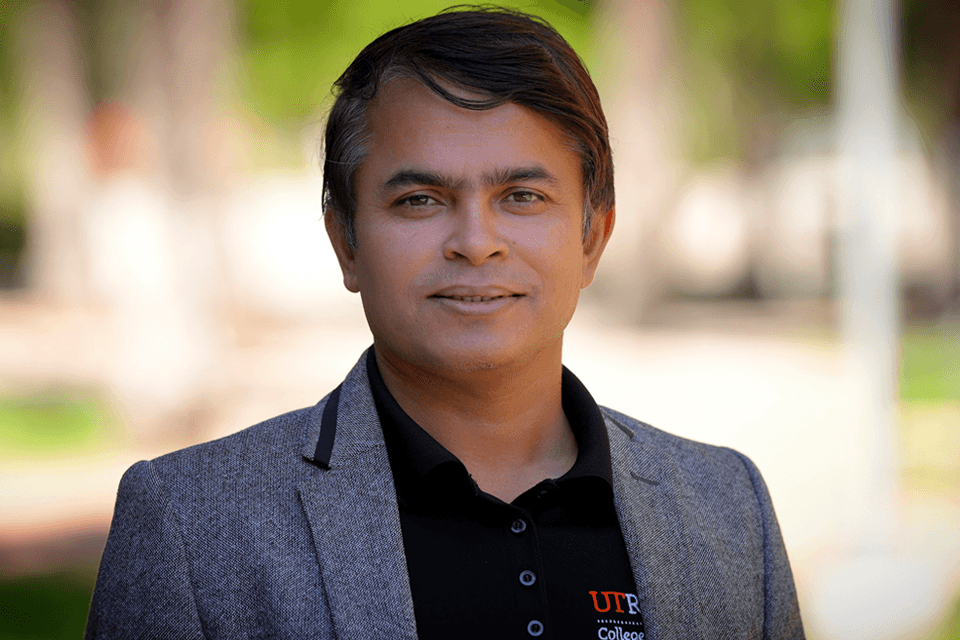
Dr. Farid Ahmed at UTRGV secured a five-year NSF CAREER award worth approximately $570,160 to tackle one of metal additive manufacturing’s persistent bottlenecks: increasing deposition rates without introducing defects or excessive residual stress. The project, titled "Integration and Tailoring of Thermal Energy Sources to Enable Defect‑Free High Deposition Rate Metal Additive Manufacturing," targets a practical jump in throughput for metal 3D printing processes by experimenting with combinations of thermal inputs and machine intelligence.
Ahmed’s research will explore laser beam shaping alongside induction heating and ultrasonic vibration to manipulate the melt pool and the thermal history of builds. The project pairs those tailored thermal-energy strategies with AI-based defect prediction to control porosity, cracking, and residual stress while pushing higher deposition speeds. The aim is explicit: raise net deposition rates while maintaining or improving part integrity and dimensional stability.
The immediate value to the 3D printing community is clear. Faster, defect-free deposition means higher throughput for service bureaus, shorter lead times for prototype and production runs, and lower scrap and post-processing costs. Controlling residual stresses reduces the need for time-consuming heat treatment or distortion compensation, and combining energy sources may enable new scan strategies and process windows for difficult-to-print alloys.
Ahmed’s award also includes funded student training and workforce development activities to prepare graduates for careers in advanced manufacturing. That component connects lab advances directly to local and regional industry needs by producing engineers with hands-on experience in multi-modal processing, AI-enabled process control, and qualification of high-rate metal prints. For makers and small labs, students trained under the project could bring new process recipes and validation skills into local shops and startups.
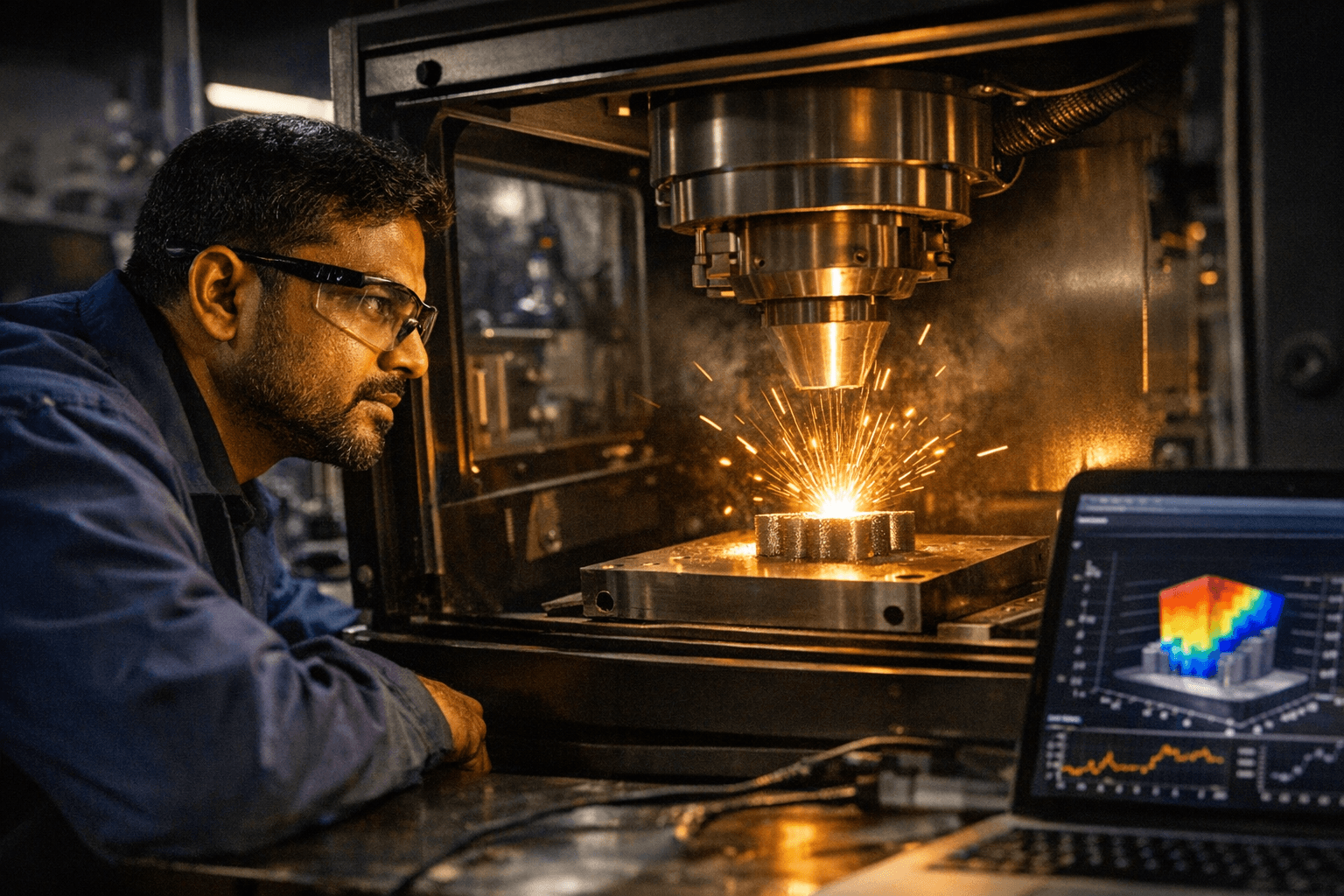
Methodologically, the integration of induction preheat, laser modulation via beam shaping, and ultrasonic vibration represents a systems approach to the melt pool rather than incremental tweaks to single parameters. Coupling those thermal tools with AI-based prediction aims to shift error control from after-the-fact inspection to predictive management during builds. If successful, the work could change how operators think about trade-offs between speed and quality.
Over the next five years, Ahmed will run experiments and develop predictive models that the community can adapt into existing directed-energy deposition and powder-bed platforms. For 3D printing operators, researchers, and students, expect new data and process concepts that prioritize speed without sacrificing print fidelity. The project promises faster parts, fewer surprises in the build chamber, and a pipeline of trained talent ready to apply high-rate, defect-aware metal printing in industry.
Know something we missed? Have a correction or additional information?
Submit a Tip