Waste-Free Color 3D Printing Could Unlock Detailed Hobby Models
Waste-free color printing could make multicolor models cheaper, cleaner, and far more practical by cutting the purge penalty that now eats time, filament, and bench space.

The hidden tax in multicolor 3D printing is not just in the slicer. It shows up in wasted filament, longer jobs, and the creeping sense that every extra color makes the model more expensive before it ever reaches your desk. Fabbaloo’s discussion of waste-free color printing lands on the core problem: desktop systems can already do multicolor work, but the purge burden often turns bold color ideas into simplified builds with broad bands instead of fine detail.
Why purge waste is the real bottleneck
The reason multicolor printing feels costly is simple. Every filament change has to be cleaned out somehow, and that usually means throwing material away during transitions. Bambu Lab says multimaterial prints are “very costly both in time and materials,” which captures the tradeoff hobbyists already know from experience: more color changes mean more plastic lost, longer print times, and more cleanup around the machine.
That matters because waste changes what people choose to print. When a model has to pay a purge penalty for every transition, designers naturally trim back gradients, tiny accents, and intricate surface shifts. Instead of pushing for expressive full-color pieces, many models get flattened into large color zones that are easier on the printer but less exciting on the bench. Fabbaloo treats that as a design problem as much as a materials problem, and that framing is important. If the printer can technically handle the palette but the workflow punishes every transition, the limiting factor is no longer creativity. It is overhead.
How current systems try to contain the mess
The major manufacturers are already treating waste as a workflow issue, not just a hardware one. Bambu Lab’s support materials specifically focus on reducing waste during filament changes, which is a clear acknowledgment that the problem starts in the slicer and the job setup as much as in the machine itself. Prusa’s MMU documentation takes the same approach: purge volume can be adjusted in printer and filament settings, and the purge tower is enabled by default for reliability.
Mosaic Manufacturing’s Palette system follows the same logic. It uses a transition tower to purge filament between changes so the print stays clean and the material break is sharp. That tower helps preserve quality, but it also reinforces the central tension in single-nozzle multicolor printing. Clean transitions are possible, but they usually come with a waste stream attached.
For hobbyists, that means today’s multicolor setups are often a compromise between visual payoff and material efficiency. You can get striking results, but every additional color can add a hidden cost in filament and time. That is why the conversation around waste-free systems matters so much. The goal is not just prettier models. It is a workflow that stops punishing ambition.
The two paths forward: smarter flushing or no purge at all
The market is now splitting into two clear approaches. One tries to reduce purge waste through better flushing, smarter slicers, and more precise control over transitions. The other tries to eliminate the purge problem by changing the hardware itself.
Prusa’s Original Prusa XL is the clearest example of the second path. Prusa documents that it can print true multi-material jobs without any purge or wipe tower, which is a major shift for anyone who has spent time managing transition waste. Instead of cleaning color changes through sacrificial material, the XL approach removes the need for that cleanup step altogether.
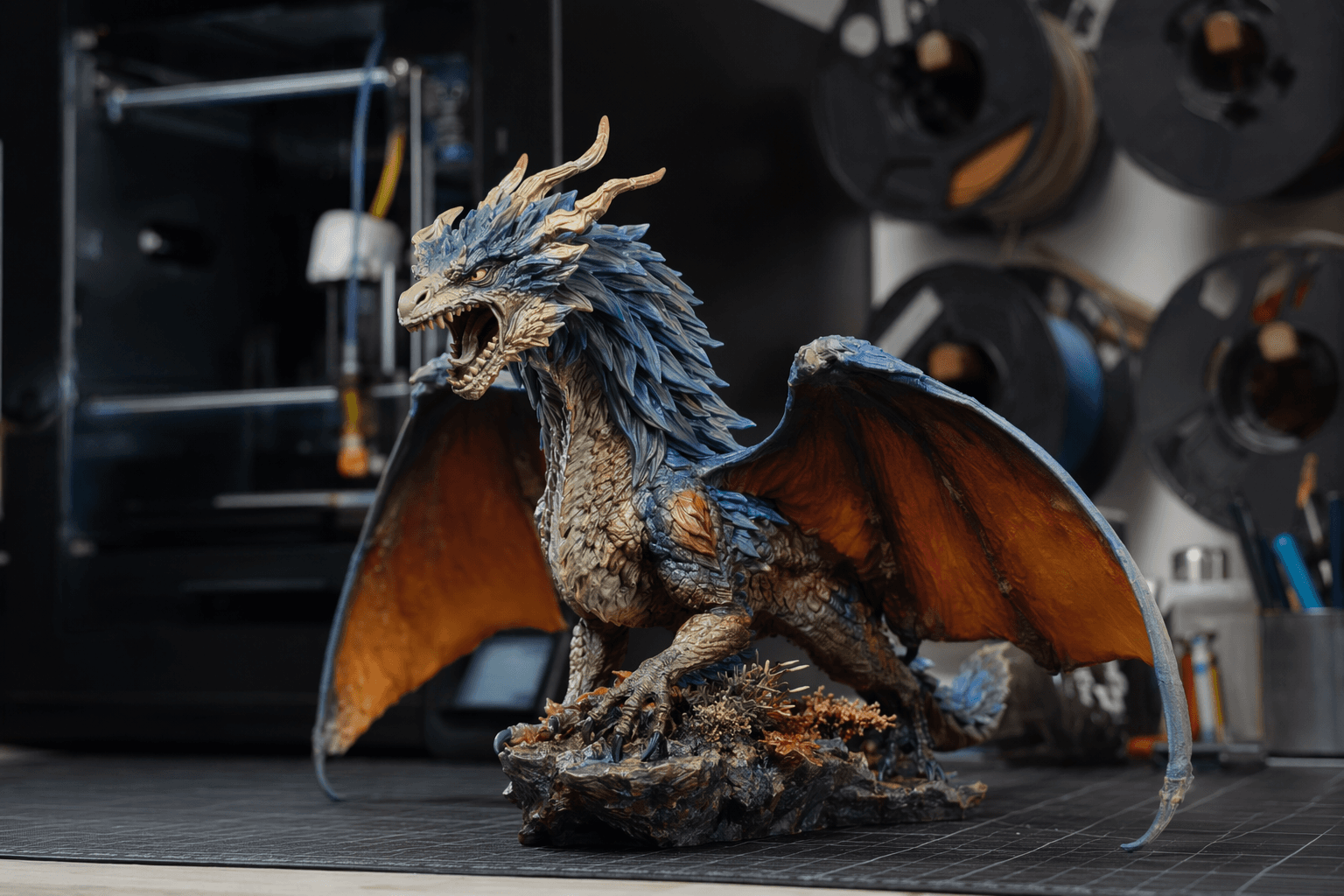
Bambu Lab is also pushing hard in that direction with the H2C. Its product page describes a purge-saving multi-material and multi-color printer with seven smart-swapping hotends and support for up to 24 filaments. That is a serious jump in ambition, and it shows how far the category has moved beyond simple two- or four-color novelty prints.
At the same time, Bambu Lab’s AMS system shows how current consumer demand is still stretching the limits of purge-heavy workflows. The AMS page says the system supports multicolor and multimaterial printing, and that multiple AMS units can be linked for up to 16 colors. That number matters because it shows the scale of the appetite. People do not just want a little accent color anymore. They want deep palettes, and they want them on desktop machines.
What waste-free color printing would change for hobby models
If the industry can actually cut purge waste in a meaningful way, the payoff for the maker world is immediate. Detailed badges, figures, display pieces, custom gifts, and branded objects all become more practical when every color change no longer feels like a penalty. That is the real promise behind waste-free color systems: they make ambitious models less wasteful in both plastic and budget.
The effect goes beyond cost per print. Less purge means less bench trash, fewer purge towers to clear, and less hesitation when you want to experiment with a more complex palette. It also changes the design language of the hobby. You can start thinking in smaller color regions, sharper contrasts, and more intricate visual storytelling instead of backing off to save material.
That is especially relevant in a market where multicolor jobs are increasingly common but still frustratingly inefficient. The user communities around Prusa and Bambu Lab have been talking about purge waste for years, and that long-running frustration is part of why the current wave of “waste-free” systems feels overdue rather than futuristic. The technical race is no longer about whether desktop color printing can work. It is about whether it can work without making every model feel like it comes with a second pile of trash.
Why the next leap is about efficiency, not just more colors
Fabbaloo’s point is easy to miss if you focus only on hardware specs. The competition is no longer just about adding more nozzles or more filaments. Systems such as INDX and Vortek point to a broader industry shift toward practical efficiency, where the real upgrade is not color count by itself but how little material gets sacrificed to get there.
That is the part hobbyists should watch closely. If waste keeps falling, color printing becomes more than a novelty feature bolted onto a standard printer. It becomes a tool that can handle detailed, expressive, production-ready models without turning every project into a purge experiment. The promise is not only better prints. It is a cleaner bench, less wasted spool, and a color workflow that finally matches the creativity people already want to bring to their printers.
Waste-free color printing is not just about saving plastic. It is about making detailed multicolor design feel normal, affordable, and worth the time again.
This article was produced by Prism’s automated news system from verified source data, official records, and press releases, then run through automated quality and moderation checks before publishing. The system is built and supervised by the people who set the standards it runs under. Read our full AI policy.
Did this article answer your question?