Zellerfeld and Nike Showcase Multicolor, Multi-Shore 3D-Printed Air Max
Zellerfeld and Nike unveiled a multicolor, multi-shore 3D-printed Nike Air Max 1000 that uses TPU and pellet-fed workflows to tune comfort and durability.
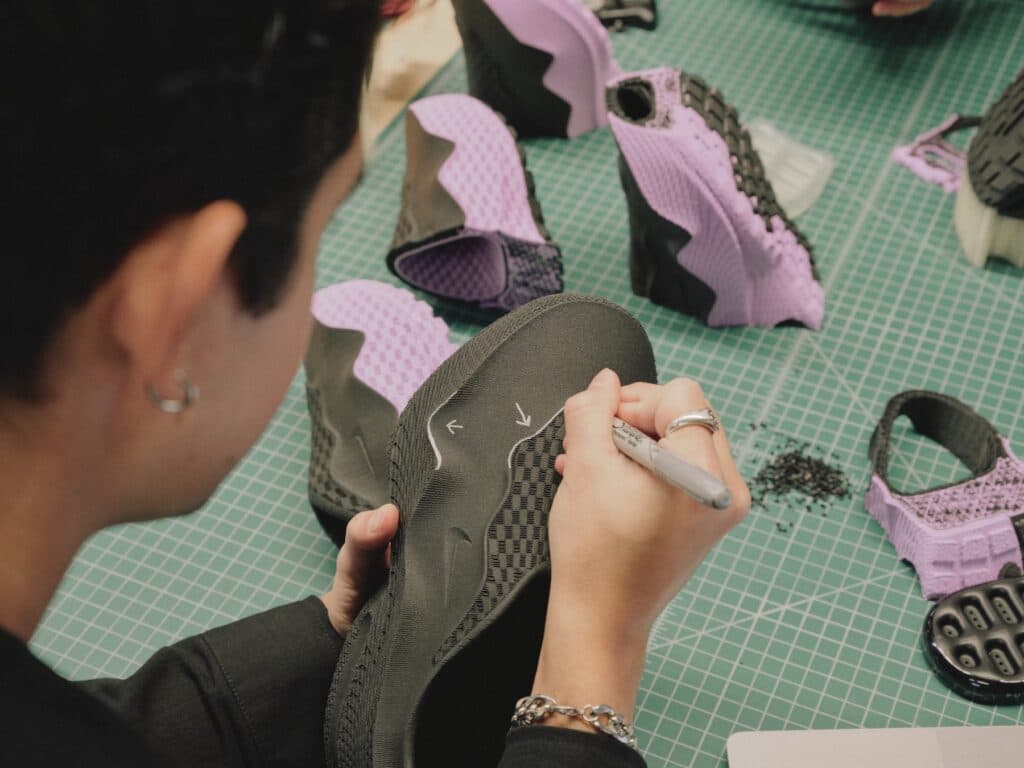
Zellerfeld and Nike showed a new multicolor, multi-shore 3D-printed Nike Air Max 1000 that points toward more functional, customizable footwear made in a single build. Images released January 22, 2026 show Zellerfeld printing multiple colors and suggest the use of different shore-hardness materials within one run, demonstrating practical multi-material capabilities beyond standard color-only prints.
The prototype uses TPU for flexible regions and appears to combine multiple TPU formulations to achieve varying durometers across the sole. The approach takes advantage of pellet-fed workflows, which let a manufacturer switch materials or feed different compounds into the same toolpath. By placing firmer compounds in high-wear zones and softer compounds under the heel and forefoot, Zellerfeld can tune comfort, energy return, and durability without assembling separate components.
Zellerfeld matched these material experiments with in-house software and hardware work. The company’s in-house slicer and machine development enable precise toolpath control and material transitions that typical consumer slicers and single-extruder systems cannot handle. That vertical control matters for complex footwear because timing, purging, and inter-material bonds determine how reliably different shore materials print and adhere in a single pass.
For the 3D printing community, the collaboration highlights a few clear takeaways. Pellet-fed extrusion scales material choice and reduces filament cost pressure for TPU parts, making multi-shore soles more economically feasible for pilot runs or small production runs. Investing in a customized slicer or advanced material-switching head unlocks design freedom for bespoke colorways and functional zoning, but it also requires system-level engineering and testing to ensure repeatable print quality and long-term wear performance.

Cost and competitive factors remain central. Zellerfeld’s machine and software work de-risks the technical side, but per-unit economics, cycle time, and post-processing still shape whether this approach can compete with traditional injection molding at scale. Zellerfeld faces the usual trade-offs between customization and high-volume cost efficiency, and Nike will weigh those metrics against manufacturing partners and retail expectations.
For makers and small labs, the demonstration is actionable: consider experimenting with pellet-fed TPU to explore durometer zoning, prioritize bond testing when mixing shore values, and evaluate slicer strategies that allow clean transitions. For sneakerheads and designers, multicolor, multi-shore printing opens new colorways and performance customization without gluing or stitching separate midsoles.
This collaboration signals a step toward on-demand, functionally graded footwear. Watch for further testing data, wear reports, and production decisions that will determine whether multicolor, multi-shore 3D printing becomes a standard option for custom and small-batch sneaker runs.
Know something we missed? Have a correction or additional information?
Submit a Tip