Kittery, Maine Closes Pickleball Courts at Emery Field Over Noise Complaints
Barely 22 months after Kittery opened Emery Field pickleball courts with federal grant money, a sound study and a threatened lawsuit forced their immediate closure.
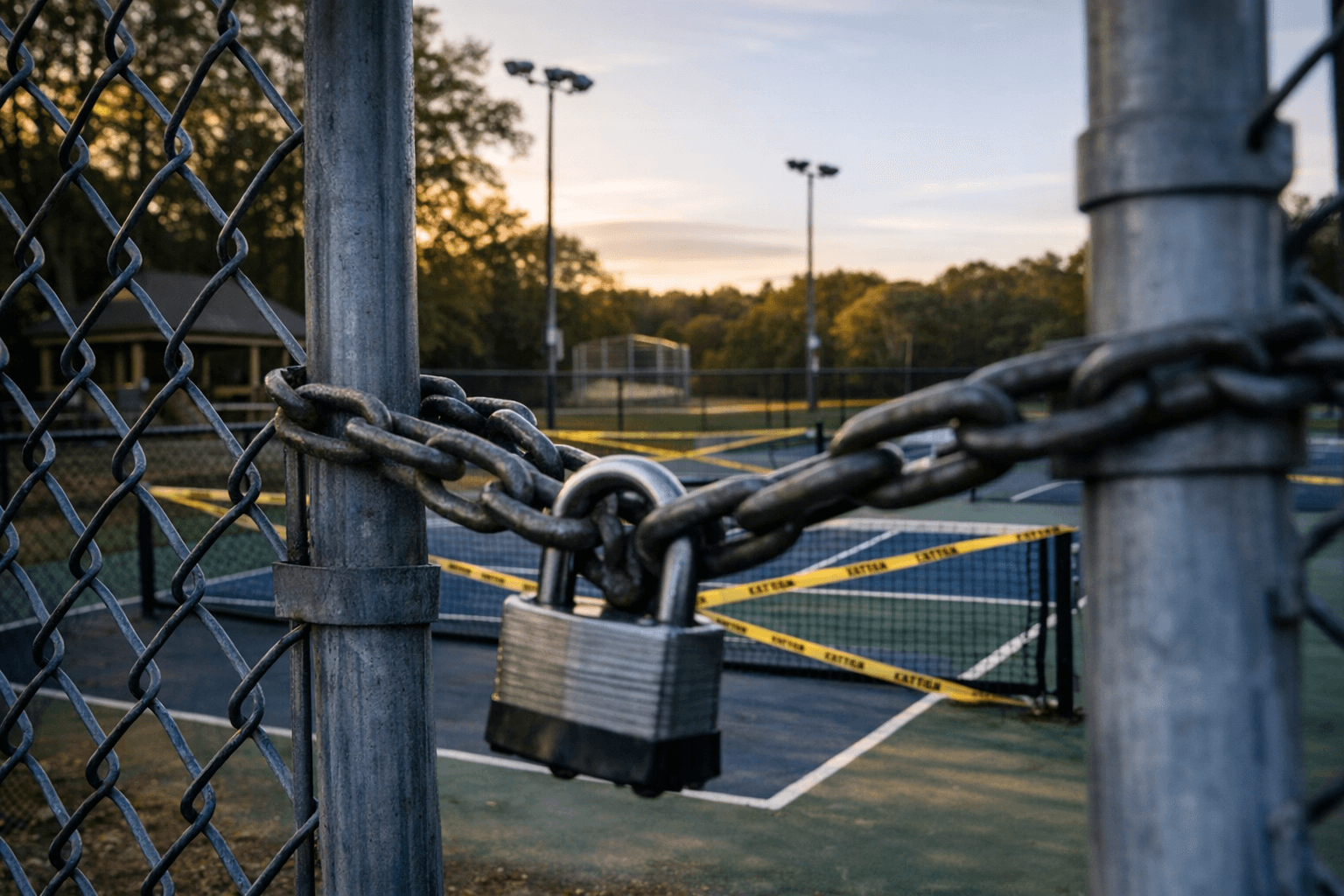
Pickleball's most persistent conflict isn't happening on the court. It's playing out in town halls across the country, and Kittery, Maine's closure of the Emery Field pickleball courts on April 10, 2026 is the latest evidence of what happens when a municipality builds courts first and asks the neighborhood questions later.
The decision came after a town-commissioned sound study confirmed that play at Emery Field was exceeding Kittery's daytime noise limits. The closure is immediate while the town searches for a less residential alternative site. What makes the story particularly pointed is how recent the investment was: Kittery built the courts using a $300,000 Land and Water Conservation Fund grant and opened them with a ribbon cutting in June 2024, barely 22 months before play stopped.
The problem was baked into the design from the start. Town officials converted an existing basketball court to keep costs affordable, a choice that placed the playing surface adjacent to at least five homes, with one neighbor's property reportedly just six feet from the courts. That neighbor, a trauma nurse who works nights and depends on daytime sleep, became the focal point of the dispute. Town Council Chair Judy Spiller disclosed publicly that the resident "has sought medical care for the stress and health impacts of sleep deprivation caused by the Emery Field pickleball courts." Her attorney threatened to sue the town if conditions did not change.
Kittery's response was measured, if ultimately futile. Town Manager Kendra Amaral contracted sound engineers to assess the site and develop recommendations. The town installed sound barriers and planted trees. The affected homeowner added new windows. Players voluntarily shifted their start times later into the morning. None of it cleared the noise threshold. Spiller and town leaders concluded that retrofitting or relocating the courts to a genuinely quieter configuration would cost substantially more than the town was prepared to spend.
Jim White, Director of Pickleball for Kittery and York, didn't dispute the central problem. "It's a loud game. No question about it," he said. Town Councilor Cyrus Clark drew a harder line: "We made a mistake putting the pickleball court there. And I think the only resolution is for it to no longer be a pickleball court."
Kittery is not alone. Maine communities in Round Pond and Christmas Cove have navigated similar disputes since pickleball converted local tennis courts. Nationwide, the pattern repeats: courts go up quickly on repurposed surfaces near homes, and the acoustic math eventually forces a confrontation.
The town said it is evaluating alternative sites in less residential settings, a process that will involve acoustic planning, community engagement, and likely buffer setbacks or scheduling restrictions. Players in Kittery currently have access to three indoor courts at the Kittery Community Center on Rogers Road, but the outdoor public option, opened with federal dollars less than two years ago, is gone. How other municipalities handle the same pressures, and how early they bring neighbors into the conversation, will likely determine whether Emery Field becomes a one-time cautionary tale or a template for what comes next.
Know something we missed? Have a correction or additional information?
Submit a Tip