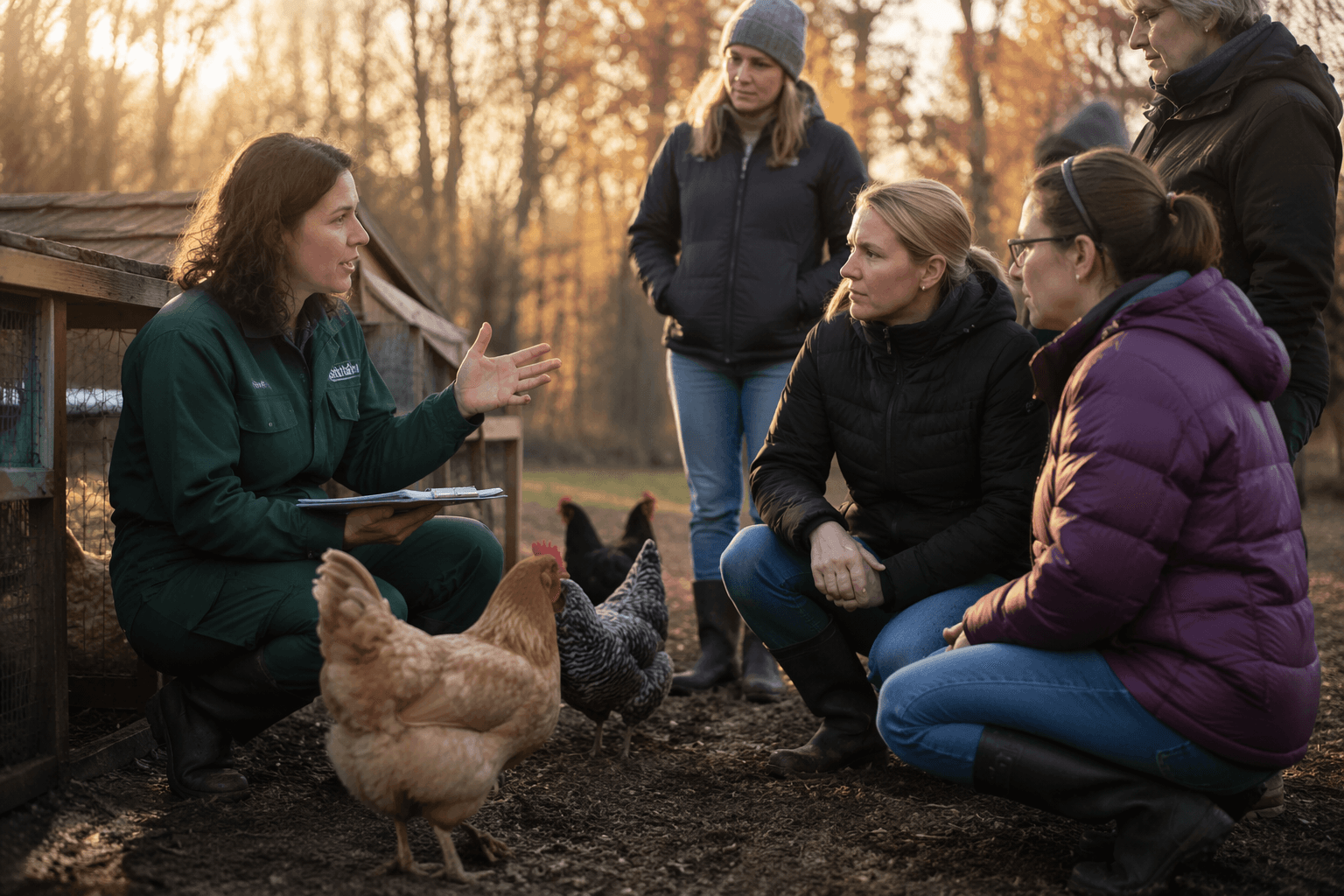
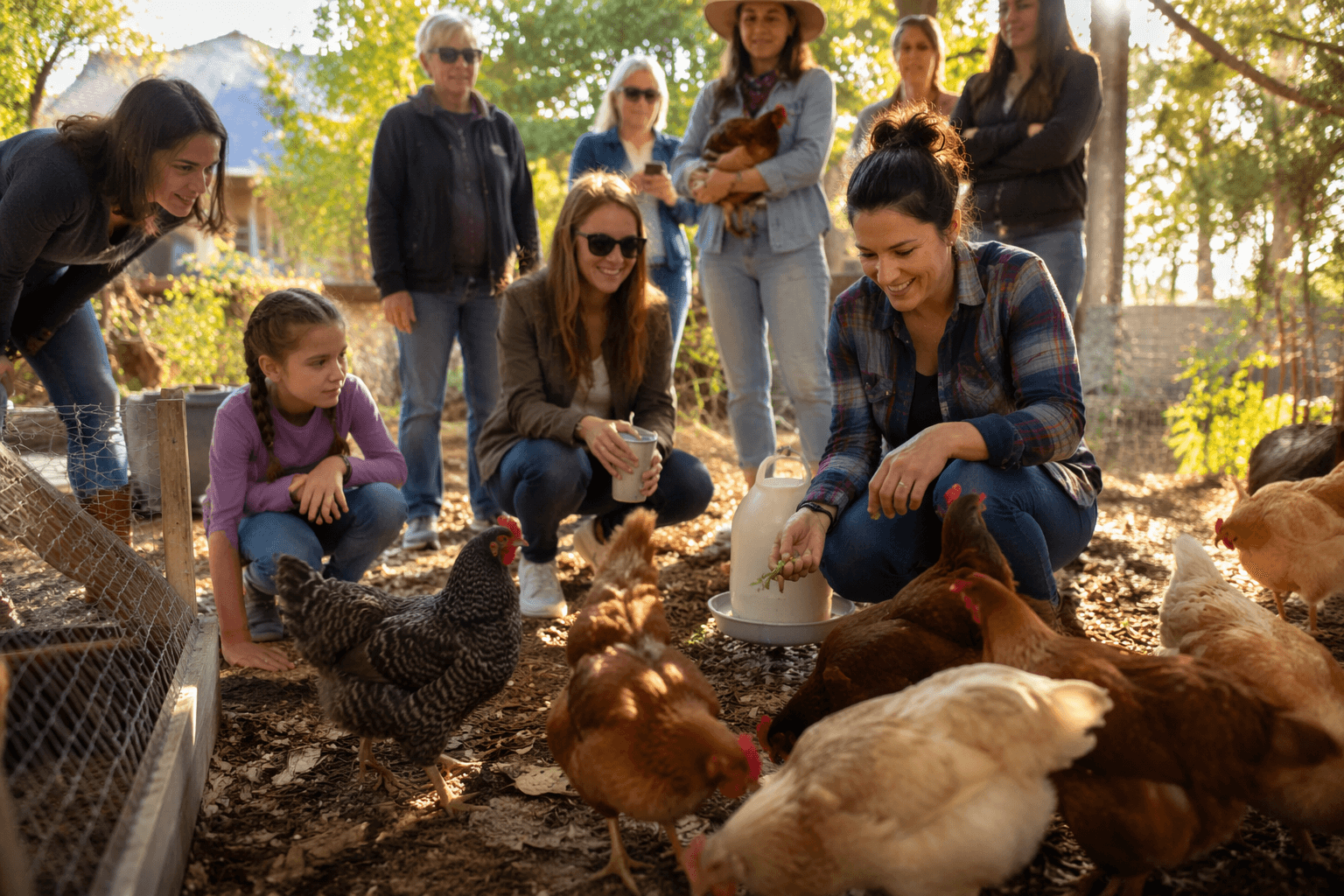
12 steps to start a healthy backyard chicken flock
Healthy flocks start with the unglamorous choices: local rules, coop space, breed fit, and biosecurity before the first bird ever comes home.

On a city lot, the wrong flock can be illegal before it ever reaches the coop. The first year with backyard chickens is a chain of decisions: legality, coop size, and breed choice come before feed, health, weather, and eggs. Most mistakes that lead to odor complaints, sick birds, and expensive do-overs happen before the flock is settled in.
Step 1: Check the rules before you bring home birds
The first move is local: make sure chickens are allowed where you live. Many urban and suburban areas restrict backyard chickens, and some ban roosters outright, so the right flock for a rural property may be illegal on a city lot. Cornell Cooperative Extension and the CDC both direct would-be keepers to check neighborhood requirements and local resources before getting birds.
That legal check should shape everything that follows, including whether you can keep roosters, how many hens you can have, and whether a homeowner association or local animal control office has extra rules.
Step 2: Decide what you want the flock to do
The UC Davis survey of 1,487 backyard chicken owners shows how varied the hobby has become: respondents came from urban, suburban, and rural settings, 71% kept fewer than 10 chickens, and 70% had been keeping chickens for less than five years. The main reasons they gave were home food use, gardening, and pets.
The flock should fit your reason for keeping it. If you want eggs, temperament and steady laying matter more than novelty color. If you want birds around the garden or for the kids to learn with, you will make different choices than someone who is focused on maximum egg count or a mixed-use backyard setup.
Step 3: Start with flock size, not single birds
Chickens are flock animals, so one of the biggest beginner mistakes is thinking in ones and twos. The UC Davis data, with most owners keeping under 10 birds, reflects what works in a typical backyard, but the number still has to match your space, your tolerance for daily chores, and your local rules. Small flocks are easier to feed, clean, and monitor, but too few birds can leave you with social problems inside the coop.
The right starting size also depends on whether you want to keep hens only or add a rooster, where roosters are allowed at all. Since many jurisdictions ban them, and since one rooster can change the sound and behavior of the yard fast, it is better to plan the flock around hens first and make any rooster decision only after the legal and social picture is clear.
Step 4: Build the coop around protection and maintenance
A good coop is not just a shelter. Oregon State University Extension and Virginia Tech Extension recommend coops that protect birds from predators and weather, include ventilation, are easy to maintain, and reduce the risk of injury and possibly disease.
Penn State Extension recommends adapting existing buildings for poultry when they can be made dry and draft-free, a useful option for first-year keepers tempted to overbuild.
Step 5: Match breed choice to climate and temperament
Breed choice is where a lot of first-timers get seduced by appearance. The smarter test is whether the breed can handle your climate, fit your temperament goals, and work for the role you want birds to play in the yard. A hardier bird for a cold area, a calmer bird for a family flock, and a more productive layer for an egg-first household will all look different on paper, even if they all seem like “just chickens” at the feed store.
This is also where the urban-suburban reality matters. If your birds will live close to neighbors, you want calm hens, manageable noise, and a setup that does not become a nuisance.
Step 6: Decide whether you want chicks or pullets
A big first-year fork in the road is baby chicks versus pullets, and that choice changes everything from time commitment to handling. Chicks require more attention, more equipment, and more patience, while pullets are closer to laying age and easier for families that want a faster transition into eggs. The difference is not cosmetic: it changes how much brooder care, observation, and early management you need before the birds ever move outdoors.
That decision should be made before you buy feed or finish the coop. If your household wants the full raising experience, chicks can be rewarding. If your goal is a steadier first season with less brooder work, pullets are usually the more practical route.
Step 7: Set up feed and water as daily essentials, not extras
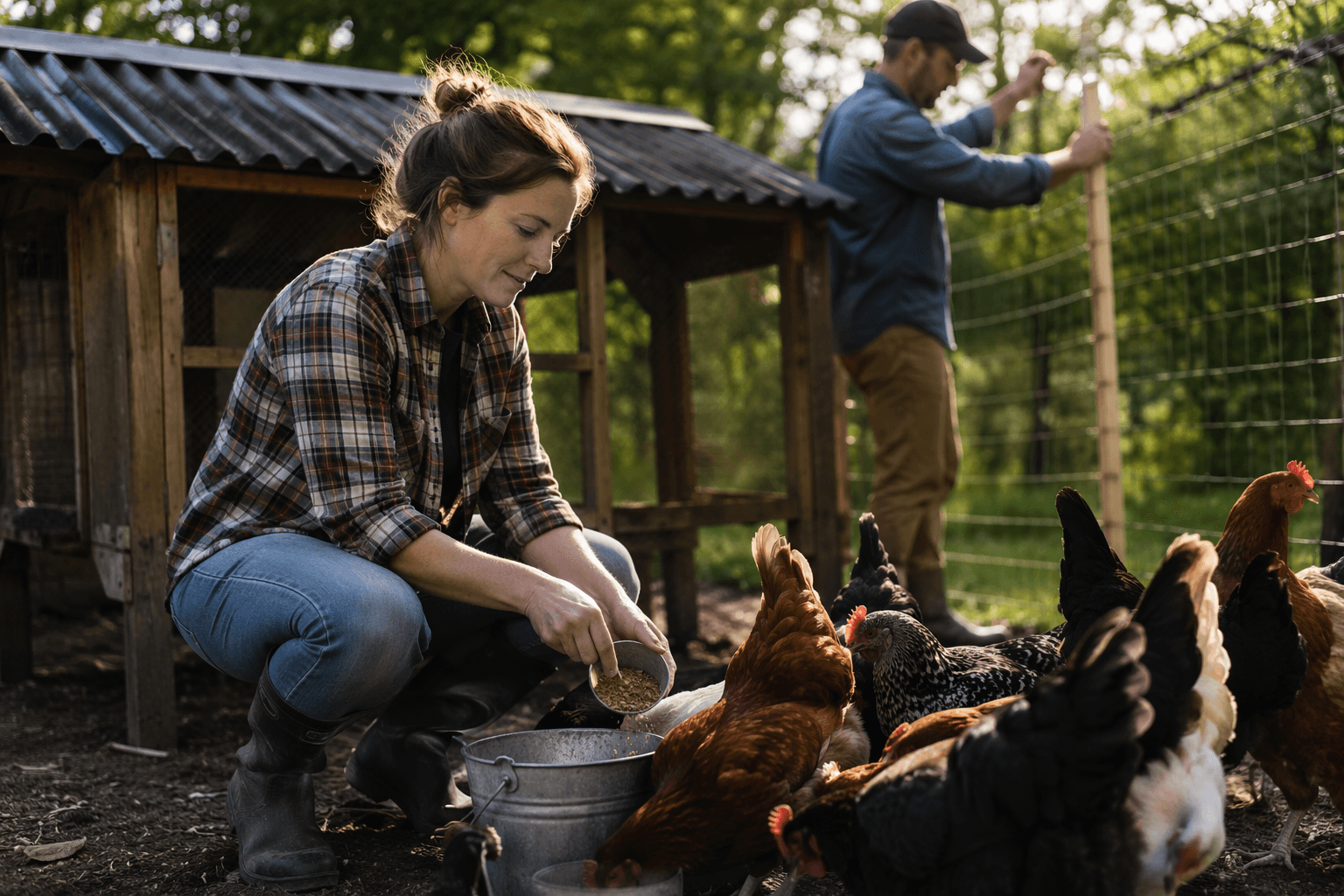
A first-year flock needs routine, and that routine starts with feeding and watering in a way that keeps birds clean and the coop dry. Chickens do best when feed and water are easy to reach, protected from contamination, and checked on a regular schedule, because spilled water turns into damp bedding and damp bedding turns into odor, flies, and a harder cleaning job. In a backyard setting, the chore is not just filling containers but keeping the whole system sanitary.
A feeder in the wrong place, a waterer that leaks, or a setup that invites bedding into the water can create problems long before a bird looks sick.
Step 8: Build a chick-care plan before hatch day or pickup day
If you choose chicks, the home setup has to be ready before they arrive. That means a brooder, warm and dry conditions, safe bedding, and enough attention to keep small birds from chilling, piling, or getting wet. Safe chick handling is part of the plan too, because the CDC’s guidance on backyard poultry makes clear that birds can carry germs that can make people sick, and young children, older adults, and immunocompromised people are at higher risk.
CDC-reviewed outbreak data documented 53 live-poultry-associated Salmonella outbreaks in the United States from 1990 to 2014, with 2,630 illnesses, 387 hospitalizations, and 5 deaths, and the median patient age was 9 years. A later CDC analysis found outbreak-associated illnesses linked to backyard poultry have nearly tripled and hospitalizations have more than quadrupled compared with that earlier period, which makes handwashing, keeping birds out of the house, and careful chick handling part of basic flockkeeping.
Step 9: Make daily, weekly, and monthly routines part of the plan
Daily checks catch problems early, weekly cleanups keep the coop manageable, and monthly maintenance keeps the system from drifting into a mess that takes a whole weekend to fix. The routine matters because a chicken that goes off feed, isolates itself, or starts acting oddly often tells you something before the rest of the flock does.
If you build a habit of watching water, feed, droppings, and behavior every day, you are much more likely to catch trouble before it becomes a vet bill or a dead bird.
Step 10: Treat biosecurity as part of normal care
USDA APHIS built its Defend the Flock program around a simple idea: biosecurity helps keep birds healthy and reduces the risk of avian influenza and other infectious diseases. In a backyard flock, that means keeping the coop clean, limiting unnecessary traffic around birds, and avoiding habits that move germs from one place to another.
Cornell’s heritage-poultry exhibit places backyard chickens in decline in the first half of the 20th century as industrialization spread, while UC Davis ties chicken keeping to surges during the Depression and wartime rationing. The current resurgence is tied to fresh eggs, food sourcing, sustainability, and family involvement.
Step 11: Prepare for hot days, cold snaps, and weather swings
Seasonal care starts with the housing you already built. Virginia Tech Extension emphasizes protection from weather, predators, injury, and possibly disease, and Oregon State University Extension emphasizes ventilation, which becomes especially important when temperatures climb. A coop that is too sealed traps moisture and heat, while one that is too open can leave birds drafty and stressed when the weather turns.
That is why “dry and draft-free” still matters so much when people adapt garages, sheds, or other existing structures. Hot weather, cold weather, and wet weather each stress birds differently, so the flock that stays healthy is the one whose housing and routines change with the season.
Step 12: Know what to expect when eggs and roosters enter the picture
Laying day is not the finish line, it is the beginning of a new management stage. When hens start laying, the routine changes around nest boxes, egg collection, and keeping the coop clean enough that eggs stay usable and birds stay calm. If roosters are part of the picture, remember that legality, noise, and flock behavior all become more complicated very quickly.
This article was produced by Prism’s automated news system from verified source data, official records, and press releases, then run through automated quality and moderation checks before publishing. The system is built and supervised by the people who set the standards it runs under. Read our full AI policy.
Did this article answer your question?