How deep litter keeps backyard chicken coops drier and easier to manage
Deep litter saves work only when the coop stays dry, airy, and lightly stocked. If odor, moisture, ammonia, or pests show up, it is failing fast.
A sharp ammonia smell, damp litter, flies or mites, and packed corners that stay wet after you turn them are blunt signs that deep litter is hiding a sanitation problem, not solving one. In a covered coop with good ventilation and manageable flock density, the method can cut down cleanout cycles and turn manure into a slow compost process inside the house itself.
What deep litter is actually doing
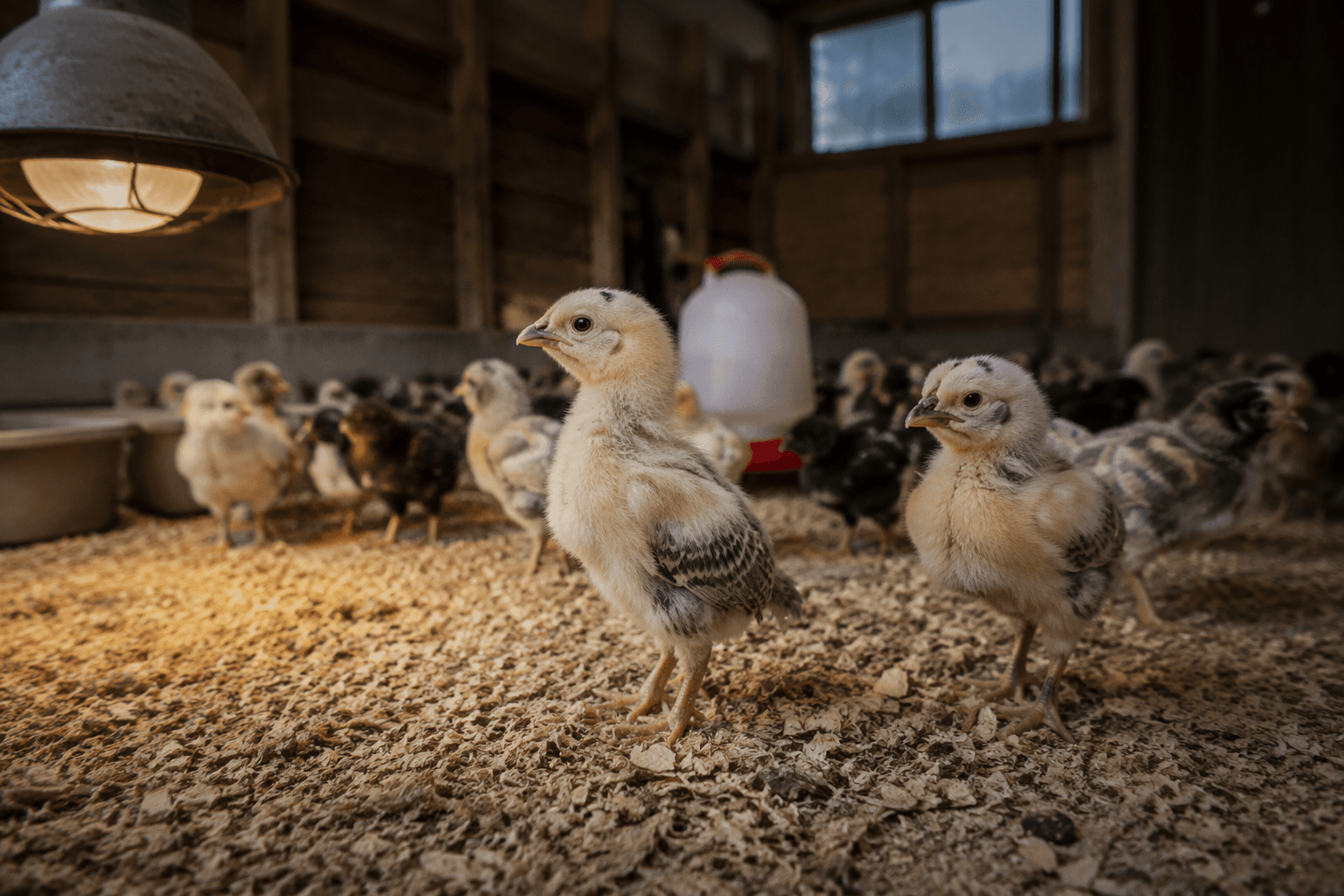
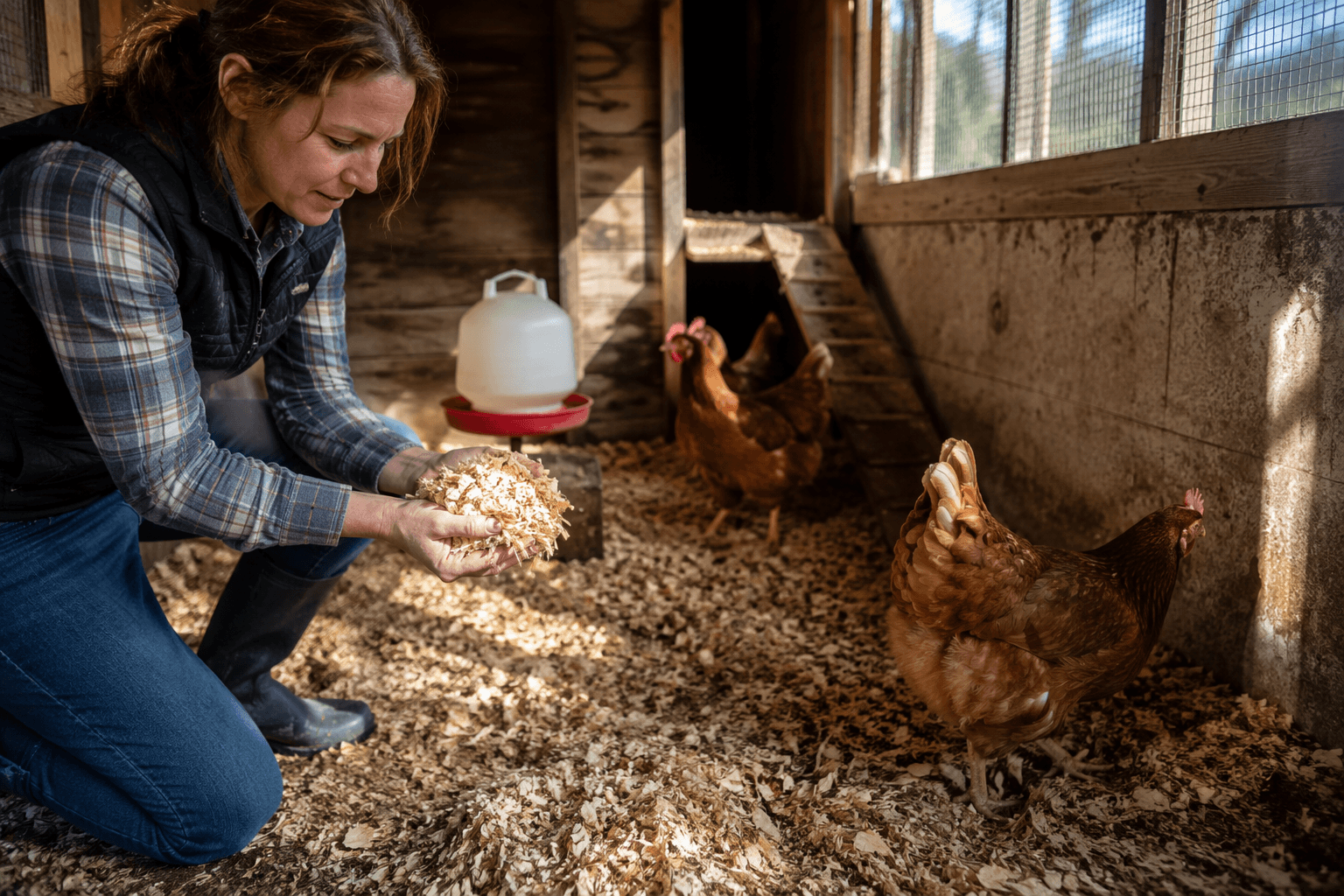
Deep litter is a built-up litter system, in Backyard Poultry’s phrasing, and the logic is simple: chicken manure is nitrogen-heavy, while bedding supplies carbon. Pine shavings, straw, leaves, wood chips, paper shreds, and other compostable bedding help absorb moisture and balance the droppings as they break down. In the best setup, the floor stays loose and dry enough to be fluffed regularly, which keeps oxygen moving through the material and helps keep ammonia in check.
Dry litter is critical because it helps control ammonia levels in poultry housing, Mississippi State University Extension Service says. Deep litter is not a license to let the coop get wet. Once bedding turns matted or anaerobic, the system stops acting like compost and starts acting like a smell trap.
When it works and when it backfires
Deep litter fits best in a coop that has a protected floor, solid roof coverage, and enough ventilation to let moisture escape. It also works better when flock size stays predictable, because droppings building up faster than you can manage them will overwhelm the bedding layer. If the coop floods, if rain blows in, or if the run turns to mud and is tracked inside, deep litter can make cleanup harder rather than easier.
The method is much less forgiving in cramped housing. More birds in less space means more manure, more moisture, and faster buildup, which is exactly where odor and pests start to show up. A damp coop is not a successful deep-litter coop, it is a cleanup problem that has simply been postponed.
For most backyard setups, the question is whether your coop can stay dry enough, ventilate well enough, and hold a bedding layer deep enough to keep droppings from turning into a slick, sealed mass.
How to start it without creating a swamp
A practical deep-litter setup begins with a clean coop and a base layer of organic, compostable bedding about five or six inches deep. Fresh bedding goes on top as the lower layers start to break down, rather than stripping the floor bare every few days. The litter should be turned often enough to keep it loose and help oxygen reach the lower layers, with wet clumps removed before they spread.
A simple sequence keeps the system on track:
1. Start with a dry, clean coop and a thick bedding base.
2. Add droppings-rich bedding on top of that base rather than dumping it all out.
3. Remove any obviously wet or matted spots right away.
4. Add fresh bedding as the surface layer thins.
5. Turn or fluff the litter often enough to keep it airy.
A well-managed coop may only need refreshing a couple of times per year, Hobby Farms wrote in a deep-litter coop-maintenance article published on October 14, 2020. That slow turnover can mean far fewer full refreshes, but only when the bedding stays dry and loose.
What not to ignore once the litter starts building
Built-up bedding is not supposed to become a surprise mound in the corners. In an Ann Arbor article on the deep litter method, litter had accumulated to almost a foot in the corners of a coop. That kind of buildup only works if the lower layers are still composting properly and the surface stays workable.
Penn State Extension treats poultry waste management as a matter of reducing the spread of pathogens as well as handling waste. Deep litter should be treated as a compost-and-health system, not just a chore shortcut. If the coop smells sour, feels wet underfoot, or draws pests, the manure is not being managed well enough to protect the flock.
Why keepers keep coming back to it
Deep litter is not a new poultry fad. A Real Time Farms post published on June 17, 2011 discussed the method as part of backyard chicken keeping, and Robert Plamondon’s Rural Life called it “another lost technique from the golden age.”
Keepers were still asking the same practical question in an Ask Extension knowledgebase entry dated June 24, 2017 from Lane County, Oregon: does this work in my coop, with my birds, in my climate? If your coop stays dry, your ventilation is good, and the flock is sized so droppings do not outrun the bedding, deep litter can make life easier; if odor and moisture are already creeping in, the system is telling you to clean up, not layer on more straw.
This article was produced by Prism’s automated news system from verified source data, official records, and press releases, then run through automated quality and moderation checks before publishing. The system is built and supervised by the people who set the standards it runs under. Read our full AI policy.
Did this article answer your question?