Amazon Bath Bombs Offer Strong Margins for Private-Label Sellers
Bath bombs still pencil out on Amazon, but only if your packaging, listing, and compliance game is tighter than your fizz recipe.
Why bath bombs still attract private-label money
Bath bombs can still produce strong margins on Amazon, but the easy money is gone. The category looks attractive because the products are low-cost to make, lightweight to fulfill, highly giftable, and in demand year-round with clear holiday spikes, yet the shelf is crowded with thousands of listings and hundreds of thousands of monthly searches tied to bath bombs and related keywords. That is the opportunity and the trap: demand is real, but generic products get buried fast.
The best-selling logic is straightforward. A compact item with visual appeal, repeat-purchase potential, and strong wholesale-to-retail spreads in gift sets is exactly the kind of product Amazon sellers keep chasing. The bath-bomb market itself keeps expanding too, with one estimate putting global value at USD 1,859.7 million in 2023 and projecting USD 2,837.8 million by 2030, while another forecast values the market at USD 2.12 billion in 2025 and sees it reaching USD 3.76 billion by 2034. Even with competition rising, the category is still large enough to support new entrants who can do more than source the cheapest puck of fizz.
The margin is real, but it is not just a sourcing story
Private-label bath bombs work when the product is cheap to produce and expensive enough in presentation to command a premium. That sounds simple, but the guide’s point is sharp: the margin does not come from finding a bargain supplier alone. It comes from reliable packaging, strong product photography, a listing that converts, and a product that earns five-star reviews instead of arriving cracked, scuffed, or leaking scent into the box.
This is where a lot of would-be sellers misread the category. A cute bath bomb that looks great on a countertop can still fail as a marketplace item if it shatters in transit or shows up with sloppy labeling. Amazon can refuse, return, or repackage inventory that arrives with inadequate or non-compliant packaging or labeling, so the real margin test starts before the first unit hits FBA, not after the listing goes live.
What actually wins on Amazon
Made Natural’s guidance is practical about what sells: bath bombs are especially well suited to lifestyle photography and short-form video because they are visual products. Color, swirl, foam, and gift presentation all translate cleanly into ecommerce assets, which matters when shoppers cannot smell or touch the item before buying. That makes the category more forgiving for brands that can stage a clean-looking box, a polished color story, and a use case people recognize instantly.
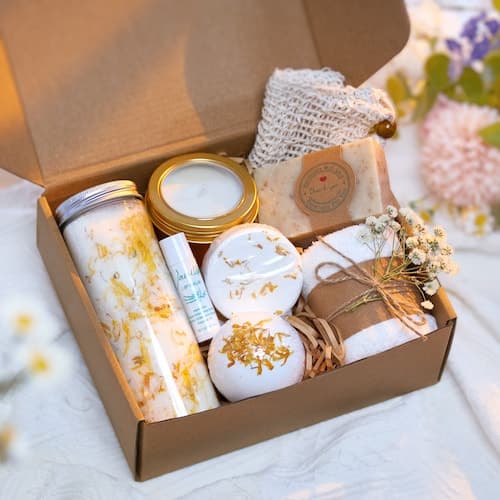
The other advantage is giftability. Bath bombs are easy to position for holidays, stocking stuffers, birthday bundles, self-care kits, and spa-themed sets. That is why the category stays active beyond a single season, and why holiday spikes can be so useful for sellers who have inventory and packaging ready before demand rises.
Private label beats wholesale arbitrage when the brand is the product
The guide pushes sellers toward private label rather than wholesale arbitrage for a reason. Wholesale arbitrage depends on finding existing product spread, while private label lets you control the packaging, the listing, and the brand story. In a crowded bath-bomb aisle, that control matters more than squeezing a little extra discount from a reseller.
The practical path is the same one serious Amazon sellers already know: 1. Source a formula you can reproduce consistently. 2. Choose packaging that survives FBA handling. 3. Build a listing that makes the product look premium, not generic. 4. Earn review velocity through dependable quality and presentation. 5. Scale only after the packaging and compliance are locked down.
That sequence sounds basic, but in bath bombs it is the business.
FBA packaging is not a footnote
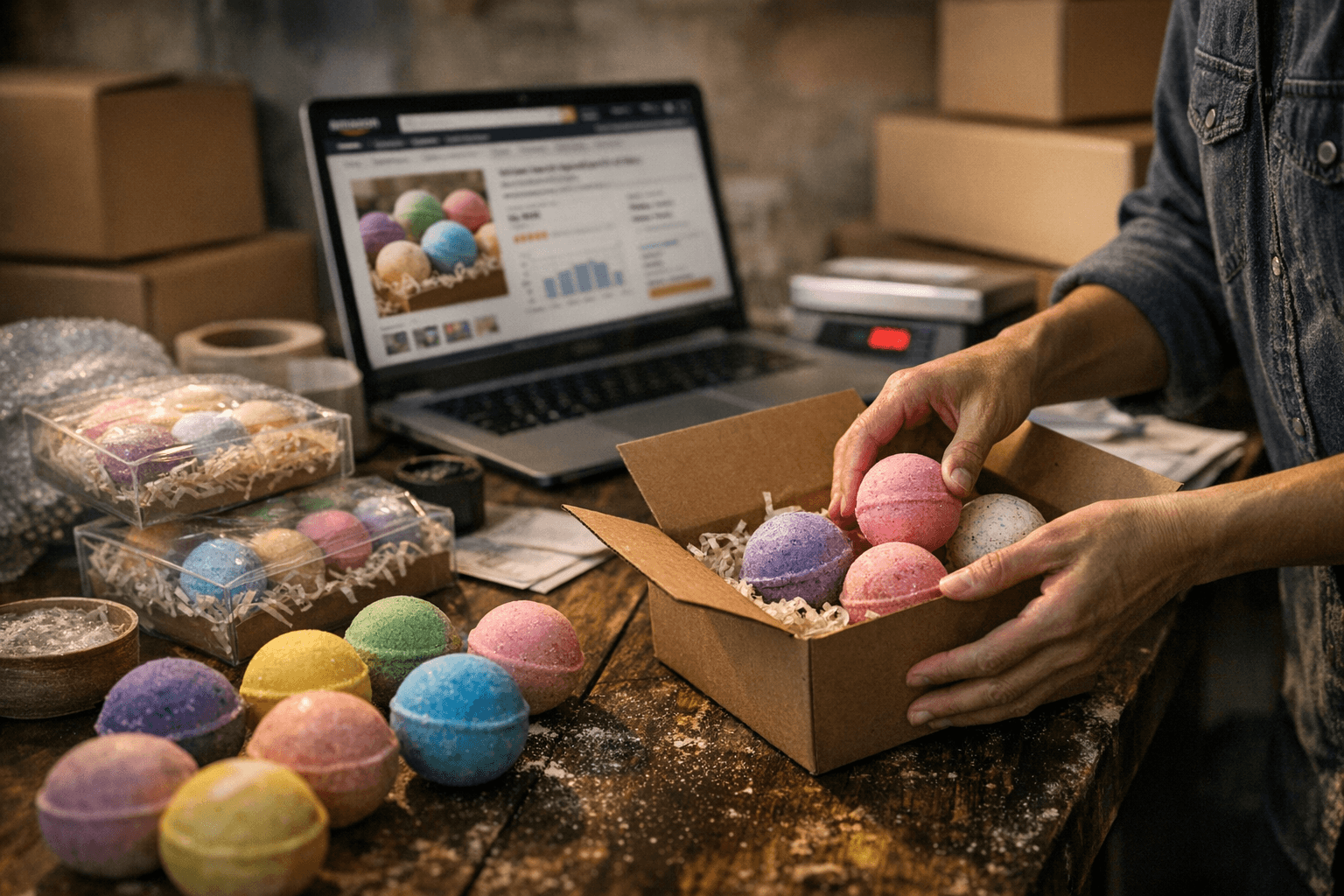
Amazon’s fulfillment rules are a make-or-break detail in this category. If your product arrives with weak seals, damaged cartons, or labeling that does not meet requirements, Amazon may refuse it, return it, or repackage it. For bath bombs, that means the box is part of the product, not an afterthought.
The smart play is sturdier packaging than you think you need. Bath bombs are fragile in a different way from glass or electronics: they can chip, dust off, absorb moisture, or lose their polished look if the carton does not protect them. If you are planning for FBA, packaging needs to survive storage, sorting, and the kind of handling that exposes shortcuts immediately.
Compliance is where hobby thinking breaks down
This category also lives under cosmetic rules in the United States when the product is marketed to cleanse, beautify, or alter appearance. That pulls in FDA cosmetics labeling requirements, including identity of the commodity, net contents, and the name and place of business of the manufacturer, packer, or distributor. The Fair Packaging and Labeling Act, enacted in 1967, still sits underneath that structure.
For a seller scaling beyond a kitchen-table setup, MoCRA makes this even more relevant. FDA announced updated Cosmetics Direct materials on February 11, 2026 to support cosmetic facility registration renewal, which is another reminder that bath-bomb brands crossing from hobby into business need a real compliance workflow. The message is simple: if you want Amazon-scale sales, you need Amazon-scale paperwork.
Hazmat review and product safety are part of the business model
Bath bombs are not automatically hazardous materials, but Amazon does define dangerous goods broadly as substances or materials that may pose risk during storage, handling, or transportation because they are flammable, pressurized, corrosive, or otherwise harmful. Amazon also has an FBA dangerous goods program for products classified as hazmat, so ingredients and packaging need to be checked carefully rather than assumed to be routine.
That matters because bath bombs often include fragrances, dyes, and essential oils, and those ingredients can trigger review questions depending on formulation and presentation. Safety is not abstract here. In March 2026, the Consumer Product Safety Commission recalled Surreal Brands’ Tubby Tots Fizzy Flask Bath Magic bath foam sets because of an impact hazard, which shows that bath-related products can face enforcement even when the issue is packaging or product design. A 2025 United Kingdom recall of a bath bomb citing BMHCA, a prohibited cosmetic ingredient there, is another reminder that ingredient control and label discipline matter as much as branding.
Who should try private label, and who should stay elsewhere
Private label makes sense if you already know how to make a consistent bath bomb and can handle the unglamorous side of ecommerce: packaging tests, listing copy, photo work, and compliance paperwork. If you can keep units intact in transit, give shoppers a polished presentation, and manage the FBA side without cutting corners, Amazon can still be a strong channel.
Direct-to-consumer can be the better fit if your strength is branding and community rather than fulfillment scale. Craft-fair sales also make sense if your product sells best when buyers can smell it, pick it up, or discover it in person. Those channels reward texture, scent, and conversation in a way Amazon cannot.
- Choose private label if you can manufacture consistently, package for shipment, and build a brand that stands out in search.
- Choose DTC if your strength is repeat traffic, storytelling, and owned audience growth.
- Choose craft fairs if your product sells on scent, feel, and instant impulse, not search ranking.
If you are choosing between them, use this rule of thumb:
The bottom line
Bath bombs still offer strong margins for private-label sellers, but only when the product is built like a marketplace item, not a hobby project. The category has the scale, the visual appeal, and the year-round demand to work on Amazon, yet the winning formula now includes packaging integrity, FBA readiness, cosmetic compliance, and a listing strategy that can survive a crowded search page. The fizz may be the hook, but the business is won in the box.
This article was produced by Prism’s automated news system from verified source data, official records, and press releases, then run through automated quality and moderation checks before publishing. The system is built and supervised by the people who set the standards it runs under. Read our full AI policy.
Did this article answer your question?