Bath Bomb Workshops Make Kids' Birthday Parties a Hands-On Hit
Skip the goodie bags: a bath bomb workshop turns every kid into the maker, sending them home with a fizzy creation they built themselves.

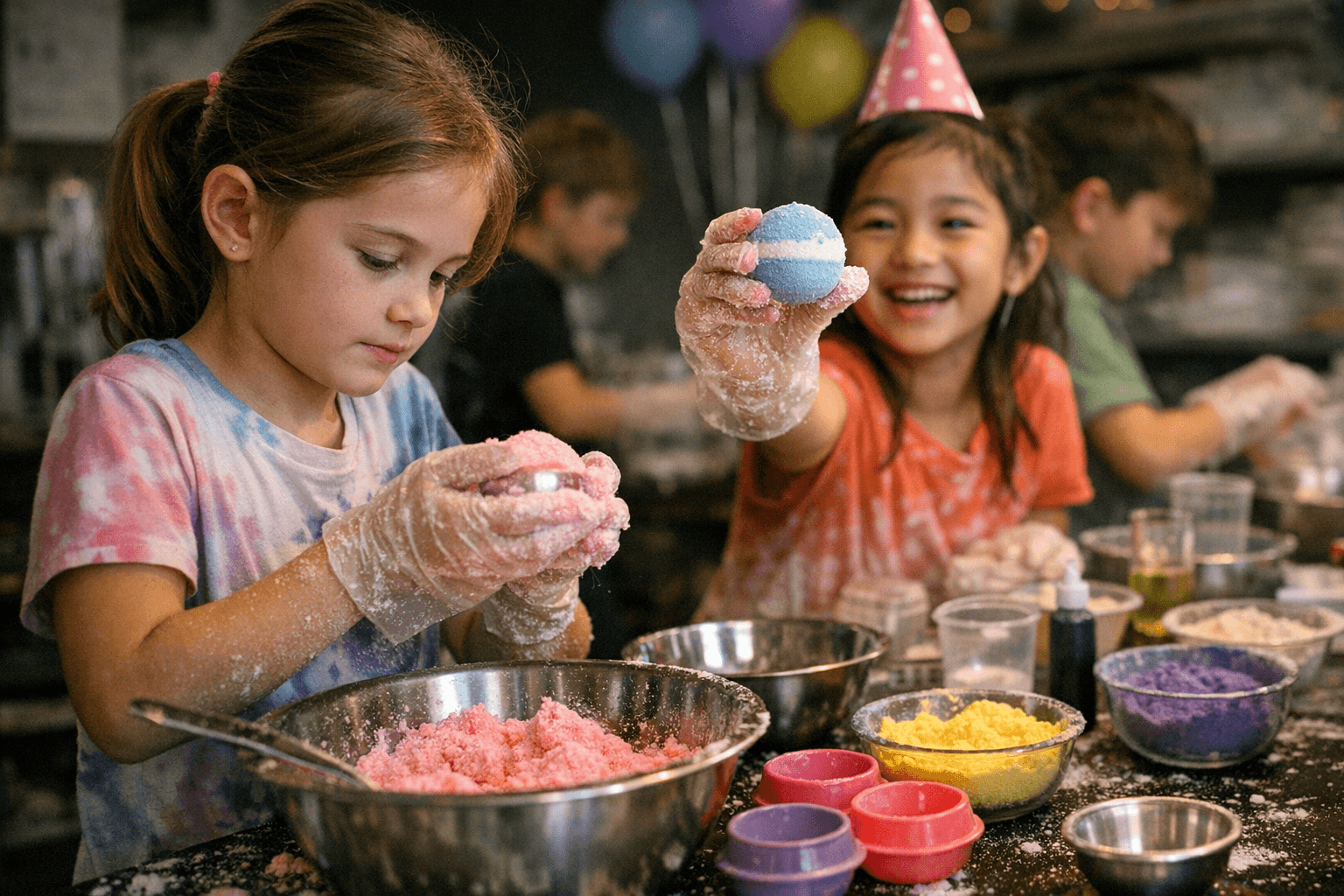
Forget the grab bag stuffed with plastic toys and half-melted candy. A growing number of parents are replacing the traditional party favor with something the kids actually make themselves, and bath bomb workshops are leading that charge. The premise is beautifully simple: each child mixes, colors, scents, and molds their own bath bomb during the party, then walks out the door with a handmade product they built from scratch. The activity is the favor, and the favor is the memory.
Why a Bath Bomb Workshop Works for Kids' Parties
The core appeal is that it solves two problems at once. Parents increasingly want to move away from disposable goodie bags, which tend to generate plastic waste and end up forgotten on a bedroom floor within 48 hours. At the same time, keeping a room full of kids engaged long enough for the adults to breathe is its own challenge. A workshop-style activity threads that needle neatly: it is hands-on enough to hold attention for a solid stretch of time, and the finished product is genuinely usable. BathBombFlings, who outlined this party format in detail, frame the finished bomb as "the take-home gift that actually means something," and it is hard to argue with that when a child has personally chosen the color, picked the scent, and packed the mold themselves.
The broader shift is real: 2025 and 2026 have seen more parents rethinking how birthday party budgets are spent, with experiential alternatives to the traditional goodie bag gaining serious traction. A bath bomb workshop fits squarely into that trend. It produces less plastic waste, avoids sugary treats for kids whose parents may be managing dietary restrictions, and generates the kind of social-media-worthy moment that parents actually want to share.
Who It's For and Where to Host It
The format works best for school-aged children, with younger kids joining in under close parent supervision. The hands-on nature of mixing and molding suits ages roughly six and up, though with an adult stationed at each table, even younger guests can participate meaningfully. The supervising-adult model also doubles as a built-in party structure: parents are not standing around awkwardly waiting for cake; they are part of the activity.
As for venue, the workshop scales across a range of settings. A condo function room or community center gives you flat tables, easy cleanup flooring, and enough space to spread out multiple mixing stations. A home living room works perfectly well for smaller guest lists, especially if you lay down a plastic tablecloth and keep the dry ingredient stations contained. The key is surface area and organization rather than any specialized equipment.
What You Need: The Supply List
The ingredient list for a kids' workshop stays deliberately simple, prioritizing safety and ease of handling over complexity. The core supplies are:
- Pre-measured dry ingredient mixes (baking soda and citric acid, portioned per child before the party starts)
- Molds in various shapes, which each child fills and presses
- Skin-safe colorants in a range of kid-friendly hues
- Child-appropriate scents, ideally pre-selected and handled at a dedicated adult station
- Aprons or old shirts to protect clothing from colorant stains
Pre-portioning the dry mixes before guests arrive is one of the most important logistics moves you can make. It cuts down on mess, eliminates the risk of a child dumping too much citric acid into the bowl, and keeps the activity moving at a pace that holds attention. Adult-supervised scent stations allow kids to make meaningful choices without unsupervised handling of concentrated fragrance oils, which keeps the experience both safe and sensory-rich.
Running the Workshop: A Suggested Timeline
Keeping a group of kids on task requires a clear sequence with built-in momentum. A rough framework that works for most group sizes:
1. Set up stations before guests arrive: pre-measured dry mixes at each seat, molds laid out, colorant options clearly displayed
2. Open with a quick demo, showing the full process from mixing to molding so every child knows what the finished product looks like
3. Let each child mix their dry ingredients first, then move to the color-mixing step, which tends to generate the most excitement and the most mess
4. Guide scent selection at the adult station, where fragrance options are pre-poured into small sniff-test vials
5. Mold, press, and set the bombs to dry while the group moves on to cake or another activity
6. Return to the drying station near the end of the party to package the finished bombs
The packaging step is worth planning deliberately. Sticker labels personalized with each child's name, plus organza bags or simple tissue wrapping, transform a damp bath bomb into a proper party favor. It also gives kids a second moment of pride in what they made.
Making It Party-Ready: The Finishing Touches
The small details that separate a memorable workshop from a chaotic craft table are mostly about preparation. Have aprons or dedicated craft shirts ready at each seat. Pre-label the take-home bags so packaging goes smoothly at the end. If you are hosting in a home or community room without utility sinks nearby, set up a rinse station with a water jug and a bowl so hands can be cleaned between the color-mixing and scent-selection steps.
For small local bath-bomb shops and makers, the workshop format also represents a scalable revenue stream: hosting parties or offering party packages that bundle ingredients, molds, and instruction. If you are a hobbyist who has been making bath bombs for your own use, a kids' birthday party is one of the most approachable ways to turn that skill into an event. The ingredient costs per child are low, the setup is replicable, and word-of-mouth from a well-run party tends to be immediate and enthusiastic.
The Bigger Picture
There is a clear shift toward valuing experiences over physical gifts in children's celebrations, with memory-making activities increasingly at the center of how families choose to mark birthdays. A bath bomb workshop delivers on that expectation in a format that is accessible to almost any venue and budget. Every child leaves with something they made with their own hands, something that will actually get used, and a story about the party that goes beyond "we had pizza and I got a plastic whistle in a bag." That combination, the tangible product plus the creative process, is exactly what parents are looking for when they plan parties that feel worth the effort.
This article was produced by Prism’s automated news system from verified source data, official records, and press releases, then run through automated quality and moderation checks before publishing. The system is built and supervised by the people who set the standards it runs under. Read our full AI policy.
Did this article answer your question?