How to Turn Your Bath Bomb Hobby Into a Home Kitchen Business
Your bath bomb hobby already has the margins of a real business — raw ingredient costs can run under $1 per bomb while retail prices hit $5-$12, but consistency is what converts a pastime into repeat customers.
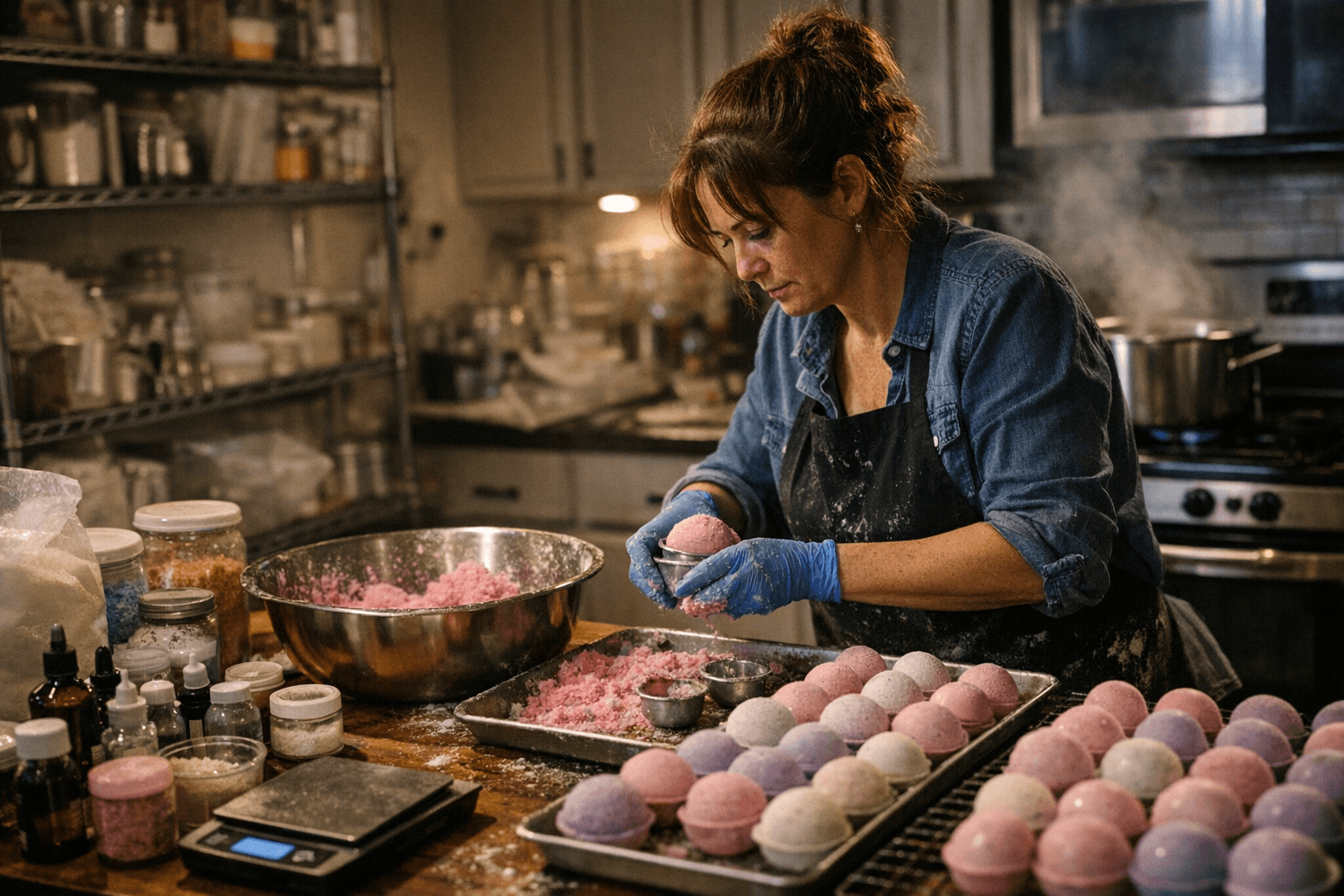
If you've been making bath bombs for a while, you already know the basics work. The fizz is reliable, your friends ask for batches as gifts, and you've started wondering whether you could actually sell these things. The short answer is yes, and the startup math is more forgiving than most side-hustle ideas you'll come across.
The Unit Economics Make Sense From Day One
Here's the case for bath bombs as a home business in plain numbers. Raw ingredient costs for a DIY bomb routinely come in under $1 per unit when you're sourcing smart. Retail prices in the market sit comfortably between $5 and $12 per individual bomb, with gift sets commanding $20 to $35, which puts gross margins in the 60-80% range for well-run small operations. Raw ingredient costs are very low, often under $1 per bomb for DIY, while retail prices of $5 to $12 per bomb and $20 to $35 per gift set create 60 to 80% gross margins.
On the equipment and ingredient side, a practical UK-focused startup estimate puts your initial outlay at roughly £70 to £100 covering both ingredients and basic tools, which translates to a comparably accessible entry point for US makers sourcing domestically. The point isn't the exact currency conversion; it's that this is one of the few food-adjacent craft businesses where you can be production-ready without a significant capital commitment.
What You Actually Need to Get Started
The core ingredient list is short: baking soda, citric acid, and cornstarch form the dry base, with carrier oils (coconut or sweet almond are popular), essential or fragrance oils, and colorants rounding out the formula. The complete equipment list is similarly lean.
- A digital scale ($20-$40) for precise measurements
- Mixing bowls (stainless steel holds up well)
- Molds, which range from $15 for basic shapes to over $100 for custom designs
- A spray bottle for applying liquid components
- Protective gear for handling citric acid
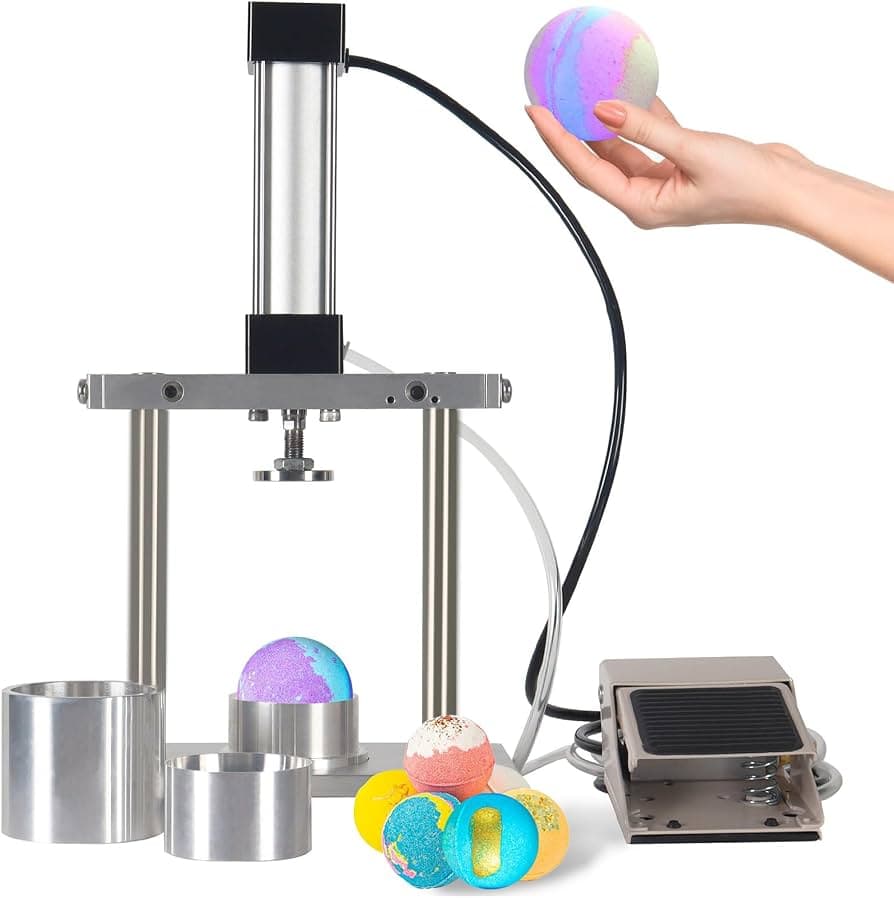
Your initial equipment needs are modest: a digital scale for precise measurements, stainless steel mixing bowls, and protective gear. Molds can range from $15 for basic shapes to over $100 for custom designs. Silicone molds are worth serious consideration early on. They hold up well during the creation process, are easily cleaned, and silicone trays help you create multiple products in one batch.
A standard prototype recipe targets a 6cm bath bomb, which is a practical size that packs well, ships without breaking too easily, and photographs cleanly for product listings.
The Production Process: Where Hobbyists and Sellers Diverge
Making one batch for yourself and making twelve consistent batches to sell are genuinely different disciplines. The most common failure point is liquid addition, and the fix is specific: use witch hazel in a spray bottle rather than water. Water triggers the citric acid-baking soda reaction immediately, giving you a clumping, fizzing mess before you've finished mixing. Witch hazel adds the moisture needed to bind the mixture while dramatically slowing that premature activation.
The step-by-step process runs like this:
1. Combine all dry ingredients (baking soda, citric acid, cornstarch) in a large bowl and whisk until evenly distributed.
2. Mix your liquid ingredients (carrier oil, essential oils, colorant) separately.
3. Add the liquid mixture to the dry ingredients very slowly, stirring continuously to avoid triggering the fizz reaction.
4. Use the spray bottle filled with witch hazel to add controlled moisture until the mixture holds its shape when squeezed.
5. Pack the mixture firmly into molds. Press hard and overfill slightly so the halves compress tightly.
6. Leave molds to set for at least 24 to 48 hours before unmolding.
7. Allow unmolded bombs to cure fully before packaging.
The curing step is the one most hobbyists-turned-sellers want to skip. Don't. Undercured bombs can develop surface cracks, lose structural integrity in transit, or fizz weakly in the tub, which is exactly the kind of customer experience that kills repeat sales. Let them dry fully, usually 24 to 48 hours, and test shelf life by storing in airtight containers and checking for crumbling or scent loss over time.
Quality Control Is Your First Real Business Investment
Consistency is what separates a seller from a hobbyist. One beautifully scented bath bomb impresses a friend; twenty identical ones in a gift box impress a paying customer enough to reorder. The investment that delivers the biggest return here is committing to a digital scale and documented recipes from your very first commercial batch.
A frequent mistake is buying ingredients in bulk too soon. Ingredients like oils and butters have a shelf life of one to two years, so starting with smaller quantities from suppliers with low or no minimum order quantities helps manage your initial cash flow. US-based suppliers like Bramble Berry and Nurture Soap are worth comparing on price and minimums before you commit to a vendor.
Plan for iteration before you go to market. Getting the ratios right, achieving consistent fizz, preventing cracking, and nailing scent throw takes practice, and you should expect 10 to 20 test batches before you have a product worth selling. That sounds like a lot, but each batch teaches you something, and those batches are cheap relative to the cost of a disappointed customer.
Pricing: Do the Math Before You Set a Number
The pricing calculation that actually holds up is cost-plus, worked through honestly. That means adding ingredients, packaging, labels, and your time per batch, then setting a retail price that gives you a real margin, not just coverage of materials. Calculate your total cost per bath bomb including ingredients, packaging, and your labor. Many sellers forget to pay themselves.
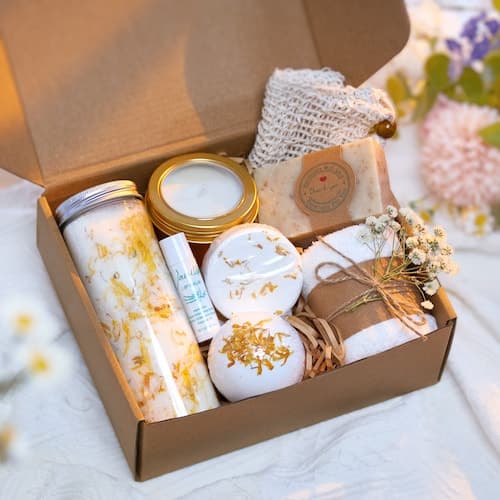
Once you have that cost-per-unit number, the pricing benchmarks in the market give you room to work with. A well-positioned small-batch bomb can realistically sell for three to five times its ingredient cost, which is the kind of margin that makes the business worth the effort. Packaging and branding choices influence where in that range you can credibly position. A plain shrink-wrapped bomb competes at the low end; a bomb in a kraft box with a handwritten card and a curated scent name competes higher up.
Standing Out: Scent, Packaging, and Niche
The competitive reality of the bath bomb market is that the basic product is widely available. Differentiation is what justifies your price and earns loyalty. Scent combinations are the most accessible place to start, because they're low-cost to experiment with and easy for customers to respond to emotionally. Beyond fragrance, consider who you're actually making for.
Define your niche, whether it's vegan, luxury, kid-friendly, or aromatherapy-focused, and use packaging, colors, and language that connect emotionally with your ideal audience. A bath bomb for sensitive skin formulated without synthetic fragrance occupies a different shelf than a neon-colored kids' bomb shaped like a dinosaur. Both can be profitable; neither competes directly with the other.
Testing the Market Before You Scale
The smartest move before investing in bulk ingredients or a proper e-commerce setup is to validate that real strangers will pay real money for your product. The most efficient way to do that is local: sell at craft fairs, farmers markets, or holiday pop-ups where you can price-test, watch customers' reactions, and collect feedback in real time. Table fees at local markets are modest, and the intelligence you gather is worth more than any focus group.
You can also test the market cheaply through small online listings before scaling. Etsy is the obvious starting point, both because the platform already attracts buyers looking for handmade goods and because listing fees are low enough that a few trial listings cost almost nothing relative to what you learn about which scents and sizes move. Bath bombs are considered cosmetics under U.S. law, as long as you don't make medical claims, which means you must follow FDA cosmetic labeling rules, including listing ingredients clearly and using proper terminology. Getting your labels right from the first listing protects you and signals professionalism to buyers.
The hobbyist who masters a consistent 6cm bomb with a documented recipe, a working cost-per-unit number, and two or three validated sales channels has already done the hard part. Scaling from there is mostly a logistics problem, and logistics problems are the good kind.
This article was produced by Prism’s automated news system from verified source data, official records, and press releases, then run through automated quality and moderation checks before publishing. The system is built and supervised by the people who set the standards it runs under. Read our full AI policy.
Did this article answer your question?