Bath bombs reveal how temperature speeds up chemical reactions
Bath bomb fizz is a fast, visible way to see temperature change reaction rates: warmer water shortens the fizz, and a simple kit makes the test easy.
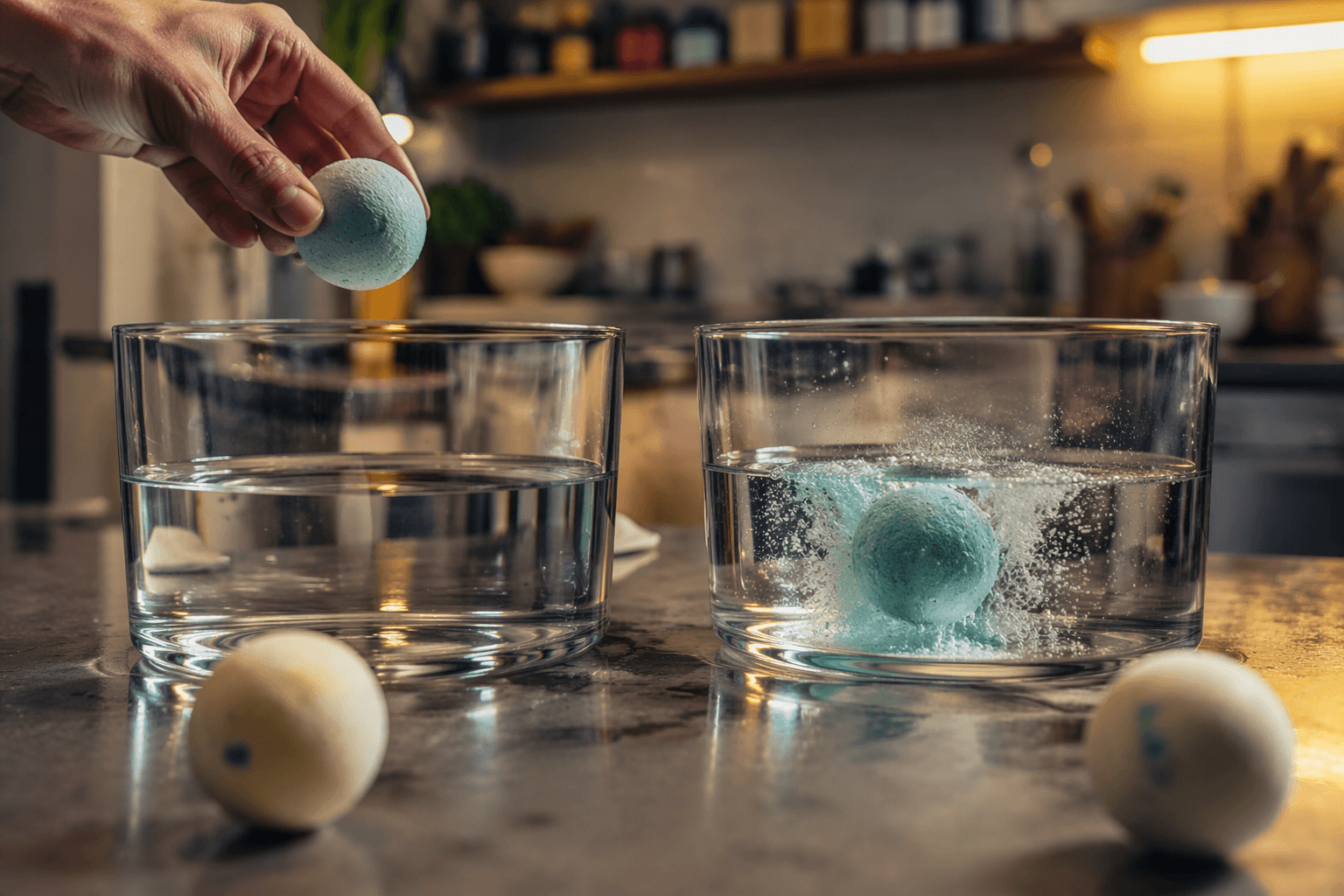
In the bath-bomb lab built by Meaghan Cabassa and Beth L. Haas, warmer water made the fizz finish faster. The classroom version turns a familiar bath product into a hands-on kinetics demo that can be set up in about an hour and taught in a 90-minute, two-day lesson.
Temperature changes the clock
Reaction time decreases as water temperature increases. In the bath-bomb lab, students saw a trend consistent with the Arrhenius equation and collision theory. Warm water gives the particles more motion and more frequent collisions, so the reaction moves faster; colder water slows that pace down.
If one bomb seems to vanish quickly while another hangs on longer, the first thing to check is the temperature of the water, because that variable can change the timing even when the recipe stays the same. NIST includes Arrhenius among the classic ways chemists model how rate changes with temperature, and bath bombs make that idea easy to see without special lab gear.
What goes into the bomb
The experiment is built around a plain, inexpensive ingredient list: 30 g sodium bicarbonate, 15 g citric acid, 15 g Epsom salt, 1 to 2 drops of food coloring, and 2 to 5 drops of water. The mixture can be packed into simple molds, including plastic Easter eggs, which makes the project easy to run in a classroom, outreach table, or kitchen sink setup.
The American Chemical Society’s AACT version keeps the build just as approachable, adding cornstarch, oil, essential oils, a thermometer, and a timer or stopwatch, along with test tubs of room-temperature, hot, and ice water. That setup keeps temperature as the clearest changing variable from batch to batch.
What the fizz actually is
Bath bombs work through a basic acid-base reaction between citric acid and sodium bicarbonate. That reaction produces carbon dioxide gas, water, and sodium citrate, and the gas release is what gives bath bombs their signature foam and break-apart effect. Once water reaches the ingredients, the reaction begins, and the speed of that reaction is what changes from one bath temperature to another.
The ACS teacher guide uses water as the solvent that lets bath bombs work. Too little water in the mix and the bomb may not bind properly; too much and it can start reacting before you ever drop it in the tub.
Why bath bombs belong in chemistry teaching
Cosmetic chemistry is prevalent in everyday life, but very few undergraduate labs were devoted to it when Cabassa and Haas designed this bath-bomb activity. The project uses a product people already know, then reveals the science hiding inside it.
The setup is also inexpensive and accessible. It works for outreach events, informal science demos, and home experiments where the goal is to show how a reaction behaves rather than to build a polished commercial product.
How to run the comparison cleanly
If you want the clearest test, keep everything constant except the water temperature. Make one batch of bombs with the same ingredients, the same mold, and the same amount of water in the mix, then compare them in room-temperature, hot, and ice water. Use a thermometer and a timer so the comparison is based on numbers, not memory.
The AACT classroom format already organizes the comparison around those temperature changes. With about 1 hour of teacher prep and a 90-minute lesson spread across 2 days, it is structured enough for a class and simple enough to adapt for a hobby table at home.
Why Epsom salt keeps showing up
Epsom salt is magnesium sulfate. The Epsom Salt Council traces the name to Epsom, England, with roots going back to an early discovery in Shakespeare’s day. The council says Epsom salt baths have been used for centuries as a natural pain remedy, which helps explain why the ingredient keeps appearing in bath products and home-soak formulas.
In the bath bomb itself, Epsom salt is part of the broader recipe rather than the source of the fizz. The real reaction comes from citric acid meeting sodium bicarbonate, and that is the piece that changes most clearly when the water gets warmer or colder.
This article was produced by Prism’s automated news system from verified source data, official records, and press releases, then run through automated quality and moderation checks before publishing. The system is built and supervised by the people who set the standards it runs under. Read our full AI policy.
Know something we missed? Have a correction or additional information?
Submit a Tip