Craft Bath Bomb Hobbyists Can Turn Their Passion Into a Profitable Small Business
Most bath bomb hobby businesses fail on unit economics and testing, not creativity. Here's the operator's playbook to build one that actually scales.
The margin for error in bath bomb making is forgiving enough when you're working in your own kitchen. A batch that cracks or pre-fizzes is annoying; a shipment of 200 units that does the same is a returns problem that can wipe your profit for the month. The global bath bomb market was valued at roughly $1.99 billion in 2024 and is growing at a 6.2% annual clip, yet most hobbyists who try to monetize their craft stumble not on creativity or demand but on three specific gaps: they can't reproduce their best batch reliably, they've never calculated a true per-unit cost, and the first customer skin complaint finds them with no ingredients log. This playbook addresses all three.
Validate Your Formula Before You Commit to Volume
Start with controlled small-batch testing, not enthusiasm. Fix a base formula and change exactly one variable per run: carrier oil percentage, binder level (cornstarch is the most common lever), or fragrance load. After each batch, document drying time, fizz longevity, and skin feel against the input variables. The non-negotiable habit here is tying ingredient lot numbers to your test log. Without that link, a great result is essentially unreproducible the moment a supplier swaps a batch of citric acid on you.
Keep a QC sample from every single batch. Stored in consistent conditions alongside a sample from three and six months prior, these become your shelf-life validation. High-quality bath bombs should maintain their shape, color, and fragrance for several months when stored in a cool, dry place, but that claim needs to be backed by your own data before it goes on a label or a product listing.
Build a Real Cost Model
Here's where most hobby-to-business transitions stall. Per-unit cost has to include everything: ingredients scaled to grams, carrier oil, packaging, labeling, and overhead like utilities and workspace rent. Don't ignore indirect costs, specifically your mixing time. If a batch of 24 bombs takes two hours to make and cure, that labor has a cost even if you're paying yourself.
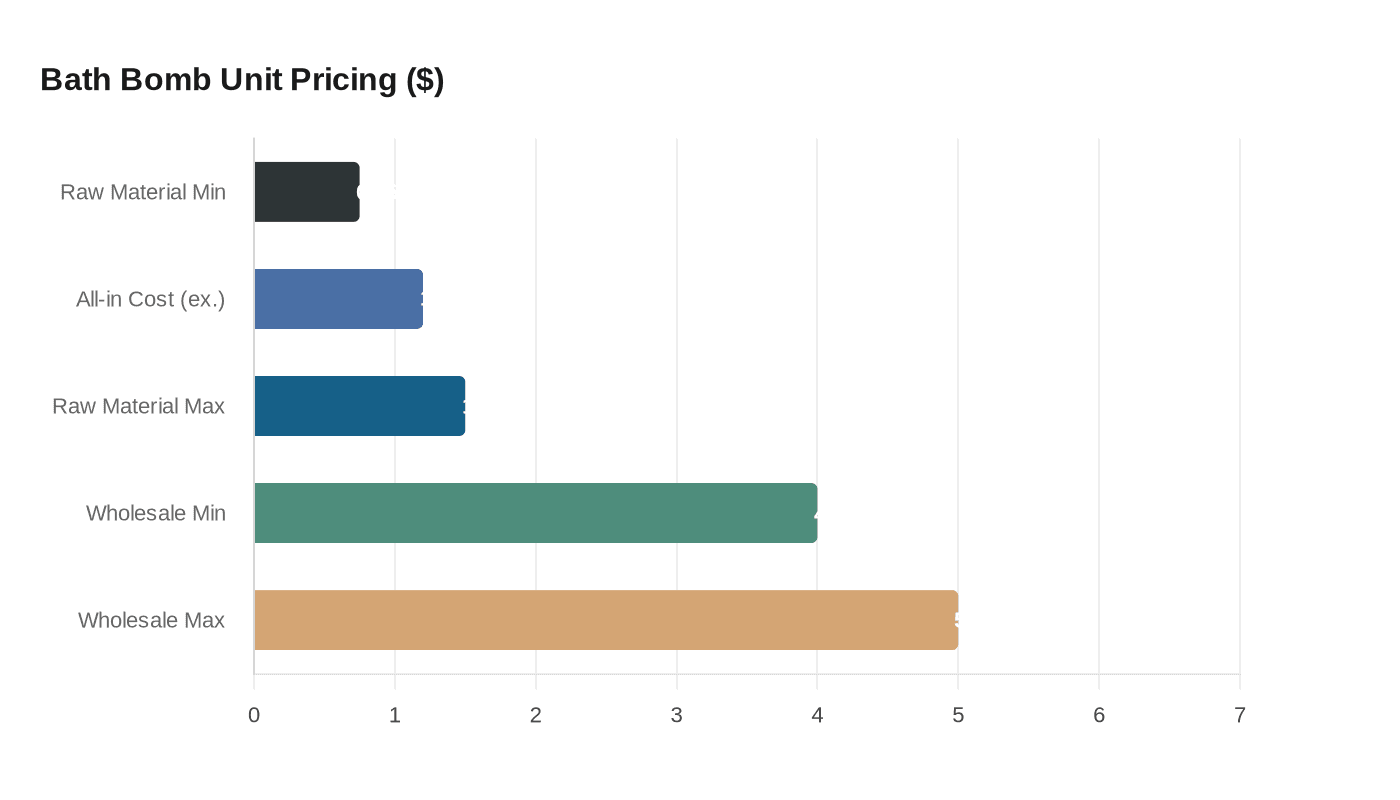
For a standard 5-ounce bath bomb, raw material cost typically ranges from $0.75 to $1.50 per unit, and bulk purchasing can reduce these costs by 20 to 40%. With that as a baseline, the target for retail craft sales is a minimum 3x markup over per-unit cost. Sell wholesale to boutiques or gift shops and the math shifts: your wholesale price needs to leave room for the retailer's margin, which typically runs 40 to 60% net. That means a bomb that costs you $1.20 all-in needs to wholesale at no less than $4 to $5 to remain viable once the retailer doubles the shelf price.
Standardize Production Before You Scale It
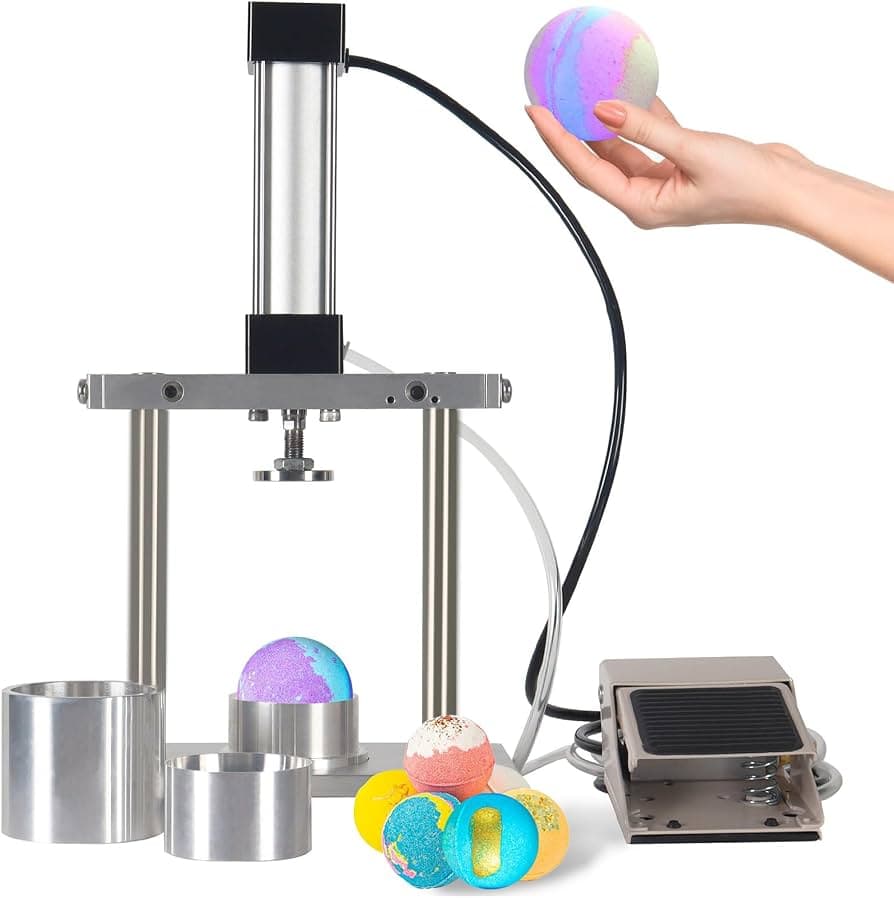
Ad hoc kitchen mixing is fine for gifting. For a business, replace it with documented, repeatable process. That means digital scales accurate to ±0.1 g, measured dispensers for dry ingredients, and dedicated, clearly labeled tools for colorants and fragrance separately to prevent cross-contamination.
Write a simple SOP that covers mixing order, binding method (a spray bottle of witch hazel or distilled water is standard), molding technique, and curing time. Curing typically runs 24 to 72 hours depending on ambient humidity and binder level. The humidity variable is not trivial: on a high-humidity day, the same formula that cures perfectly in 24 hours in winter can pre-fizz at the surface before it sets in summer. Your SOP should flag this and prescribe a response.
Run a QC Checklist on Every Batch
Quality control at scale is a checklist, not an eyeball test. The items that matter: shape integrity after demolding, zero surface pre-fizzing (a sign of excess moisture during mixing), consistent scent strength across units in the batch, absence of visible dye migration or streaking, and packaging weight checks to catch fill inconsistencies.
When bombs crack or crumble, the investigation follows a specific sequence: check ambient humidity first, then binder volume, then mixing speed. Over-mixing introduces air and weakens the structure; under-binding produces the same result from the opposite direction. Keeping that QC sample from each batch is not just for shelf-life testing; it's your control unit when a customer complaint arrives weeks after shipping.
Source Ingredients You Can Document
Use cosmetic-grade ingredients, not food-grade or unclassified bulk powders. Request supplier invoices and certificates of analysis (COAs) for every raw material, and file them. This is not bureaucratic overhead; it's the foundation of any credible response to a skin reaction complaint.
The storage protocol for hygroscopic powders, particularly citric acid and baking soda, deserves attention. Both attract moisture aggressively and will begin reacting each other in a poorly sealed container. Store them in separate airtight bins with desiccant, and track lot numbers for traceability. Every product label should carry a complete ingredients list and a "for external use only" advisory at minimum.
Understand What the FDA Actually Requires
In the U.S., the FDA regulates bath bombs as cosmetics but does not pre-approve products before they go to market. What it does enforce is labeling accuracy and truthful claims. Critically, the Modernization of Cosmetics Regulation Act of 2022 introduced new requirements that apply even to small makers: safety must be substantiated, severe adverse reactions must be reported, and fragrance allergens must be disclosed on labels.
The line to watch carefully is therapeutic language. The moment your product description includes a claim like "relieves muscle pain" or "treats dry skin," the regulatory path changes from cosmetic to OTC drug, which carries a different set of requirements entirely. Keep your copy descriptive and sensory, not clinical, and consult a professional before testing the boundary.
Package for Protection and Brand Differentiation
A bath bomb is a fragile, hygroscopic product that ships through temperature-variable logistics. Packaging has to solve both the physical protection problem and the moisture barrier problem before it solves the branding problem. Sturdy boxes or biodegradable fill material are the practical baseline; shrink-wrapping individual bombs before boxing adds a meaningful moisture barrier for longer transits.
On the consumer side, ingredient transparency is increasingly a purchase driver. Clear ingredient windows on packaging or QR codes that link to a full ingredient disclosure are both effective. A growing number of buyers specifically seek recyclable or compostable packaging options, and building an eco-conscious product line around that preference is one of the cleaner ways to differentiate in a crowded market.
Choose Sales Channels That Match Your Volume
Start where the feedback loop is tightest: local markets and craft fairs. Face-to-face sales generate the kind of unfiltered, immediate customer reaction that no online review replicates. Once you've validated a product line and a price point locally, expand to online marketplaces like Etsy or your own Shopify storefront.
Shipping protocol matters more than most new sellers anticipate. Use padded mailers for single units and small boxes for multi-packs. More importantly, test your packaging's shipping stability across seasons. Carrier oils can soften and migrate into packaging in summer heat; cold-weather shipping can make already-fragile bombs more brittle. A batch that survives a November shipment without issue can arrive damaged in July from the exact same zip code.
Build an Audience Around Process, Not Just Product
Social media has transformed the bath bomb industry by increasing brand awareness and driving consumer interest, with the visual nature of fizzing, colorful bath bombs generating significant user-generated content and free advertising. Short how-to videos and behind-the-scenes production shots consistently outperform static product photography for engagement. Tutorials that pair a recipe with a specific troubleshooting scenario, such as how to rescue a batch that's cracking or how to fix dye bleeding, build credibility faster than pure promotional content.
Micro-influencers with engaged niche audiences deliver more authentic reach than macro accounts for a craft product at this price point. Local workshops and virtual classes serve double duty: they generate direct revenue and they plant your brand in the memory of buyers who are more likely to purchase and refer when they have a personal connection to the process.
Build the Feedback Loop Into Your Operations
Collect post-purchase feedback deliberately. A simple follow-up for online orders and a returns protocol that treats complaints as data will surface the same two or three formulation or packaging issues repeatedly. Address them systematically: if fragrance fading is a common complaint, revisit your fragrance load and packaging seal. If breakage is appearing consistently in certain shipping regions, retest your box format for that lane.
Transparent communication about ingredients, shelf life, and usage directions is not just good customer service; it reduces the volume of reactive inquiries and builds the kind of trust that converts single buyers into repeat customers. The craft that draws people to bath bomb making, the precise chemistry, the sensory outcomes, the small-batch control, translates directly into a brand story. The operational scaffolding covered here is what keeps that story from being undercut by preventable failures.
This article was produced by Prism’s automated news system from verified source data, official records, and press releases, then run through automated quality and moderation checks before publishing. The system is built and supervised by the people who set the standards it runs under. Read our full AI policy.
Did this article answer your question?