Dollar Tree Bath Bombs Offer Budget DIY Crafting in Minutes
A bath bomb that sells for $9 at Lush can be made for roughly $1 using Dollar Tree supplies; here's what the viral shortcut gets right and what it quietly skips.

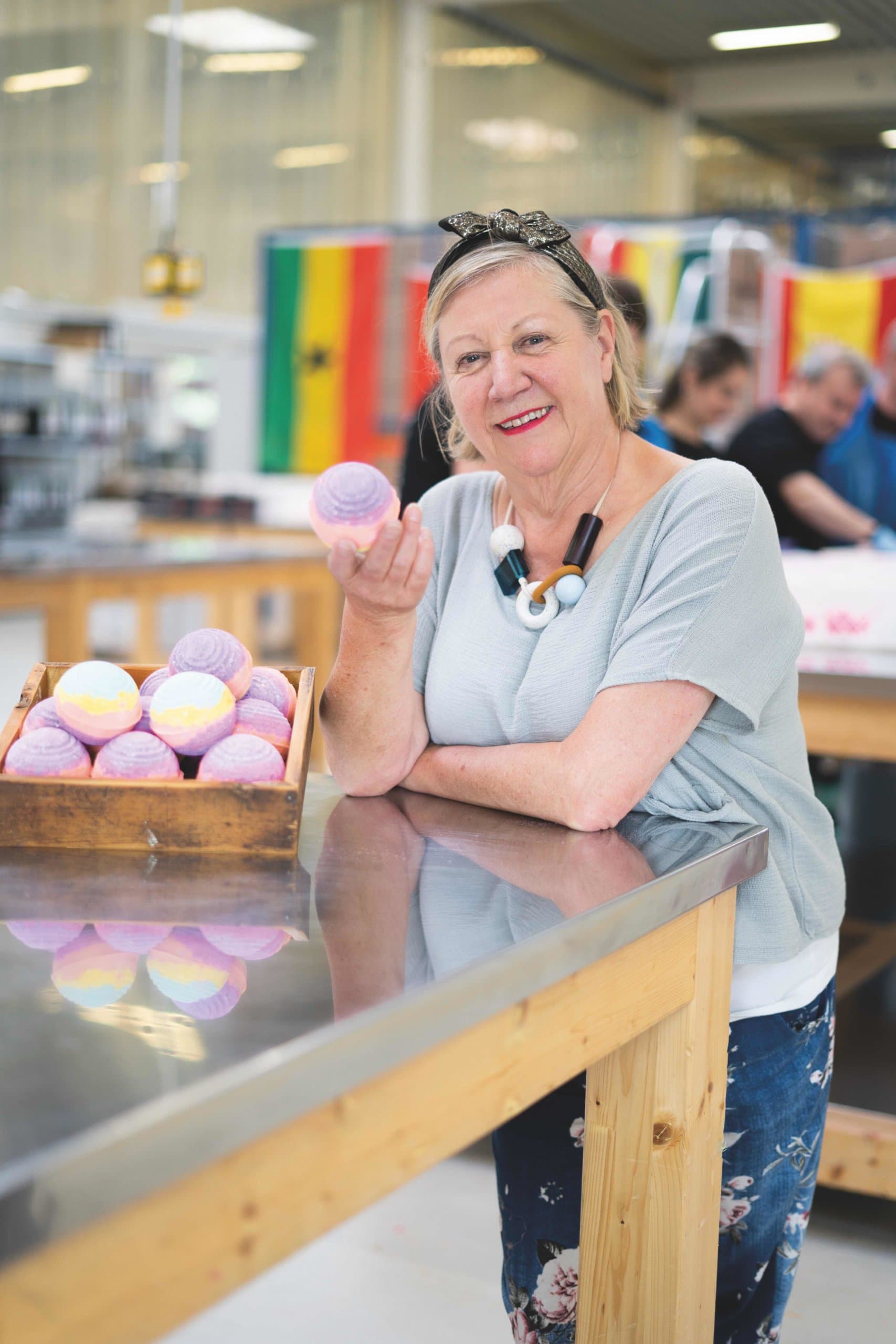
Mo Constantine invented the bath bomb in a garden shed in Dorset, England in 1989, pressing together citric acid, sodium bicarbonate, and essential oils after becoming fascinated by the fizzing action of Alka-Seltzer tablets. She called her creation "Aqua Sizzlers." Lush now sells those same bombs for $6 to $9 each. A short how-to video on MSN's lifestyle channel, produced in the "Cooking with Carson" format, promises to compress that same chemistry into a Dollar Tree haul and a few minutes of kitchen-counter mixing. That promise is mostly real. But the actual cost math, and the four failure points the video never mentions, are what separates a clean, fizzy result from a cracked, faint-smelling disk that stains your tub.
The 35-Year-Old Recipe Behind Every Dollar Store Bomb
Constantine's 1989 formula is the direct ancestor of every DIY tutorial circulating on TikTok and Instagram today: citric acid meets baking soda in the presence of water, releasing carbon dioxide in the fizz that defines the product. In 1989, Mo Constantine pressed together citric acid, sodium bicarb, and a blend of essential oils in her garden shed in Dorset, and the bath bomb was born. In tribute to the fizzing tablets that inspired her, Mo's first Aqua Sizzlers were pressed into that same shape and infused with calming French Lavender. She patented the invention; Lush commercialized it globally. The core 2:1 ratio of baking soda to citric acid has barely shifted in more than three decades. What has changed is access, specifically the availability of those ingredients at dollar-store prices, which brings the hobby within reach of virtually any household.
The market tells you exactly how much appetite exists for this product. The global bath bomb market was valued at approximately USD 1.99 billion in 2024 and is projected to reach USD 3.34 billion by 2033, exhibiting a CAGR of 6.2%. A separate GM Insights estimate places the 2024 figure at USD 1.38 billion but agrees on the 6.2% growth trajectory through 2034. A social media boom has transformed the bath bomb industry by increasing brand awareness and driving consumer interest, with TikTok and Instagram identified by analysts as primary drivers. The MSN video is squarely designed to feed that ecosystem.
What the Video Actually Demonstrates
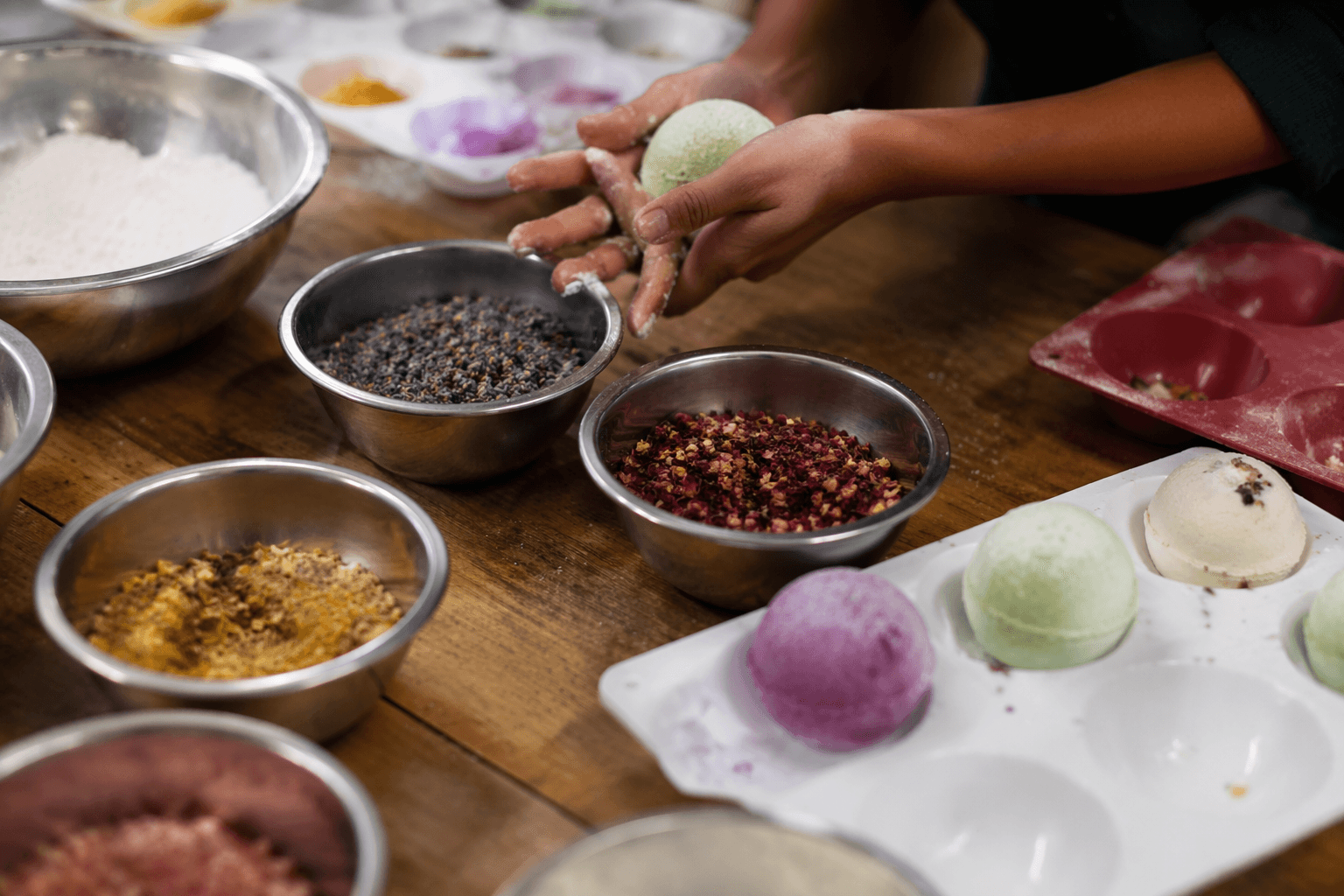
The clip follows the cold-process method: combine dry ingredients (baking soda, citric acid, cornstarch), add a small amount of carrier oil as a binder, then use a spritz of witch hazel or rubbing alcohol to pull the mixture just barely together before pressing into molds. Silicone candy molds stand in for standard bath bomb presses, and food coloring or discount-store mica alternatives provide color. On-screen text cautions viewers to work in dry conditions and to measure by volume for repeatability.
The production is optimized for quick consumption: short runtime, close-up mixing shots, text overlays. It is casual and demonstration-focused, aimed at parents, busy hobbyists, and first-time crafters who want a low-barrier project rather than a formulation deep-dive. The format's strength is inspiration; its weakness is precision, and precision is exactly what determines whether your batch survives demolding.
Your Honest $10 Dollar Tree Shopping List
Here is what you can realistically source from Dollar Tree for a starter batch of six to eight bombs, and what each item contributes:
- Baking soda (1 lb box, approx. $1.25): the alkaline base; provides the fizz reaction
- Epsom salt (small bag, approx. $1.25): adds mineral texture and skin-softening weight
- Cornstarch (approx. $1.25): slows the fizz for a longer release and smooths texture
- Silicone candy molds (approx. $1.25): the most accessible option for novelty shapes
- Food coloring, 4-pack (approx. $1.25): color layer; tub-staining tradeoffs discussed below
- Fragrance oil or essential oil drops (approx. $1.25): scent; roller-ball or dropper bottle
Dollar Tree subtotal: approximately $7.50. Here is what the video does not flag:
- Citric acid: Dollar Tree does not reliably stock it. Walmart's canning section is the most dependable backup, typically $3 to $5 for a small bag.
- 91% rubbing alcohol or witch hazel: the binder spritz. If you don't already own this, add $1.25 to $2.
- Disposable gloves: citric acid at higher concentrations causes skin irritation with prolonged contact, an omission the video makes entirely.
True all-in cost for a first batch: $12 to $15, dropping to $7 to $9 on repeat runs once the citric acid and alcohol are already in your cabinet. Per-bomb cost at that scale lands between $1.50 and $2.50. Making bath bombs at home typically costs around $1.09 per bomb using standard ingredients; Lush sells for $6 to $9 each, while Target charges approximately $5 for a 4 oz bomb. Crafting retailer Bramble Berry estimates slightly higher at $3.33 to $3.83 per bomb when mold costs are factored in, but that figure still lands at or below standard retail prices.
The Four Failure Points (And How to Fix Them)
This is where the video's brevity costs makers the most. Four problems account for the vast majority of failed Dollar Tree bath bombs.
Cracking
Cracking happens when the mixture is too dry when packed into the mold, or when the bomb expands slightly as it cures in a humid room. Fix it by adding your rubbing alcohol spritz in two-to-three-second bursts, mixing thoroughly between each, until the mixture holds its shape when squeezed in your fist. Once molded, cure bombs in a cool, dry room, not a bathroom. A small addition of kaolin clay or cream of tartar to the dry mix significantly improves cohesion if cracking persists.
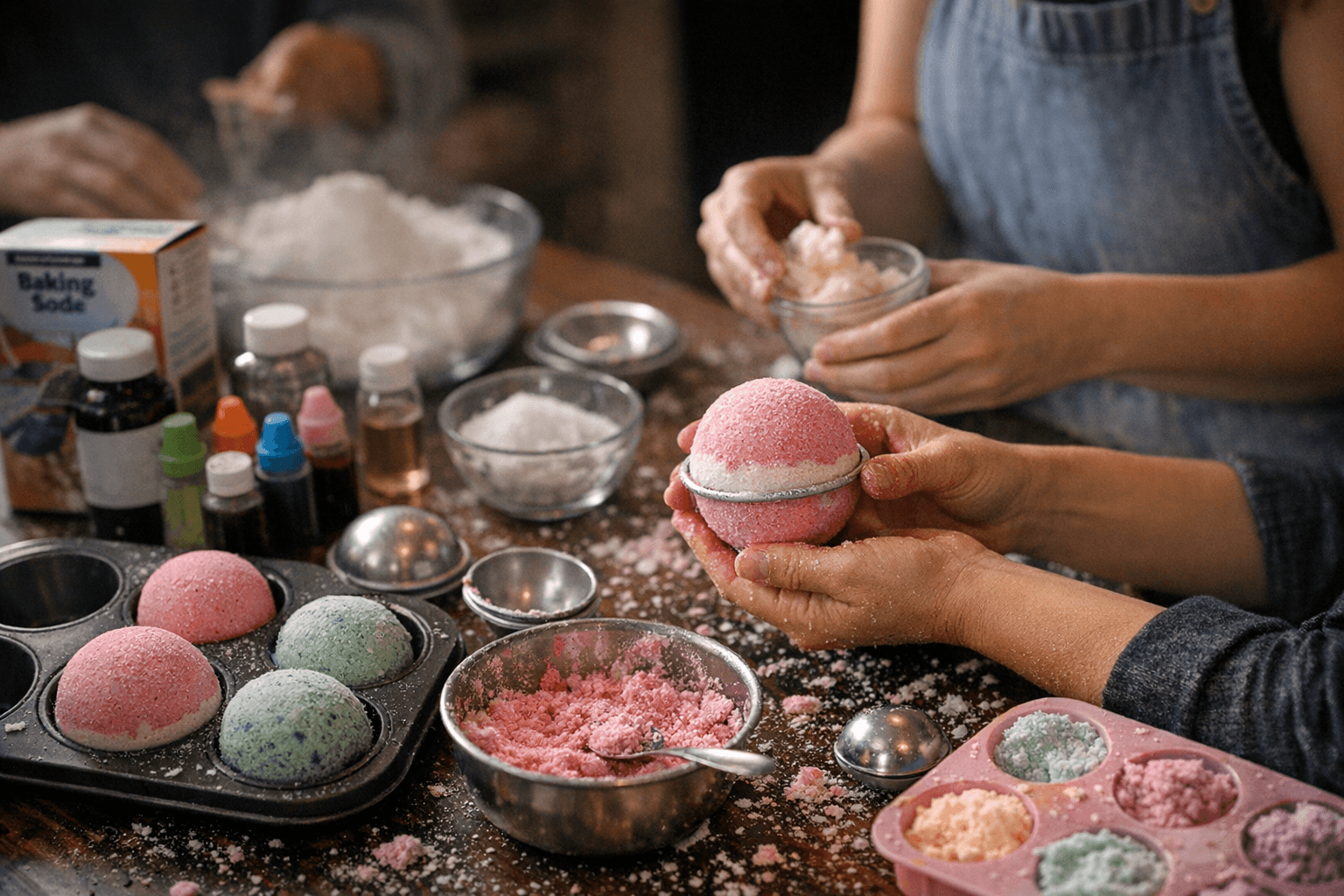
- DO: test the mixture by squeezing a handful; it should clump and hold without crumbling
- DON'T: add all your liquid binder at once; the citric acid begins reacting immediately on contact
Weak Fizz
Weak fizz is almost always a ratio problem or a freshness problem. The standard formulation runs 2 parts baking soda to 1 part citric acid by weight. Dollar Tree baking soda is reliably fresh due to high inventory turnover and sealed packaging. Citric acid sourced from canning supplies should be checked for clumping, which signals moisture exposure and reduced potency. Also note that cornstarch slows the reaction by design; more than roughly 25% cornstarch by volume will noticeably mute the fizz.
- DO: use a kitchen scale rather than volume spoons for the baking soda and citric acid ratio
- DON'T: substitute baking powder for baking soda; they are chemically distinct and the swap kills the reaction
Fragrance Fading
Fragrance fading in the finished bomb is one of the most common complaints and one of the least addressed in short-format tutorials. Dollar Tree fragrance oils and roller-ball essential oils should be mixed into the carrier oil phase, which helps anchor scent molecules to the bomb. But if finished bombs are stored uncovered in a warm or humid space, volatile fragrance compounds dissipate within days. Wrap each bomb individually in plastic wrap or tissue within an hour of demolding and store in a cool drawer rather than on an open bathroom shelf.
- DO: wrap bombs within one hour of demolding while the surface is still slightly firm
- DON'T: store unwrapped bombs in the bathroom; ambient humidity will degrade both scent and fizz strength simultaneously
Tub Staining
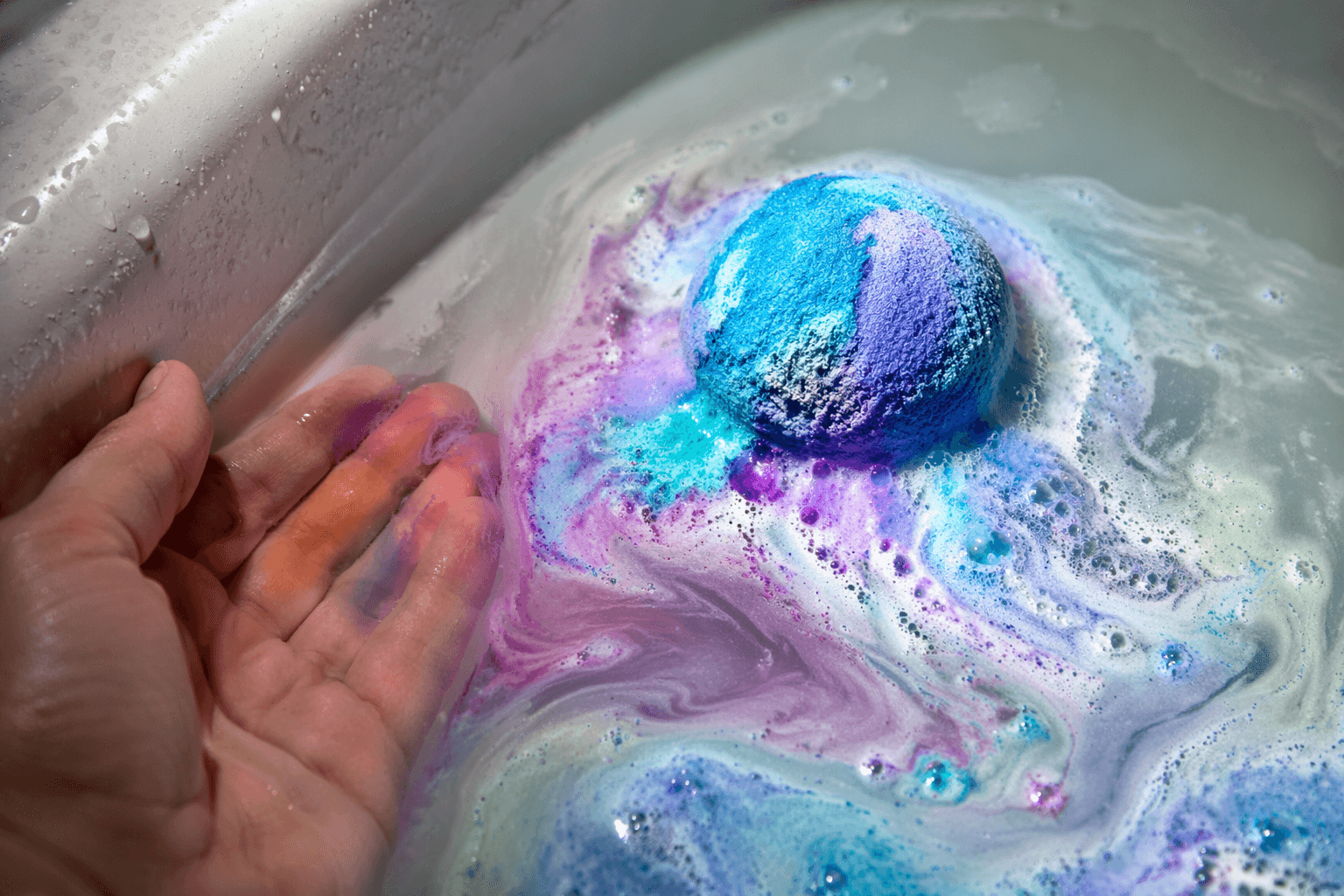
Food coloring, the colorant the video recommends by default, is the most likely culprit for tub staining. Liquid food dyes are water-soluble and typically rinse clean from the water itself, but they can temporarily mark acrylic or older porcelain tubs if the dissolving bomb rests in one spot. Cosmetic-grade mica powder is a far better option: it suspends in water rather than bonding to surfaces. Bramble Berry recommends no more than 2 teaspoons of mica per pound of bath bombs to keep staining risk minimal. Basic cosmetic mica is available at craft retailers and occasionally at dollar stores; it is worth the extra step if tub cleanliness matters to you.
- DO: reach for mica powder over food coloring when tub staining is a concern
- DON'T: increase food coloring volume to get deeper color; the staining risk scales directly with dye concentration
Safety Gaps the Video Leaves Out
The MSN demo does not address skin safety, and for makers with sensitive skin, that omission is consequential. Synthetic fragrance oils, the type most commonly found at dollar stores, can cause irritation or allergic reactions in some users. Food-grade colorings carry similar risks at elevated concentrations. Citric acid itself can irritate skin, particularly with prolonged handling without gloves. The genuine advantage of the DIY approach is full ingredient control: replacing synthetic fragrance with pure essential oils and omitting colorants entirely produces a gentler bomb suitable for sensitive skin and young children, an option no commercial product allows on demand.
A Word on Dollar Tree's Stability
Anyone planning a Dollar Tree haul should factor in one layer of retail uncertainty. The chain announced plans to close approximately 1,000 stores across its Dollar Tree and Family Dollar banners starting in 2024. Roughly 600 Family Dollar locations were slated for closure in the first half of fiscal 2024 alone, with additional closures to follow as leases expire. In July 2025, Dollar Tree sold its Family Dollar subsidiary to Brigade Capital Management and Macellum Capital Management for just over $1 billion, a reported loss of approximately $7.5 billion relative to the original acquisition price. Neil Saunders, managing director of GlobalData retail analytics, described the Family Dollar acquisition as "botched." Dollar Tree's core single-price-point banner remains operational and its craft supply aisle continues to attract budget DIY consumers, but product availability and store locations should be confirmed before planning a supply run. Citric acid in particular has never been a guaranteed Dollar Tree stock item; Walmart's canning section remains the more dependable backup.
The Honest Verdict
Constantine's 1989 garden-shed formula democratized something that had previously only existed in expensive spa products. The Dollar Tree video extends that democratization one step further, and for one-off batches, party crafts, or proof-of-concept testing, it largely delivers on its premise. The real first-batch cost is $12 to $15 rather than the implied $7, the citric acid requires a separate stop, and the technique gaps around humidity, binder ratios, and curing time are where most beginners lose their first batch. Patch those four failure points before you press your first mold, wrap your finished bombs within the hour, and the savings over a $9 Lush product are hard to dispute. In a market on track to reach $3.34 billion by 2033, the cheapest entry point still turns out to be the same three ingredients Constantine used in 1989 — just sourced from a different shed.
This article was produced by Prism’s automated news system from verified source data, official records, and press releases, then run through automated quality and moderation checks before publishing. The system is built and supervised by the people who set the standards it runs under. Read our full AI policy.
Know something we missed? Have a correction or additional information?
Submit a Tip