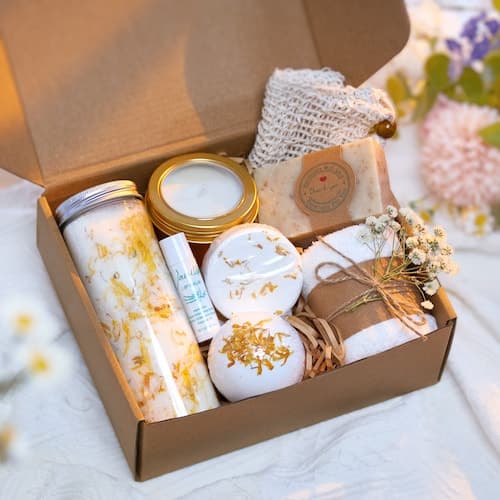
Legend's Creek Farm Shares Bath Bomb Guide for Sensitive Skin Soakers
Reactive skin doesn't have to mean skipping bath bombs; Legend's Creek Farm breaks down exactly what triggers flare-ups and how to soak safely.

Sensitive skin does not mean you have to avoid bath bombs entirely, but it does mean you need to be more selective about what goes into the water." That line from Legend's Creek Farm's practical use guide cuts straight to the point, and it's the right framing for anyone who's ever stepped out of a fizzy soak feeling tighter and more irritated than when they got in.
Legend's Creek Farm, a small-batch handmade skincare maker, published a detailed guide aimed specifically at customers with reactive or easily irritated skin. The guidance covers product selection, water temperature, soak duration, post-bath care, and the ingredient variables that most commonly cause problems. It's grounded in practical routine advice rather than clinical claims, and it's worth walking through section by section.
What's Actually Causing the Reaction
Before you can fix a problem, you need to know what's driving it. According to the guide, "most reactions come down to three things: a weakened skin barrier, heavy fragrance, or overly complex ingredient lists." That's a useful diagnostic trio, because it tells you where to start troubleshooting.
If your skin is already compromised, dry, or inflamed going into the bath, you're starting with a disadvantage before the bomb even hits the water. Heavy fragrance compounds the problem by loading the bath with additional ingredients your skin has to process while it's already in a compromised, absorptive state. And highly complex formulas, those with long ingredient lists packed with colorants, synthetic additives, and multiple fragrance compounds, multiply the number of potential irritants in a single soak.
"Strong scent blends or highly colored bath bombs introduce more ingredients that your skin must process during a soak," the guide notes. Highly colored bath bombs are often an overlooked culprit; the vivid swirling colors that make for great photos also mean additional chemical inputs that reactive skin has to contend with.
Why Fragrance Is the Variable You Need to Control First
"Fragrance is one of the biggest variables for sensitive skin." Full stop. If you've been reacting to bath bombs and you haven't yet scrutinized the scent profile, start there.
The distinction the guide draws is between light scent profiles and heavy fragrance blends. Some gentle bath bombs use lighter scent profiles, allowing you to enjoy the relaxing experience without overexposing the skin. This is the explicit rationale behind Legend's Creek Farm's own formulation approach: their bath products "emphasize milder scents and straightforward ingredient lists that tend to be easier for sensitive skin to tolerate."
For the reactive-skin community, this isn't just a preference issue. Heavy fragrance blends can trigger contact dermatitis-style responses even in people who don't consider themselves particularly sensitive. If you're shopping for bath bombs and scanning ingredient lists, fragrance components near the top of the list or multiple distinct scent compounds in a single formula are red flags.
Addressing Post-Bath Tightness
That tight, pulled feeling after a soak is one of the most common complaints from sensitive-skin bathers, and it's also one of the clearest signals that something went wrong at the barrier level. "Tight skin often signals that the bath environment disrupted the skin barrier," the guide explains. "Simpler formulas reduce the number of variables that can cause that reaction."
The practical fix the guide recommends is twofold: use lukewarm water rather than hot, and keep soak times moderate. "When sensitive skin bath bombs are used with lukewarm water and moderate soak times, many people experience less tightness afterward." Hot water strips lipids from the skin surface more aggressively than lukewarm water, and extended soaking time compounds that effect. The guide doesn't specify exact temperatures or minute counts, so if you're starting from scratch, lukewarm means water that feels comfortable without any heat-induced redness or flushing, and moderate means you're not spending an hour in there.
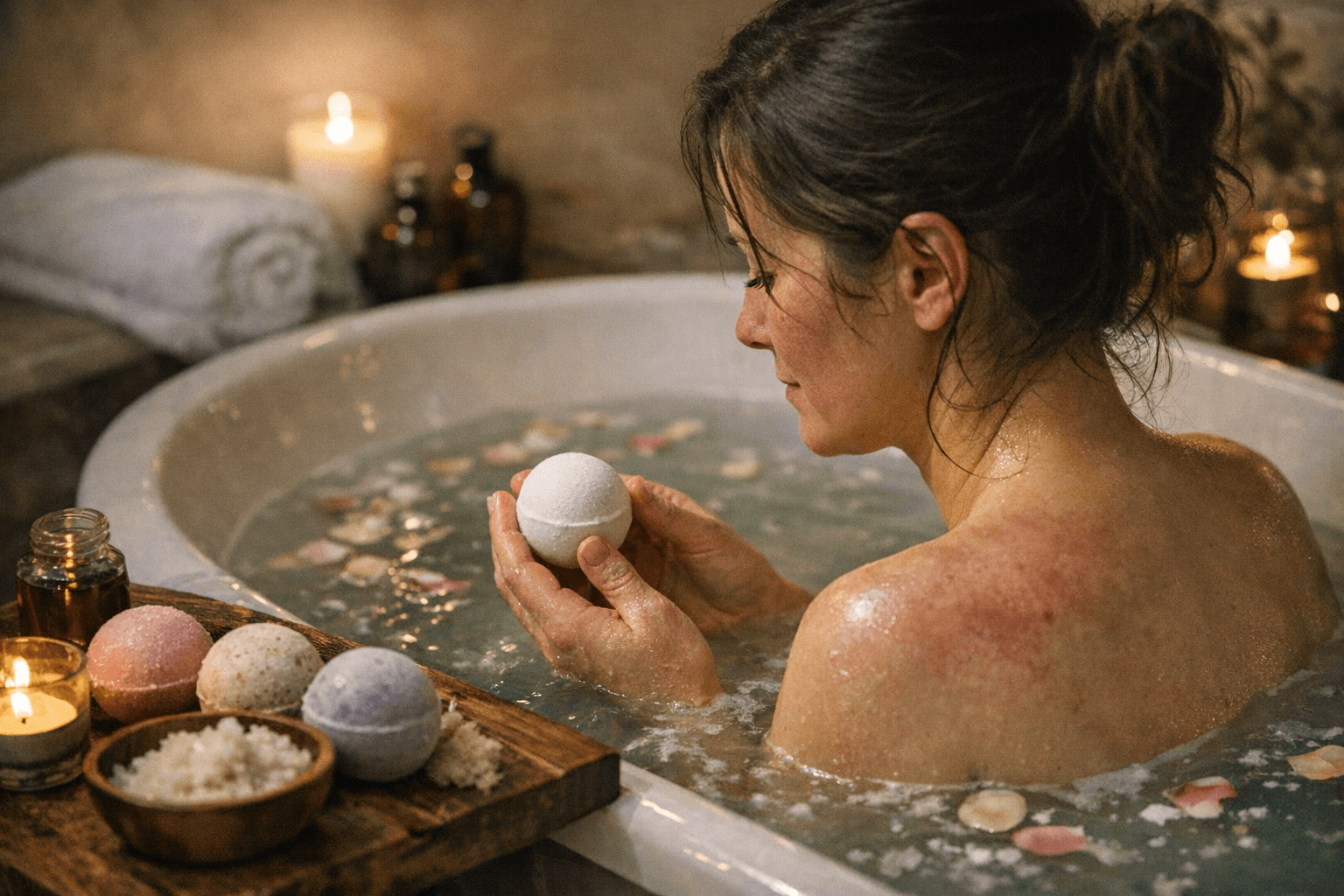
Following the soak with a moisturizer completes the barrier-repair loop. Legend's Creek Farm specifically recommends their Goat Milk Lotion to "restore moisture balance after bathing," used immediately after stepping out while the skin is still slightly damp for maximum absorption.
Ingredient Function: What Oats and Milk Powders Actually Do
One of the more useful pieces of functional guidance in the guide covers the role of specific soothing ingredients. "Ingredients like oats and milk powders can help soften the bath water and reduce that overly 'squeaky clean' feeling after soaking." That squeaky-clean sensation is itself a sign of barrier disruption; it means the surface lipids have been stripped away.
This is one reason the guide highlights the Oatmeal Milk & Honey Bath Bomb as a comfort-focused option. "Comfort-focused options like the Oatmeal Milk & Honey Bath Bomb are often preferred by people with reactive skin." Colloidal oat in bath products is well-established as a skin-calming ingredient, and the milk powder component helps soften water hardness while contributing emollient properties. For reactive-skin bathers, a bomb built around these ingredients offers a meaningfully different soak experience than a brightly colored, heavily fragranced novelty product.
Your Skin's Condition on the Day Matters More Than You Think
This is probably the most counterintuitive point in the guide, and it's worth sitting with: "Your skin's condition on the day of the bath often matters more than the product itself."
The same bath bomb that felt perfectly fine last Tuesday might trigger tightness or irritation today if your skin barrier is currently compromised from cold weather, over-exfoliation, or any other stressor. "When the skin barrier feels hydrated and calm, gentle bath bombs are more likely to feel relaxing rather than irritating." This is a useful reframe because it puts some of the control back in your hands. If your skin is going through a rough patch, it might not be the right day for any bath bomb, even a gentle one.
The guide frames this as part of building a more predictable bath routine overall. Pairing the right product with the right conditions, hydrated skin, lukewarm water, moderate soak time, and a moisturizer waiting on the towel rack, gives you the best chance of getting a relaxing result rather than a reactive one.
Putting It Together
The core of what Legend's Creek Farm lays out is less about any single product and more about a consistent approach: "When formulas stay simple and the bath routine supports your skin barrier, sensitive skin bath bombs can still be part of a relaxing routine."
That means choosing bath bombs with shorter ingredient lists, avoiding heavy fragrance blends and heavily dyed formulas, keeping water temperature down and soak time reasonable, and sealing in moisture afterward with something like the Goat Milk Lotion. For reactive-skin bathers who've written off fizzy soaks entirely, it's a practical case that the problem is usually solvable with the right combination of product and habit, rather than avoidance.
This article was produced by Prism’s automated news system from verified source data, official records, and press releases, then run through automated quality and moderation checks before publishing. The system is built and supervised by the people who set the standards it runs under. Read our full AI policy.
Did this article answer your question?