Board Game Design Lab guides beginners from idea to playable prototype
Board Game Design Lab turns game design into a repeatable loop: prototype fast, test hard, revise again. The real first step is getting a rough game onto a table.
It’s time to get that game out of your head and onto a table, and Board Game Design Lab makes a strong case that this is where real design starts. The site’s beginner-friendly guide frames board game creation as a practical workflow, not a lightning strike of inspiration, and that shift matters for anyone trying to move from idea to playable prototype.
Start with a rough table presence, not a finished vision
The guide is built around a simple reality: the first version of a game does not need to be polished, it needs to exist. Board Game Design Lab says its homepage offers “free guides to show you how to be successful in the board game industry” and sums up its mission in one line: “Design Great Games People Love.” That same mindset drives the “How to Design a Board Game” page, which points readers toward behind-the-scenes looks at designers’ processes, plus playtesting, prototyping, getting published, and other practical skills.
That emphasis is the right corrective for beginners who expect a game to arrive fully formed. In practice, the process usually begins with a rough structure, a few core mechanisms, and the willingness to revise them again and again after they hit the table. The guide’s value is that it treats iteration as the craft itself, not as cleanup after the “real” creative work is done.
Playtesting is the actual engine of progress
Board Game Design Lab is blunt about where a design becomes real. Its playtesting page says, “Playtesting, feedback. Playtesting, feedback. Long pause. Repeat. This will never cease to be the secret to making a great game.” It goes even further: “Playtesting is the purifying fire that all games must go through to find out if they’re actually any good or not. Until a game is tested, it’s really just an idea.”
That language cuts through one of the biggest beginner traps, which is spending too long protecting an idea from contact with players. The point is not to preserve your first draft, but to see how people actually interpret the rules, where they hesitate, and which parts of the system create friction or surprise. A game that has not been tested may be imaginative, but it is still only theoretical.
The guide’s framework also helps clarify what to watch during those sessions. You are not just checking whether players “like” the game in some vague sense. You are watching for rule comprehension, pacing, balance, component usability, and whether the intended decisions are the ones the table is actually making.
Prototype quickly, then improve the thing in front of you
Jamey Stegmaier of Stonemaier Games reinforces that same process-first approach. In an August 2023 post on tabletop game prototyping, playtesting, and development, he wrote that “This is the heart of game design” and added that the idea and brainstorming stages are “just the tip of the iceberg.” That is exactly the kind of correction many first-time designers need to hear: the concept matters, but the work that follows matters more.
Stegmaier also describes rapid prototyping and early minimum viable products as part of the early design process. That lines up neatly with the Board Game Design Lab approach, where the goal is not to perfect the idea in private but to put something playable in front of humans as soon as possible. His earlier post, “10 Steps to Design a Tabletop Game (2020 version),” published on February 23, 2020, pushes the same point by laying out 10 roughly chronological steps for building a board game rather than treating design as one burst of inspiration.
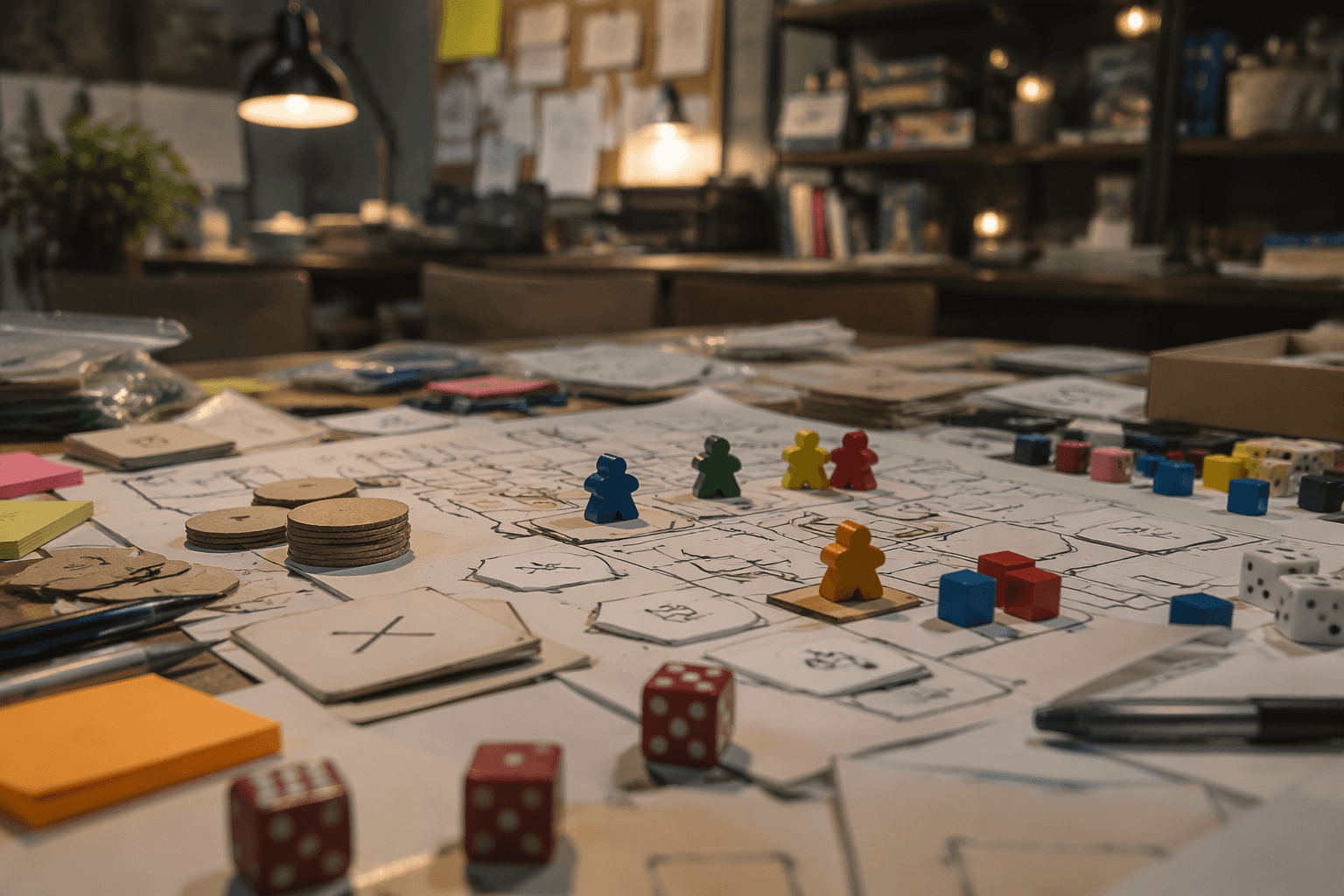
For beginners, that sequence is the first usable roadmap: 1. shape the core idea into a rough system, 2. build the smallest playable version you can, 3. test it with real people, 4. revise based on what the table exposes.
That is where the design moves from fantasy to function.
The BGDL ecosystem is built around the same lesson
The “How to Design a Board Game” page is not a standalone article floating by itself. It sits inside a broader Board Game Design Lab ecosystem built around design education and publishing literacy. The site’s podcast description says it was created “for one purpose: to help you design great games people love,” and says it interviews designers, publishers, and board game insiders on game design topics. Apple Podcasts lists the show as updated weekly, which fits the project’s long-running role as a regular source of craft-focused tabletop discussion.
That broader educational push is also visible in BGDL’s book, *Find the Fun: From Idea to Published Game*, released in 2023. The title alone shows how the site connects the earliest stage of design to the later realities of publication, not as separate worlds but as parts of the same chain. For anyone trying to break into the hobby professionally or semi-professionally, that matters because a strong prototype is only one piece of the pipeline. Rules writing, component planning, balancing, testing, and understanding how games actually get published all belong in the same conversation.
Why beginners stall, and what to do first
The most common stall point is mistaking clarity in your own head for playability on the table. Board Game Design Lab’s framing pushes directly against that habit. A concept can feel vivid before it is built, but until cards are drafted, tokens are cut, or a system is mocked up, the game cannot reveal its problems. That is why the guide’s most useful promise is not inspiration, but movement: get the thing into a format where other people can touch it, misread it, and stress-test it.
BGDL’s place in the community also gives that message weight. Gabe Barrett, who founded and hosts the project, has built it around teaching the craft rather than celebrating pop-culture chatter or recent plays. A 2022 r/boardgames post noted that Barrett ended the podcast after five years, which shows how long that instructional run shaped the tabletop design conversation. The 2023 book and the weekly podcast listing both point to the same conclusion: this is a long-term educational platform built to help designers do the unglamorous work that moves a sketch toward a real game.
The clearest first step, then, is not to chase a perfect pitch or a brilliant theme. It is to make the smallest version of the game that can be played, watched, and changed. That is the line Board Game Design Lab keeps drawing, and it is the one most beginners need to cross before the design can truly begin.
This article was produced by Prism’s automated news system from verified source data, official records, and press releases, then run through automated quality and moderation checks before publishing. The system is built and supervised by the people who set the standards it runs under. Read our full AI policy.
Did this article answer your question?