Cardboard Edison spotlights practical resources for board game designers
Bright Ideas reads like a working designer’s toolbox, not a single article, and that makes it useful from first concept sketch to publisher pitch.
The July 21, 2026 entry on Cardboard Edison’s Bright Ideas page is titled “Tips & Resources for Board Game Designers.” It is branded “Game design & bright ideas for game designers.”
A living reference shelf, not a one-off post
The page sits on Cardboard Edison’s blog, and the surrounding dates tell the story: similar Bright Ideas pages appeared on June 26, July 3, July 4, July 7, and July 11, 2026. Those dates mark it as part of an ongoing series, not a closed article.
Cardboard Edison’s site navigation in search results includes About Us, Our Games, Prototypes, Blog, Industry Reports, and Tariffs Report, while the broader site also shows a Contests section and a free-resources-oriented structure.
Concept stage: where broad guidance earns its keep
At the idea stage, a page labeled “Tips & Resources for Board Game Designers” is useful because it does not force you into a single workflow. Early on, you are usually comparing directions, trimming bad instincts, and deciding whether a hook is really a game or just a neat mechanism with no legs. A broad Bright Ideas feed is helpful here because it gives you a place to collect practical prompts without pretending every design starts from the same template.

The support network around a project now spans prototyping tools, playtesting feedback, graphic presentation, component sourcing, crowdfunding prep, and publishing logistics.
Prototyping and playtesting: the stage where repetition matters
Once a project moves into prototyping, the value of a recurring resource page rises. The run of recent Bright Ideas entries makes it the kind of page you can check while iterating a build, updating a ruleset, or revisiting a component list. That fits the rhythm of tabletop work, where one test can expose a timing problem, a usability issue, or a component choice that looked fine on paper and falls apart at the table.
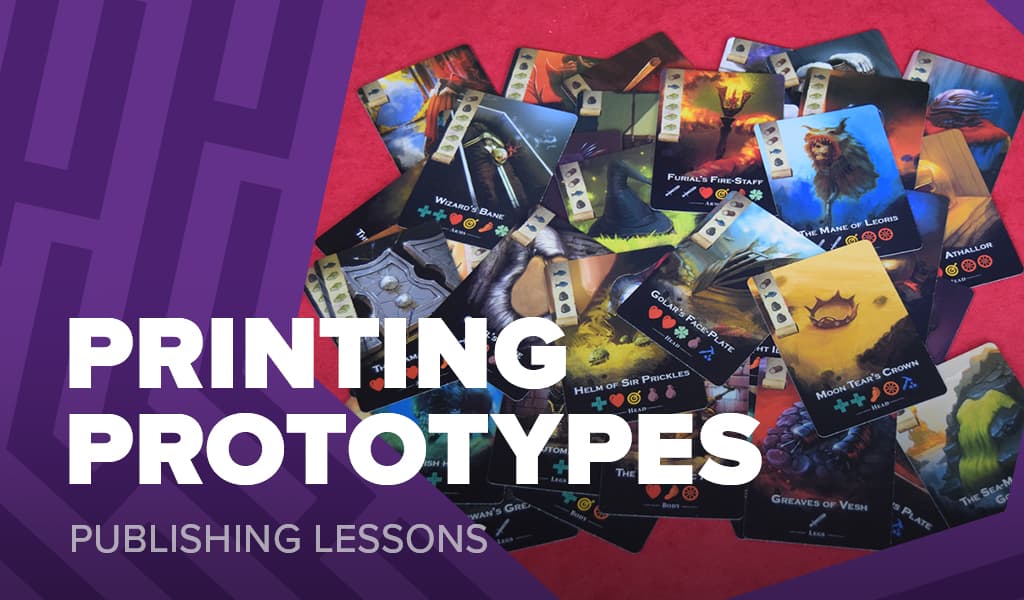
Cardboard Edison’s site structure includes a Prototypes section alongside the blog and broader industry material. The setup covers the practical middle of the process, where you are making rough builds, watching people misuse them, and adjusting before the design hardens.
A well-maintained tips page can help you avoid re-litigating the same mistakes, especially if you are juggling more than one project. The practical gains show up in another iteration, a clearer component, or a rule rewrite.
Pitching and publishing: when the guides get more procedural
The farther a game moves, the more useful process-heavy resources become. LaunchBoom published a YouTube guide called “How to Create a Board Game: An 11 Step Guide” on 2025-10-14, and that kind of numbered structure is most valuable once you are already mapping tasks and checking off what comes next. It is less about sparking the initial idea and more about helping you organize the route from concept to something pitchable or launch-ready.
PledgeBox’s “How to Publish a Board Game A Creator’s Guide to Success” sits in the same lane. Its focus is publication, not pure design exploration. That makes it most relevant when you are dealing with the practical side of moving a finished or nearly finished game toward market, whether that means crowdfunding prep, production planning, or a broader publication strategy.
Cardboard Edison’s ecosystem covers both the early creative work and the later submission or publication phase. The presence of a Contests section alongside free resources, plus the Bright Ideas series itself, shows that split. That mix covers contest entry, rules polish, and publisher expectations for a presentable project.
What to keep and what to file away
The cleanest way to use Bright Ideas is to separate durable guidance from stage-specific tools. The durable part is the broad design thinking: reminders, references, and practical nudges that stay useful whether you are sketching your first idea or revisiting an old system. The stage-specific tools are the linear guides, the submission advice, the publishing checklists, and the logistics-heavy material that only matter once a project is already moving.
This article was produced by Prism’s automated news system from verified source data, official records, and press releases, then run through automated quality and moderation checks before publishing. The system is built and supervised by the people who set the standards it runs under. Read our full AI policy.
Did this article answer your question?