Deck-building remains a cornerstone of modern board game design
Deck-building works because it lets designers tune control, pacing, and card economy in starkly different ways. Dominion, Star Realms, and Hero Realms show how one mechanic can feel like a sprint, a campaign, or a combo puzzle.
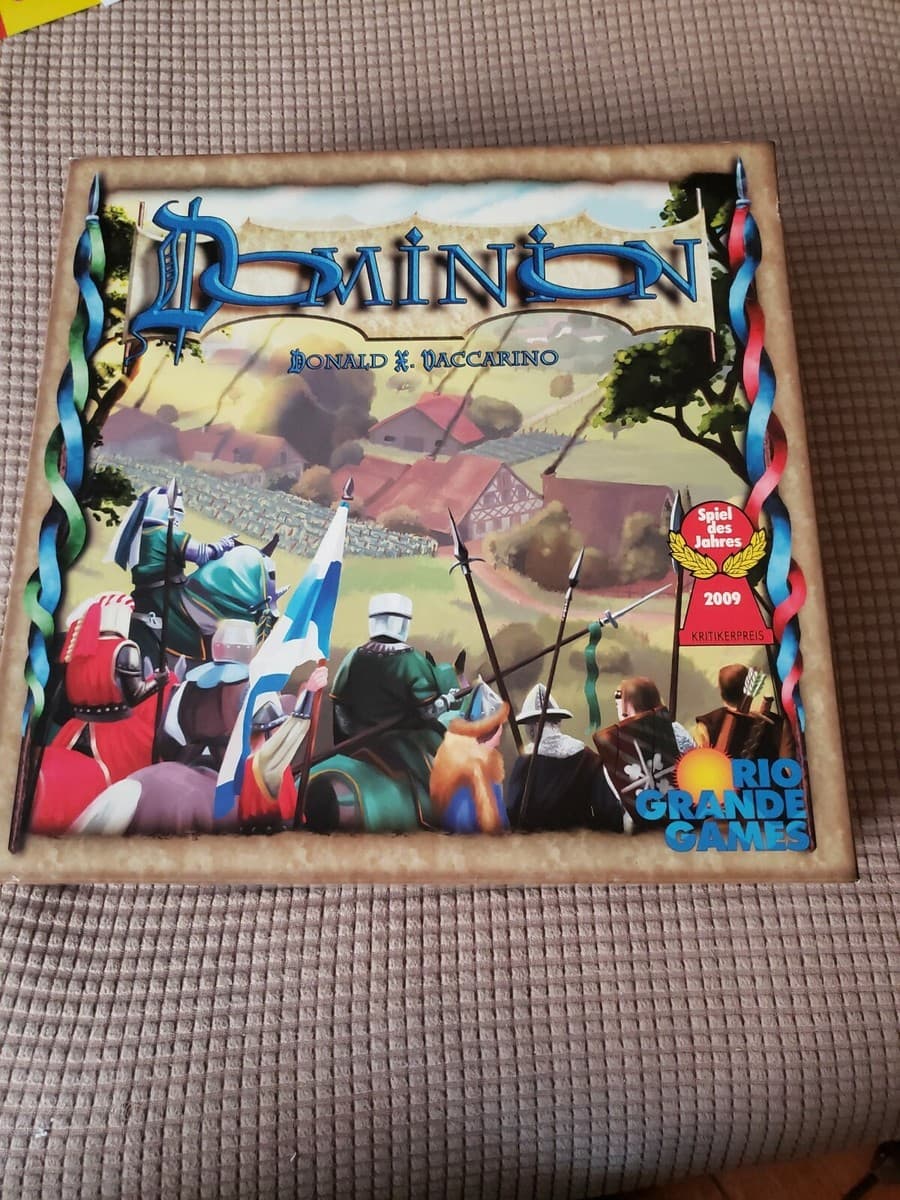
Dominion's original publication in 2008 was followed by a Spiel des Jahres win in 2009. Deck-building gives players a visible path from a weak starter deck to something sharper, faster, and more personal, and that arc is still one of the most teachable structures in modern board game design. It sits alongside worker placement, engine building, and drafting as one of the hobby’s core mechanics, which is why designers keep returning to it when they want a system that teaches itself at the table.
The mechanic that turned a genre into a design language
Dominion remains the clearest proof that deck-building became foundational rather than fashionable. It started the deck-building genre. By the end of 2010, a BoardGameGeek discussion put worldwide sales of Dominion and its expansions at more than one million.
Deck-building is about improving options over time, not just collecting cards. Dominion now has more than a dozen expansions, and that long tail is part of the mechanic’s appeal. The core loop is simple to explain, but it can be stretched into pure deck-builders, hybrid deck-builders with boards, campaign deck-builders, and competitive or cooperative variants.
Darwin Kastle sits at the crossroads of card-game skill and board-game clarity
Darwin Kastle is an ideal lens for that evolution because his background bridges two card-game worlds. He is a Hall of Fame Magic: The Gathering player with deep card-game experience and the creator of Star Realms and Hero Realms. He was inducted into the Magic: The Gathering Pro Tour Hall of Fame in 2005, and he was part of Team Your Move Games, which won Pro Tour Washington, D.C. in 1999.
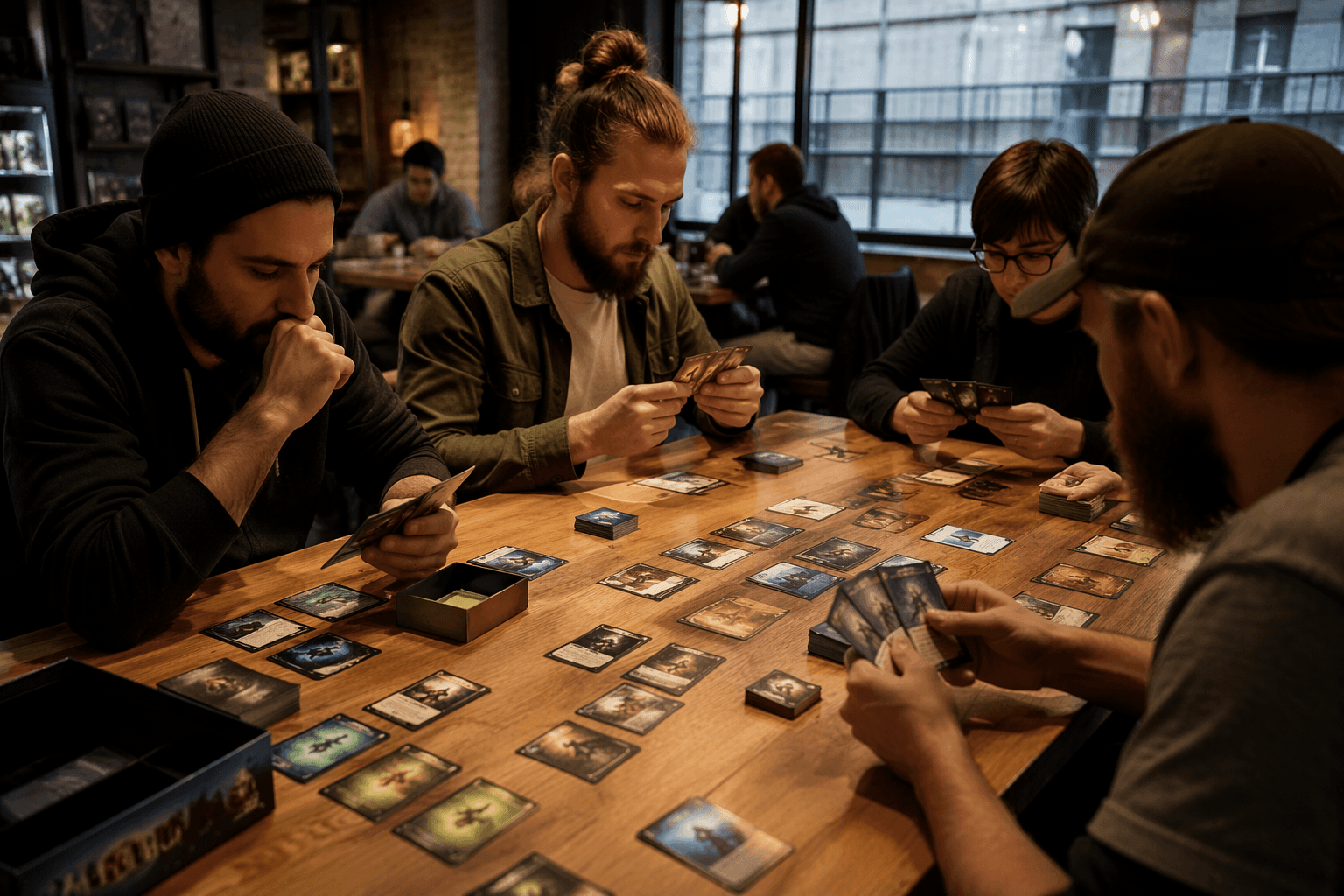
Kastle’s deck-builders are tuned to pacing and economy. Kastle understands what it means to sculpt a deck from fragmented decisions, but he also understands the board-game need for quicker setup, cleaner turns, and clearer pressure. Star Realms and Hero Realms translate that skill into systems that are easy to learn and hard to exhaust.
Star Realms shows the lean, aggressive end of the spectrum
Star Realms launched as a Kickstarter campaign in October 2013 and was published in 2014. It is a fast-paced, head-to-head spaceship combat deckbuilding game built for speed, direct conflict, and constant pressure. The game won the 2015 SXSW Tabletop Game of the Year award and four Golden Geek Awards.
Star Realms is a model of how deck-building can be made to feel like a race. Card economy is tight, turns are short, and the market has to support quick conversion from weak starter cards into immediate combat power. That creates a strong sense of momentum, but it also changes what control feels like. You are not building a slow, self-contained engine so much as managing tempo, buying power, and attack timing before the other side closes the game.
Hero Realms asks the same system to carry identity, story, and group play
Hero Realms takes the same basic framework and expands the emotional range. It is a fantasy-themed expandable deckbuilding game, and it launched as a Kickstarter in 2016 before releasing that same year. It supports one-on-one and group play, and it adds cooperative campaign play through content such as the Ruin of Thandar campaign deck, which transforms it into a cooperative adventuring deckbuilder.
The shift changes the player fantasy. Star Realms is about efficient combat decisions, while Hero Realms gives the deck a stronger sense of character progression and campaign identity. When the Ruin of Thandar deck pushes the system into cooperative adventuring, the deck is no longer just a machine for buying better cards. It becomes a record of party development, table coordination, and scenario-driven growth.
Why Magic expectations can make deck-builders feel different at the table
This is where player expectation becomes a design issue. Many players arrive at a deck-builder with a Magic mindset, where the goal is often to express an identity through synergy, plan a coherent line, and make the deck feel like a recognizable build. In a board-game deck-builder, especially one closer to Star Realms, the experience is often less about identity and more about efficiency. You are converting a starter pile into the best possible draw pattern, often under pressure from a shared market and an opponent who is trying to do the same thing faster.
That difference shapes card economy in a major way. A Magic player may expect cards to reinforce a long-term archetype, while a board-game deck-builder often asks them to buy for immediate throughput, cycling speed, or direct scoring. The result is a different feeling of control: Magic-style play can feel like assembling a signature machine, while Star Realms-style play can feel like shaving waste from every turn until the deck becomes a lean racing engine. Hero Realms sits between those poles, because classes, adventures, and campaign content give the player more room to feel identity without losing the efficiency race.
This article was produced by Prism’s automated news system from verified source data, official records, and press releases, then run through automated quality and moderation checks before publishing. The system is built and supervised by the people who set the standards it runs under. Read our full AI policy.
Did this article answer your question?