Solo play emerges as board gaming’s third-biggest mechanism
Solo play has moved from bolt-on bonus to core design feature, pushing publishers to build automation, replay value, and audience fit into the first draft.
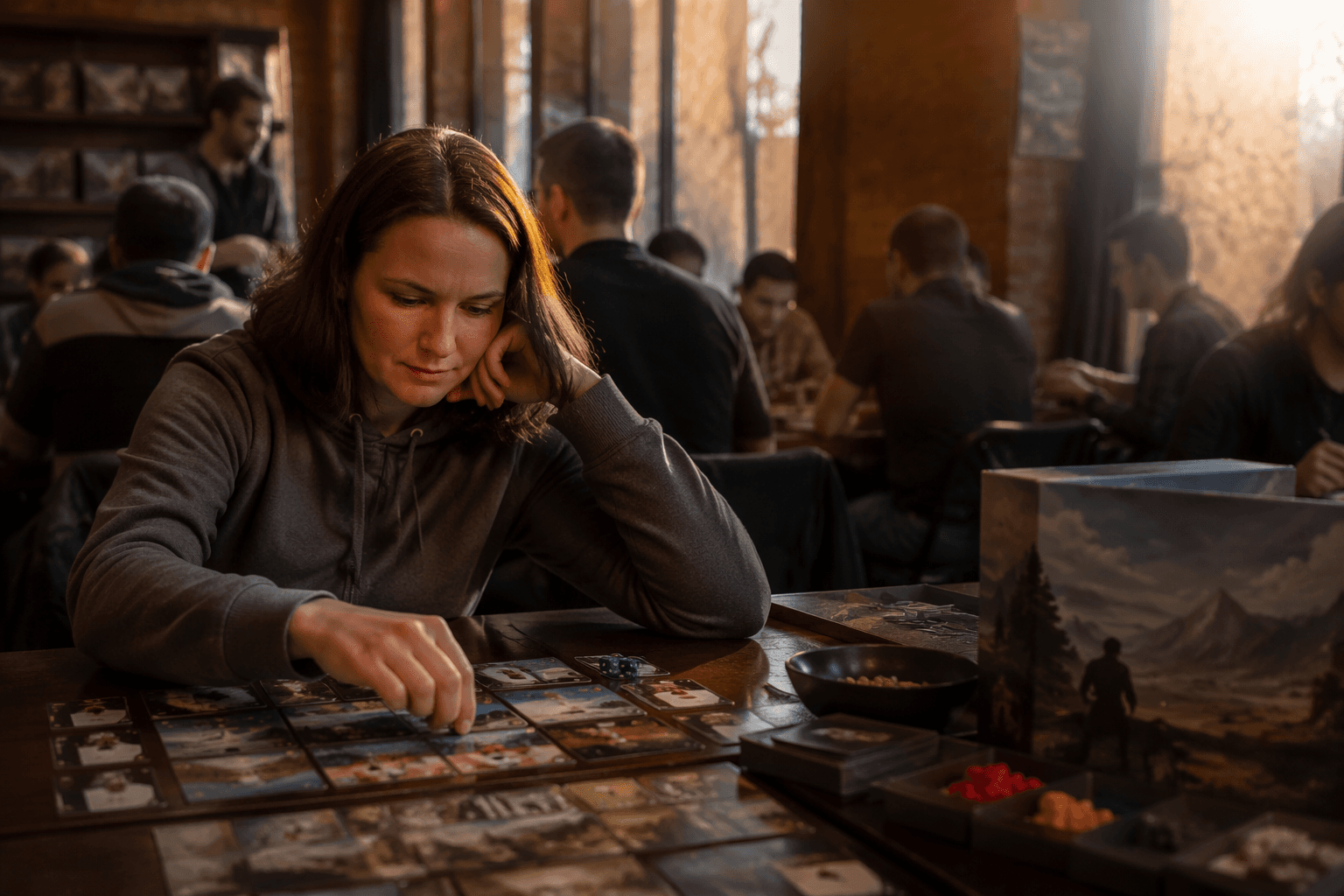
Across 104,000 board game titles, solo play was the third-biggest mechanism in games released since 2020. The bigger shift is what that ranking says about how games are being conceived: one-person play is no longer a patch at the end of development, but a design target that can shape everything from turn flow to marketing copy.
Solo is no longer a niche add-on
Solo play is on the rise, and co-op is rising with it. That combination points to a hobby that is increasingly comfortable with play structures built for fewer assumptions about table size and more flexibility about how a game gets used.
When solo and co-op climb together, the market rewards systems that can function without a full competitive group, which changes the brief for publishers and designers alike. It is no longer enough to ask whether a game has a solo mode. The better question is whether the solo experience feels native to the system or like it was pasted on after the fact.
The difference between a solo mode and a solo design
Going Analog’s description of solo-play board games as converting multiplayer board games into a one-person experience captures how many older solo modes worked in practice: they preserved the frame of the original game, then added enough scaffolding to make it playable alone. A 2018 Analog Game Studies article, titled “Solo Board Gaming: An Analysis of Player Motivations,” treated solo play as its own area of motivation and design, not just a fallback for missing players.
That distinction still matters in development meetings. A bolted-on solo variant often inherits multiplayer assumptions that do not translate cleanly, such as hidden negotiation, table talk, or a pace built around multiple human decision-makers. A game designed for solo from the start can instead build its turn structure, information flow, and opposition around one player’s decision space, which is why designers increasingly treat solo as a separate user experience rather than a spare mode.
What good solo design has to solve
A strong solo system usually has to do three jobs at once: preserve tension, simulate pressure, and avoid turning the game into bookkeeping. That means automa structures, decision trees, scaling systems, and enemy behavior all have to work together without smothering the core puzzle. The solo version has to feel like the same game, but it also has to stand on its own when no other players are at the table.
Practical lessons:
- Build solo early, not as a late appendix.
- Make automation legible so the game does not become rules administration.
- Tune replayability so the player is not solving the same script every session.
- Preserve the feel of the multiplayer design, even when the opposition is run by systems.
Publishers now genuinely sweat over solo support rather than treating it as a nice-to-have.
Why players and publishers both care
The audience for solo play is broader than the stereotype of the isolated gamer. It includes players who do not always have a regular game group, collectors who want more value from a box, and people who simply want a game they can table on demand. That makes solo support a practical selling point, not just a design flourish, because it gives a product a second life when multiplayer scheduling falls apart.
That also changes how games are marketed. If a box can be played alone, that fact now needs to be easy to find and easy to understand, because solo support is part of the purchase decision. BoardGameArena’s catalog offers more than 500 titles and includes solo games as a searchable mechanism category. Players are no longer waiting to be surprised by a solo mode; they are actively filtering for it.
The hobby already had the signals
This shift did not appear out of nowhere. In 2017, Quantic Foundry highlighted BoardGameGeek’s solo play and solo variant tags in its catalog and its annual awards for solo games.
This article was produced by Prism’s automated news system from verified source data, official records, and press releases, then run through automated quality and moderation checks before publishing. The system is built and supervised by the people who set the standards it runs under. Read our full AI policy.
Did this article answer your question?