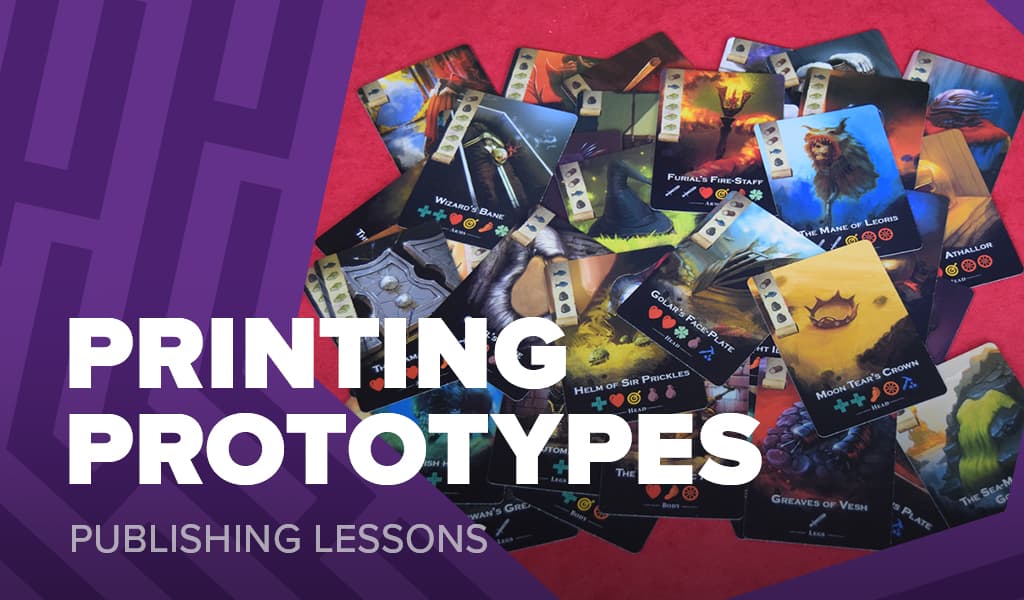
TTGDA resource page helps designers find local playtesting groups
TTGDA’s playtesting directory points designers to local groups that catch rules, balance, and fun problems early, then keep iteration moving.
TTGDA’s playtesting resources page steers designers toward local groups, in-person sessions, and the broader network that keeps tabletop iteration moving.
Why local playtesting groups matter
Local groups solve one of the most annoying bottlenecks in tabletop design: access. They cut travel costs, make repeated testing easier, and give you a stable circle of testers instead of a one-off crowd. Board games rarely reveal their real problems in a single pass. A first test may expose rules confusion, a second may uncover balance issues, and a third may show whether the game is actually fun once everyone knows what they are doing.
Instead of waiting weeks or months for the next convention table, you can revise a build, bring it back, and watch the same or similar players hit the new rough edges. The feedback loop gets shorter, and the prototype gets stronger because you are not just hearing reactions once, you are hearing how those reactions change as the design changes.
What recurring in-person feedback catches early
The most useful local groups tend to catch the kinds of problems that hide inside your own familiarity with the game. Designers often know the system so well that they stop noticing where a rule is unclear, where an assumption is unstated, or where a step only makes sense because they built it. A newcomer in a recurring local group is much more likely to stop at the exact point where the prototype needs another pass.
They reveal whether the rule explanation works without a long apology from the designer, whether the game balance survives players who are not already on the designer’s wavelength, and whether the fun still shows up after the table has settled into the actual procedure. In its August 7, 2023 discussion of tabletop prototyping and development, Stonemaier Games called playtesting “the heart of game design.” Board Game Design Lab presents playtesting as a core part of the design process rather than a final polish step.
How local groups differ from online feedback
Online feedback can be useful, but it tends to be flatter and less immediate. Local groups let you sit through the awkward parts of a teach, watch the exact moment a rule explanation loses the room, and return with a revised build without rebuilding the whole conversation from scratch. That makes the feedback more actionable, because you can connect the criticism to a specific moment in play instead of a comment thread.
There is also a social difference. A local group can become a place where the same people see your game evolve over time, which means they are not only reacting to the prototype in front of them, they are comparing it to the last version they played. That kind of continuity is hard to replicate when every test is a fresh audience. TTGDA’s playtesting section also points designers toward conventions and in-person playtesting, structures that make return visits normal.

What a strong local playtesting circle looks like
A group becomes genuinely useful when it does more than host a session and disappear. The best local circles turn into informal networks where designers swap prototypes, share print-and-play files, talk through publishing options, and point one another toward conventions or other groups.
Meetup lists First Play: L.A. Board Game Playtesters in Burbank, California, with 1,917 members and a 4.9 rating. Austin Board Game Designers and Playtesters in Austin, Texas, has 1,222 members and a 4.8 rating. A BoardGameGeek thread about a Los Angeles game designer playtest exchange group put the group at 23 designers at the time of posting.
A group like that is worth your time when it shows three things:
- it has enough regular attendees to create continuity
- it is structured around repeated testing, not just social meetups
- it gives you access to players who will react to a changed prototype, not just the first draft
TTGDA’s broader design infrastructure
TTGDA’s resource page sits inside a larger push to build infrastructure for tabletop designers. Geoff Engelstein introduced the Tabletop Game Designers Association in a Reddit post on November 2, 2023, saying it was being developed with Elizabeth Hargrave and Sen Foong-Lim and expected to launch in Q1 2024. TTGDA describes itself as a professional organization for tabletop game designers focused on advocacy and professional development.
The playtesting resources page is part of a broader toolkit that also includes conventions and in-person playtesting, the same kinds of touchpoints that help a prototype move from a promising idea to something a publisher or backer can actually evaluate. Cardboard Edison also has a Playtest Groups page, and convention-centered platforms like Tabletop.Events help connect the live event side of the ecosystem with the day-to-day work of testing.
This article was produced by Prism’s automated news system from verified source data, official records, and press releases, then run through automated quality and moderation checks before publishing. The system is built and supervised by the people who set the standards it runs under. Read our full AI policy.
Did this article answer your question?