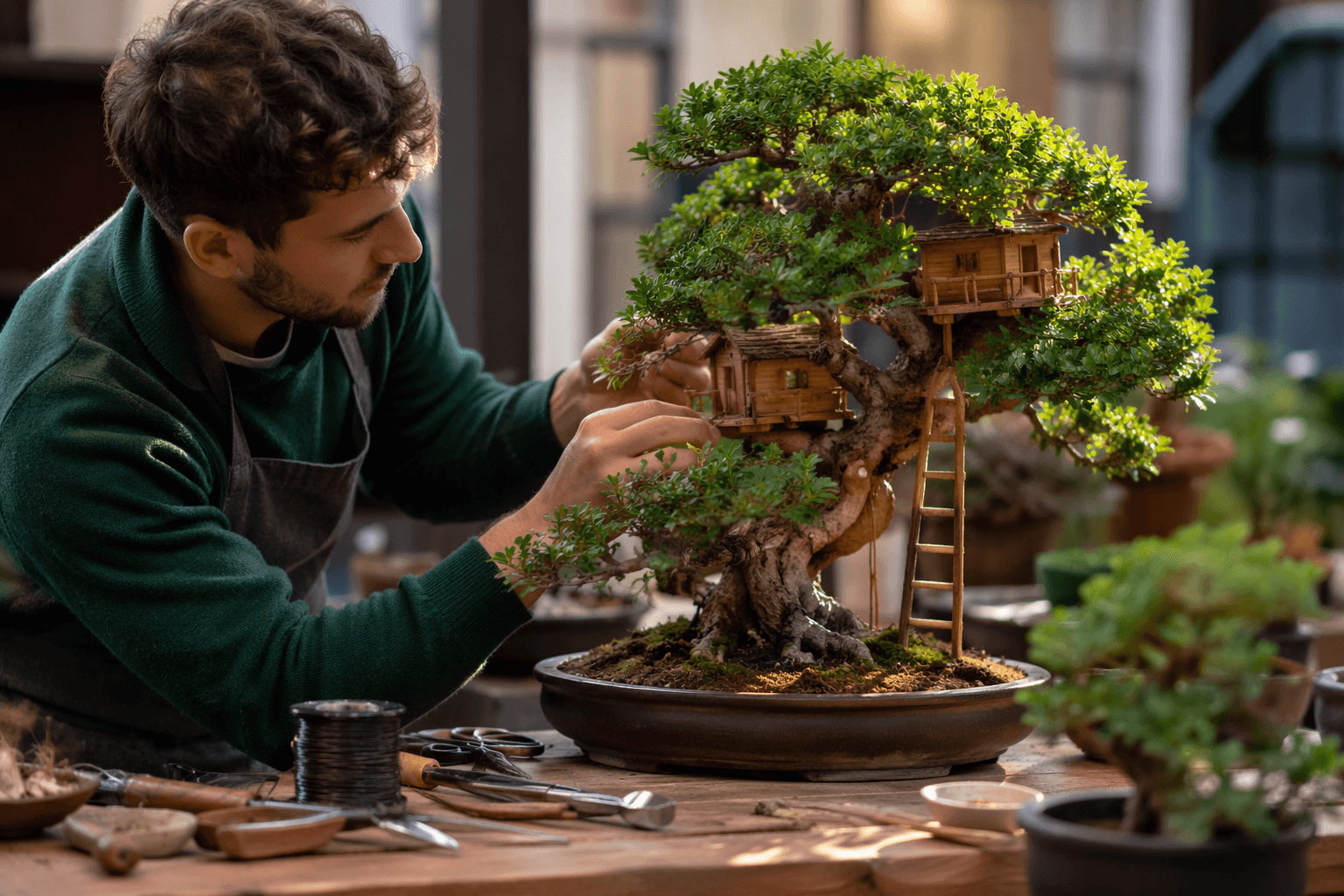
Akron Sakura Festival Pairs Cherry Blossoms With Public Bonsai Workshop
A bonsai display joins 472 blooming cherry trees at Akron's Sakura Festival this Saturday, putting the art form in front of an expected 8,000 first-time viewers.
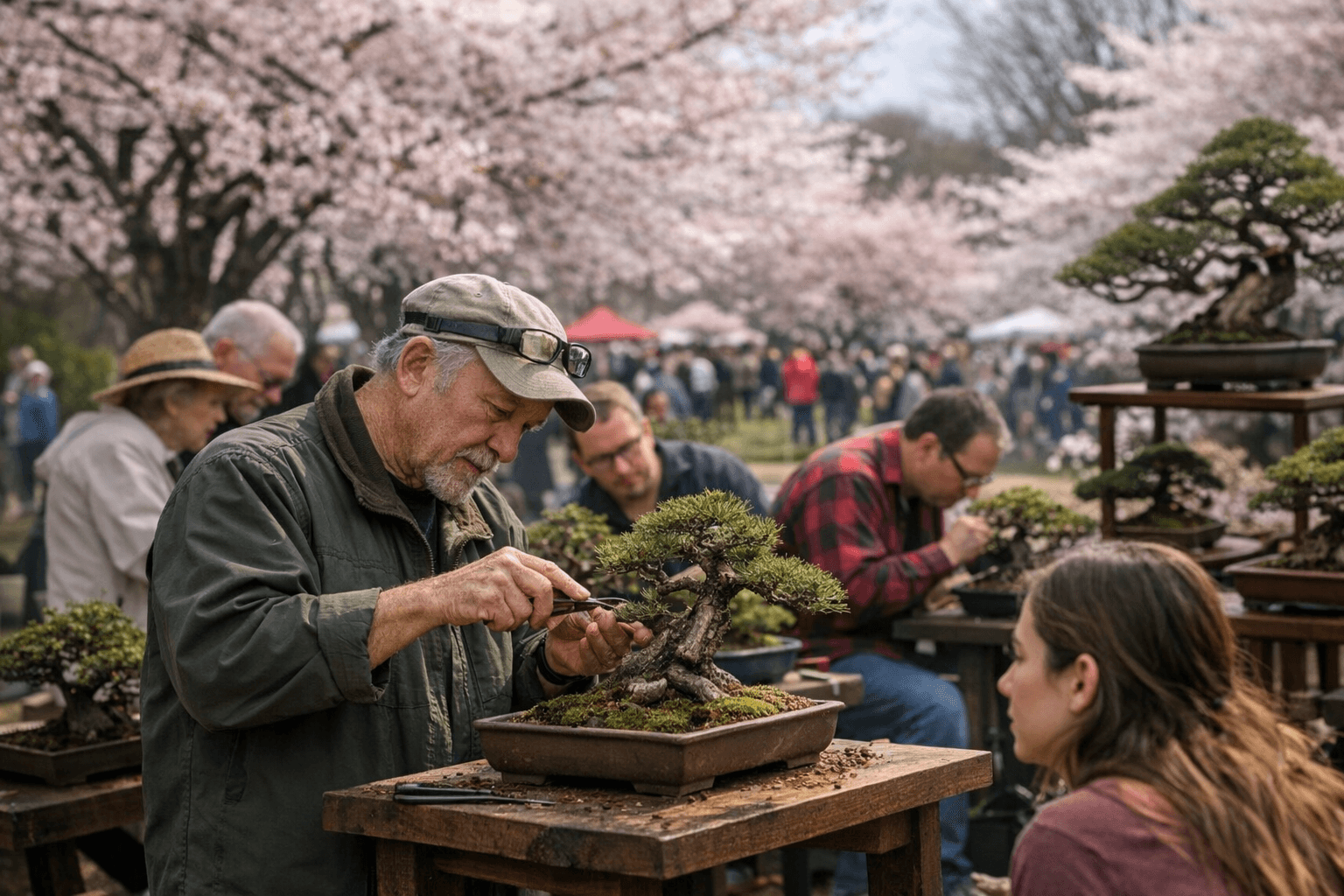
Cherry blossoms run on their own clock, which is part of what makes them powerful. Along Akron's Ohio & Erie Canal Towpath, 472 of them bloom each April because the Japanese Association of Northeast Ohio (JANO) spent the better part of a decade donating trees to the city and planting them into a downtown corridor that had none before. This Saturday, those trees serve as something more than scenery. The sixth annual Downtown Akron Sakura Festival runs from 1 to 7 p.m. along the Towpath, drawing an estimated 5,000 to 8,000 visitors into a program that includes ikebana demonstrations, a Japanese tea ceremony, sake and sushi tastings, a horticulturist walk, and a bonsai display and workshop that plants the art of the cultivated miniature directly inside one of Northeast Ohio's largest seasonal gatherings.
For the regional bonsai community, that last detail is worth marking. A bonsai display inside a festival of this scale represents a different kind of reach than a club table at a botanical garden or an invite-only workshop. People arrive at a sakura festival already primed to look at trees, already shaped by the cultural context of the event toward Japanese aesthetics, already open to things they wouldn't ordinarily seek out. A bonsai placed inside that frame, with cherry trees overhead and the tea ceremony nearby, lands differently than it would at a home-and-garden expo.
The connection between sakura and bonsai is not decorative. Both disciplines draw from the same aesthetic tradition, one that prizes the distillation of natural form, that locates meaning in the precision of a season or the architecture of a branch, that treats time itself as a working material. The cherry blossom's hold on Japanese cultural imagination derives partly from its brevity: it blooms, peaks, and is gone within two weeks. Bonsai operates at the other end of the same sensibility, demanding sustained attention over years, sometimes decades, to produce the appearance of an ancient thing in miniature. Placing a bonsai display inside a cherry blossom festival is not programming strategy so much as aesthetic argument, and for the uninitiated visitor walking the Towpath on a Saturday afternoon, it can be the most memorable part.
Chiaki Nakayama of JANO, whose organization planted all 472 of those Towpath trees, frames the occasion in terms of renewal: "The cherry blossoms invoke a feeling of renewal and rebirth after a long harsh winter." The bonsai component extends that framing into something more tactile and more durable. A tree in bloom lasts two weeks. A bonsai in a shallow pot, tended correctly, outlasts its caretaker.
The 2026 edition, organized by Downtown Akron Partnership with JANO's contribution at its cultural core, includes ikebana demonstrations at 1:30, 3:00, and 4:30 p.m. in Lock 3 Commons; Chado, the Japanese tea ceremony, at 1:00 and 3:00 p.m.; sake and sushi tastings at Cilantro Thai & Sushi at 1:00 and 2:30 p.m.; a Horticulturist Walk and Talk led by Master Gardener Lee Paulson covering the ecology of the Towpath trees, the geology of Northeast Ohio, and the history of the Ohio & Erie Canal; and the bonsai display and workshop. The Sakura Photo Contest, open through April 17, extends the festival's cultural reach past the single afternoon. All of it runs rain or shine across Locks 2 and 3, the Towpath Trailhead near Spaghetti Warehouse, the James R. Williams Tower in Ohio & Erie Canal Park, and The Mustill Store.
That Paulson's walk covers how the 472 cherry trees arrived along the Towpath, and that the same afternoon includes a bonsai display and workshop down the path, gives the festival a coherent depth that pure bloom-watching doesn't have. Someone who hears about the JANO donation, the canal history, and the specific care those trees have required, and then encounters a bonsai with similarly shaped intentions behind it, is receiving a connected argument rather than a collection of activities. The planting of those 472 trees over a decade ago was an act of long horticultural commitment; so is every bonsai on a display table.
That coherence matters for bonsai as a living practice in the region. The festivals that most reliably generate new practitioners are not specialty shows that address the already-converted. They are civic events where bonsai appears unexpectedly alongside something else that drew 6,000 people out on a Saturday. Someone who didn't know they were interested in bonsai can leave a sakura festival having encountered a specimen that stopped them, having asked a question, having taken a photograph for the photo contest. That is a different kind of first contact than a club open house, and it tends to produce different kinds of learners.
The 2025 festival welcomed 5,500 visitors to downtown Akron. The 2026 event, now expanded across its largest footprint to date, carries an estimated range of 5,000 to 8,000. Even at the conservative end, that is a significant concentration of the curious sharing a Towpath corridor with a bonsai display.
The practical note: the festival is free and open to all, running from 1 to 7 p.m. this Saturday along the Towpath in downtown Akron. Most ticketed programs require advance registration through Downtown Akron Partnership's website, but the bonsai display and workshop component is part of the general festival programming, accessible to anyone who walks through. That accessibility is the point. The trees were planted for the public more than a decade ago. The bonsai workshop is there for the same reason.
This article was produced by Prism’s automated news system from verified source data, official records, and press releases, then run through automated quality and moderation checks before publishing. The system is built and supervised by the people who set the standards it runs under. Read our full AI policy.
Did this article answer your question?