Bonsai deadwood styling turns damage into weathered design language
Deadwood can make a bonsai feel ancient, but only when the species, live vein, and aftercare can carry it. Jin, shari, and uro each tell a different weathering story.
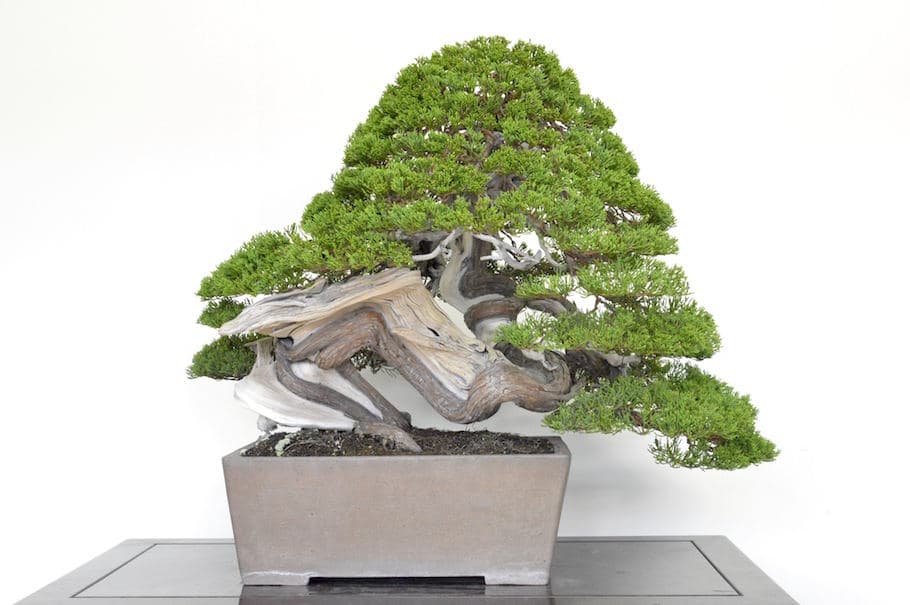
A June 15, 2009 Bonsai Bark post, “Jin & Shari #3: The Three Types of Deadwood,” showed a classic Japanese white pine, Pinus parviflora, with sabamiki, shari, and jin all on one tree. Deadwood styling is one of bonsai’s strongest visual languages, but it works best when it reads as survival, not decoration. Jin, shari, and uro each describe a different kind of damage turned into age, and the difference between convincing and forced usually comes down to species fit, believable structure, and how much living tissue the tree can still support.
What each deadwood form is actually saying
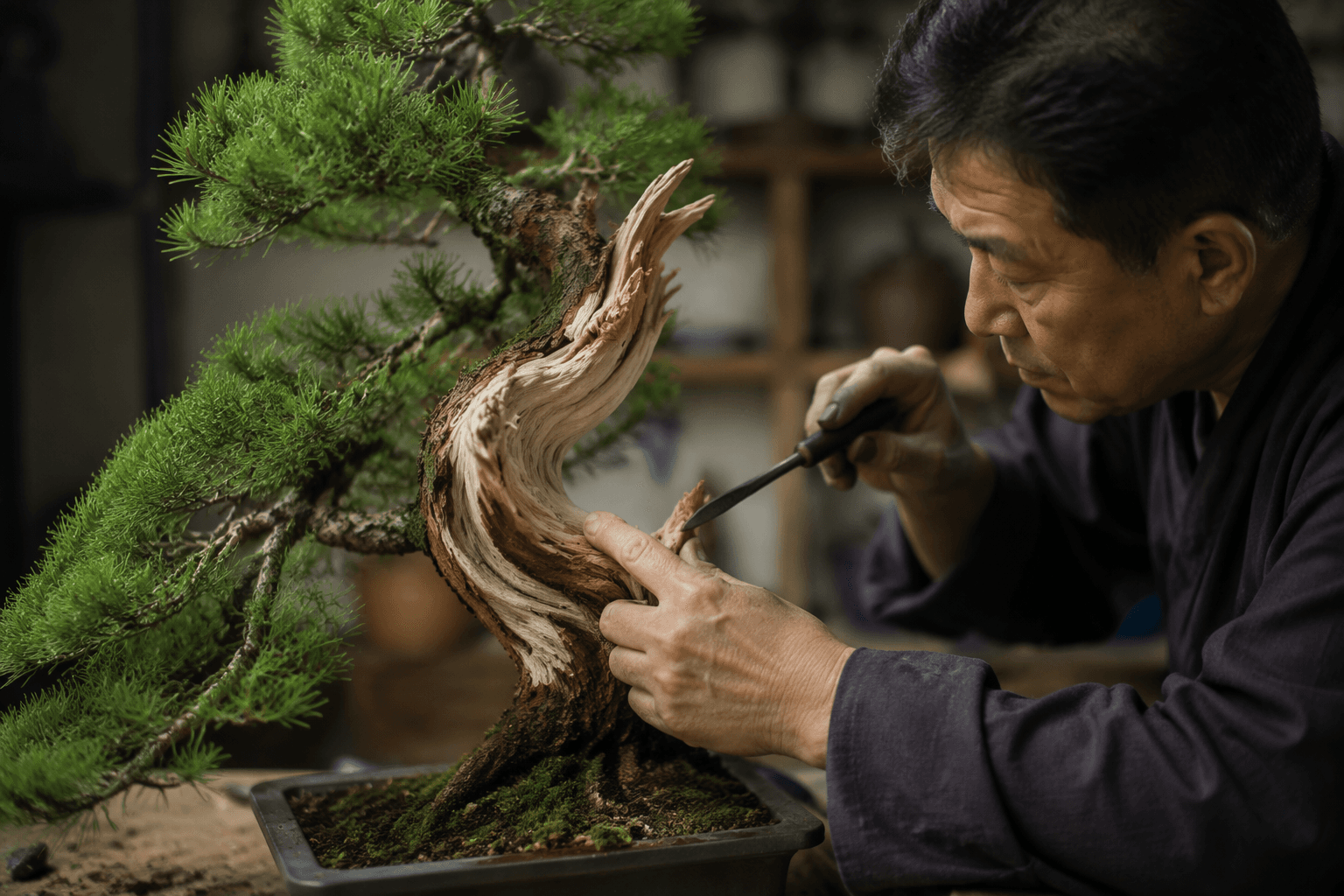
Jin is a stripped dead branch, usually read as a limb that snapped under wind, snow, or age. Shari is exposed deadwood running along the trunk, often used to suggest partial injury, lightning, or long exposure to harsh conditions. Uro is a hollow or cavity, the kind of scar that makes an older tree look hollowed out by time rather than carved for effect.
Those three forms are part of a broader deadwood vocabulary that also includes sabamiki and tanuki.
When deadwood fits the tree
Deadwood is most convincing on conifers, especially junipers and pines, because their rugged silhouettes already suggest mountain weather, drought, and age. Juniper and pine material often appears in deadwood demonstrations. Bonsai Empire’s deadwood video “Deadwood on Bonsai (Jin, Shari and Uro),” made to celebrate the organization’s 15th anniversary, features Will Baddeley. The effect is strongest when the live crown, trunk movement, and deadwood all agree on the same story.
Deadwood has to fit the species or it looks forced. A Bonsai Empire video featuring Andres Bicocca asks whether deadwood can be used on all bonsai and whether the techniques vary. Different trees, different growth habits, and different levels of vigor call for different amounts of restraint.
When deadwood starts to look wrong
Deadwood turns awkward fast when it outpaces the tree’s health or design. If the tree is still recovering from pruning, repotting, or other stress, adding jin or shari can make it look overworked rather than weathered. The same is true when the deadwood overwhelms the live vein, the trunk line, or the branch structure, leaving you with a feature that reads as damage first and design second.
The beginner mistake is copying dramatic deadwood without asking whether the tree has a believable reason for it. A dead branch on a small, weak tree can look like a mistake. A long strip of shari on a species that does not naturally age that way can look carved rather than earned. And a hollow uro that lacks a coherent edge, taper, or connection to the rest of the trunk can make the whole composition feel artificial.
Before-you-cut checklist
Use deadwood only after the tree passes a quick design check:
- The species can plausibly support the look, with junipers and pines usually reading most naturally.
- The tree is strong enough to handle the work, not just surviving recent pruning or repotting.
- The deadwood follows an existing line in the trunk or branch, rather than inventing a story the tree cannot support.
- The live vein still looks integrated, with enough living tissue to keep the composition believable.
- The finished shape will still read as a tree, not as a trunk with decorative wounds.
- You know whether you want jin, shari, uro, sabamiki, or a combination, because each one changes the design in a different way.
If the answer to more than one of those points is no, stop and let the tree build strength first.
How deadwood is created and preserved
Deadwood work follows two basic paths: making a wound that later heals, or digging into the tree’s core fibers. That gives you the central split in deadwood technique. One approach begins with injury and selective recovery, while the other removes material to reveal age, hollows, and exposed grain from the start.
That is why tools matter. Carving tools, knob cutters, and concave cutters help shape the wound cleanly, while raffia or wire can protect live veins during bending and keep the tree from splitting in the wrong place. Lime sulfur is commonly used to whiten and preserve deadwood surfaces, which helps the feature read as old wood instead of raw trauma.
Why strong design still matters more than dramatic wood
The best deadwood does not replace structure. It sits inside a larger composition built on taper, branch placement, and a live vein that feels like the engine of the tree. That is why deadwood on old nursery stock or collected material often looks more natural than deadwood added to a tree that has no believable age in the trunk or branch line.
Central Coast Bonsai Club Inc. keeps a dedicated page titled “Jin and Shari.”
This article was produced by Prism’s automated news system from verified source data, official records, and press releases, then run through automated quality and moderation checks before publishing. The system is built and supervised by the people who set the standards it runs under. Read our full AI policy.
Did this article answer your question?