Bonsai size guide explains shohin, chuhin and dai by hand count
Hand count turns bonsai size into a care cheat sheet: shohin is one-handed, chuhin two-handed, and dai signals bigger space, water, and budget.
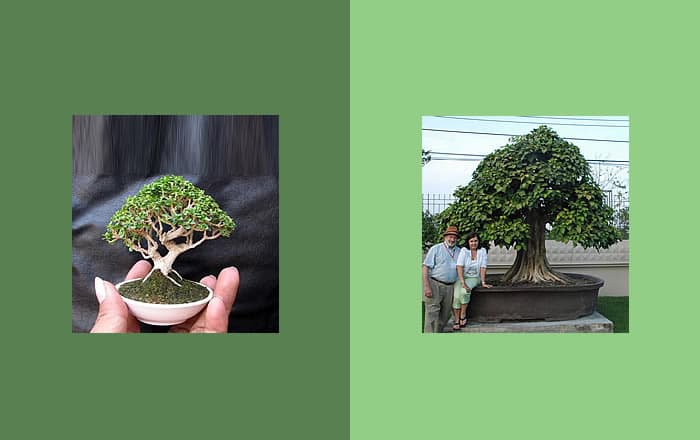
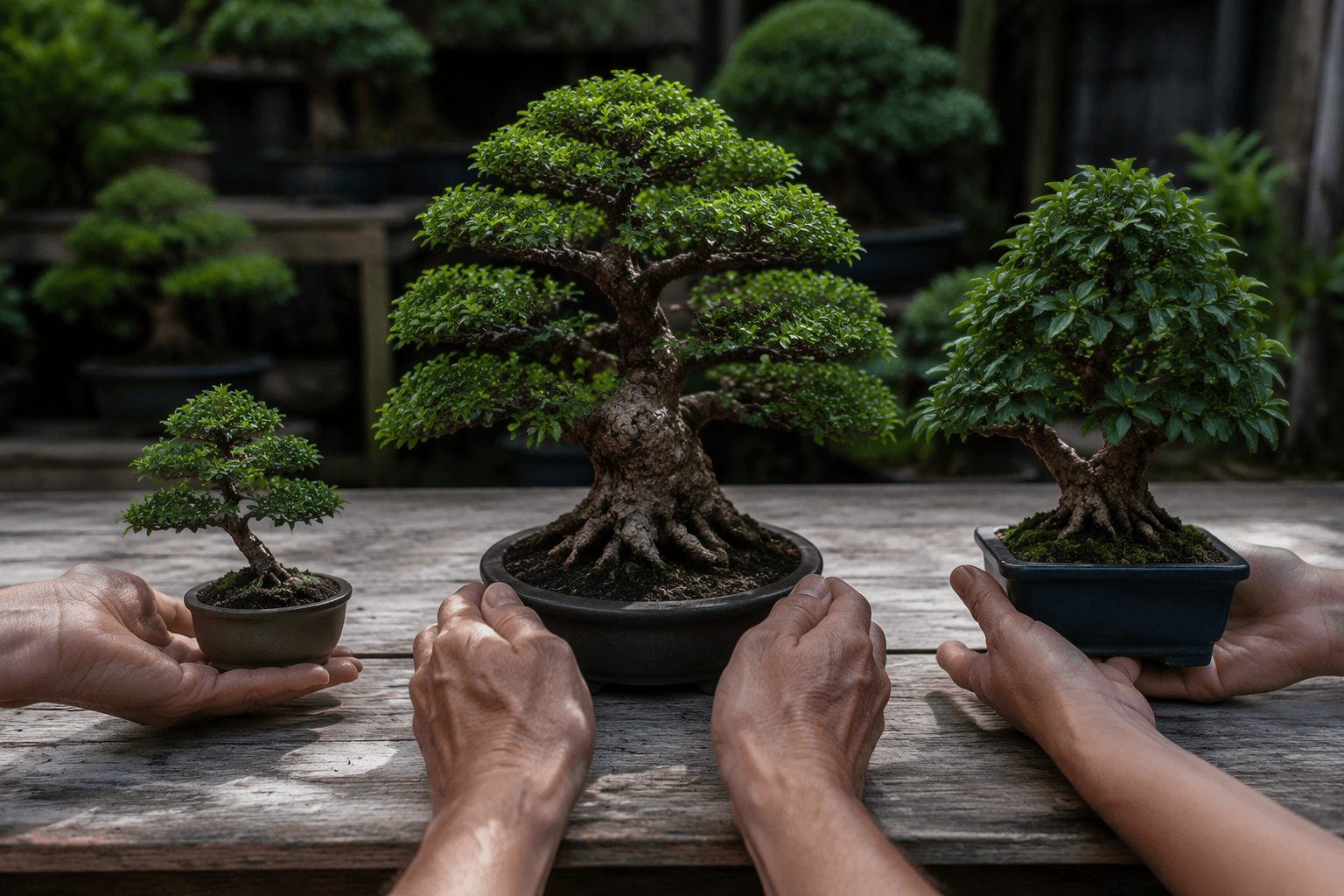
In the Albuquerque Bonsai Club’s hand-count system, shohin is a one-handed bonsai, chuhin is a two-handed bonsai, and dai is a four-or-more-handed bonsai that may take two or more people to move. Those labels tell you how a tree moves, where it fits, and how demanding it will be once it leaves the sales bench. They are a practical map for care, display, portability, and cost.
Why the hand-count system works
The system works by a simple test: how many hands it takes to move a tree. By December 10, 2022, Bonsai Made Simple described bonsai categories in more general terms as a matter of height and ease of handling.
The labels tell you how much bench space you need, how carefully you need to water, and whether a tree is going to travel easily to a club meeting or an exhibition. A tiny tree in a tiny pot is not automatically easier than a larger one, and the label helps you avoid treating every bonsai as if it had the same daily routine.
Shohin: small enough to carry, demanding enough to respect
Shohin is the size class most beginners recognize first, and Bonsai Empire gives the word its literal meaning: “a small thing.” The Albuquerque Bonsai Club breaks that category down further into komono, about 16 inches, mame, about 5 to 10 inches, and shito, or fingertip bonsai, under 3 inches. Once a tree falls into the shohin range, you already know you are dealing with a tree that can be shown compactly and moved without much drama.
The common beginner mistake shohin helps prevent is assuming “small” means “low maintenance.” In practice, the tiniest trees dry out fast, wiring has to be delicate, and pruning mistakes show immediately because there is so little foliage and branch length to absorb them. If you are choosing mame or shito, the label is a warning to pay attention to watering rhythm and to expect precision, not rough handling.
Shohin also changes how you think about display. A March 27, 2021 Shohin Bonsai Europe post on judging shohin bonsai used photos from Morten Albek’s private collection and from the 2020 Trophy in Belgium.
Chuhin: the middle ground with room to build a tree
Chuhin sits in the middle of the practical spectrum, and the Albuquerque Bonsai Club defines it as a two-handed bonsai. That extra size usually gives you more trunk movement, more branch structure, and more room for the design to breathe than you get in the tiniest classes.
The beginner mistake chuhin helps avoid is trying to force a medium tree to behave like a shohin. A chuhin still needs careful handling, but it is not the place for the same ultra-tight compromises you accept with a fingertip tree. It usually asks for a little more display room, sturdier placement, and a willingness to let the trunk and branch structure carry more of the visual weight.
That middle position is also why chuhin often feels like a sweet spot in a collection. It is still portable enough to move without special equipment, but it gives you enough scale to work with convincing taper, primary branches, and a more readable silhouette.
Dai: when size starts to change the whole setup
Dai is the category that pushes bonsai into a different practical league. At this end of the hand-count system, bench strength, transport, and where the tree can reasonably live all change.
The beginner mistake dai helps avoid is underestimating the physical side of bonsai. A larger tree asks for stronger benches, more space, and a plan for moving it safely, and it usually means more soil volume, larger containers, and a heavier watering load. The tree may offer an imposing presence and a strong trunk, but the tradeoff is that every routine task gets more serious.
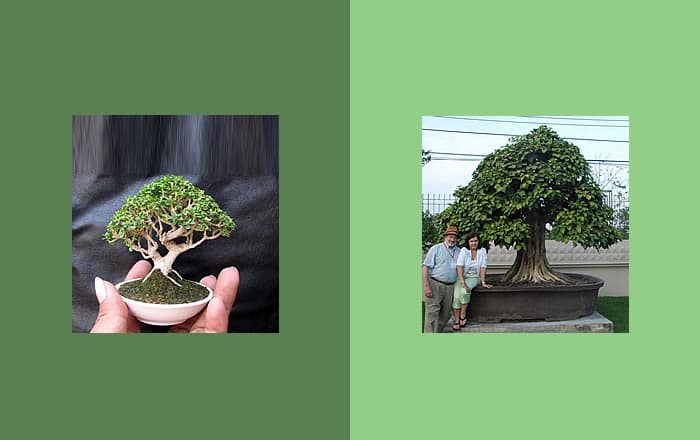
Dai is also the clearest example of why the size label is a service tool, not just a description. If a tree takes two or more people to move, it will not suit the same shelf, windowsill, or travel crate that might work for a shohin.
The broader ladder behind the labels
The hand-count system sits inside a wider size vocabulary that other bonsai references present as a spectrum rather than a single small-tree category. Miyagi Bonsai extends the ladder beyond shohin, chuhin, and dai with classes such as keshitsubo and imperial-sized trees, while Beechfield Bonsai treats bonsai as a range of size classes.
Bonsai displays at Japanese exhibits are commonly six feet wide, about the length of one tatami mat, and bonsai commonly range from a few inches tall to three or four feet tall, Bonsai Tonight wrote in its November 26, 2023 post on display basics. Size tells you what can share a stage, what needs an accent plant, and how much room the composition will occupy.
A language with old roots and modern use
Bonsai Empire traces bonsai back to ancient Chinese horticultural practice and to redevelopment under the influence of Japanese Zen Buddhism. Wikipedia’s bonsai history pages place the art across early versions, Hachi-no-ki, the classical period, and modern bonsai.
This article was produced by Prism’s automated news system from verified source data, official records, and press releases, then run through automated quality and moderation checks before publishing. The system is built and supervised by the people who set the standards it runs under. Read our full AI policy.
Did this article answer your question?