Nigel Saunders begins first styling work on neglected tropical bonsai material
Nigel Saunders finally repotted two neglected trees, a possible Pitanga and a Crocodile Plant aloe, after years without work. It marked their first real bonsai step.
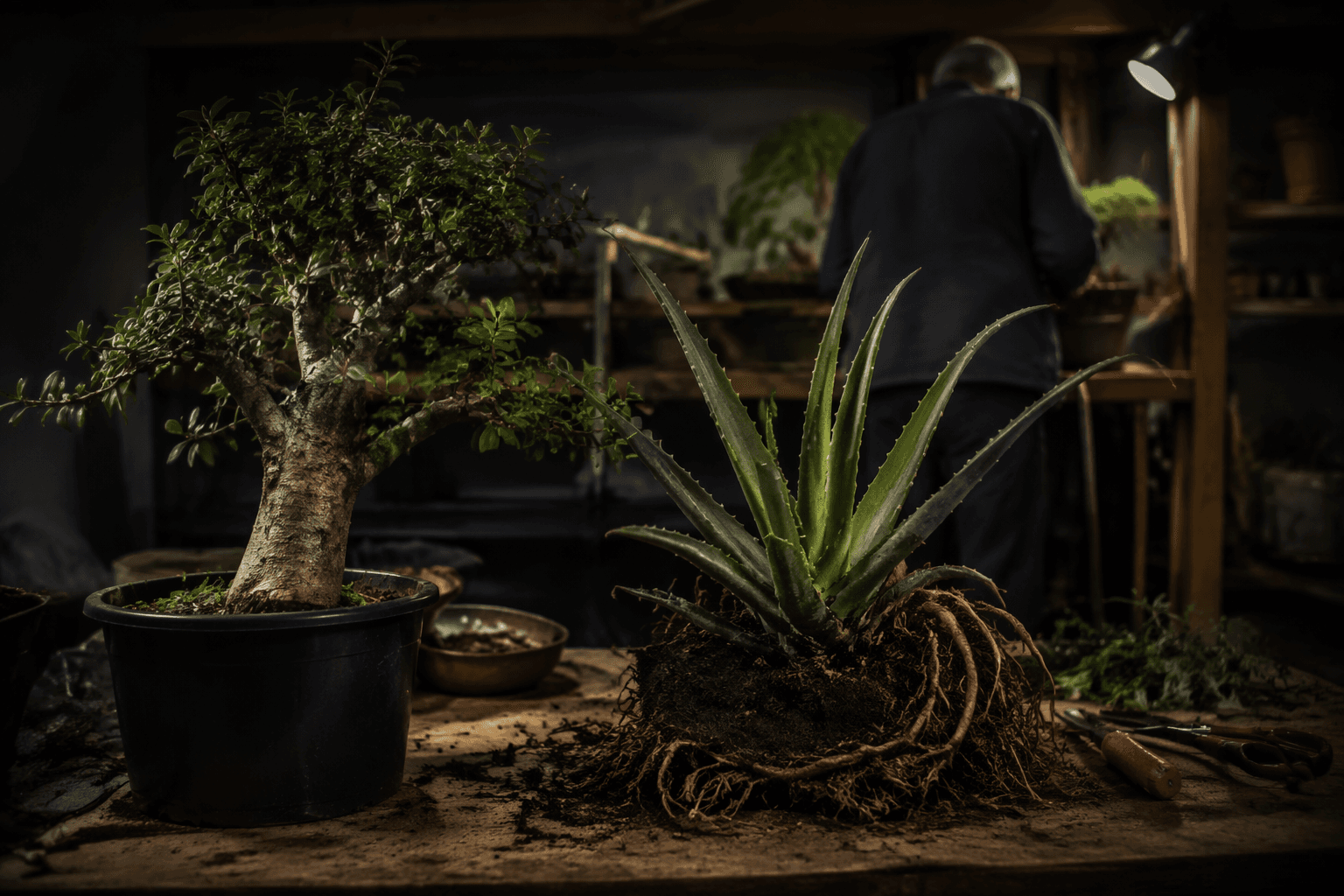
Nigel Saunders gave first structural attention to two trees he said had been neglected for a couple of years in a July 21 video on The Bonsai Zone. One was a tropical tree he identified as possibly a Pitanga, or Surinam cherry, Eugenia uniflora; the other was an Aloe bonsai, specifically Crocodile Plant Aloe brevifolia.
The pairing made the episode more than a simple repot. Eugenia uniflora is a woody tropical species that can be built into refined bonsai over time, while Aloe brevifolia grows with the thick, succulent texture and different rhythm that come with aloe material. Saunders said these were trees that had simply kept growing while he waited to start turning them into bonsai, and that is where the practical lesson sits: material does not need to arrive at the bench in finished shape before it can be worked.
Saunders framed the repotting as the first step for both plants, not the end of the project. That is the right way to read neglected stock that has been left alone for years. Repotting is often the moment when roots, nebari potential, trunk line and future silhouette become visible enough to judge honestly, and Saunders treated these trees that way rather than pretending they were already close to showable.
His recent aloe work gives that approach some added context. On April 29, Saunders said he had moved his overwintered trees from an unheated basement into a glass greenhouse for spring growth and was working on his Aloe bonsai among other plants. On July 6, he posted a separate video titled Repotting My Aloe Bonsai and said he had had that aloe for 10 years, starting from a small little aloe plant.
That July 21 session also fits a longer run of succulent experimentation in his work. A May 2023 Bonsai Zone video, Repotting My Aloe Bonsai, Part 1B, showed him planting a new short-leaved Aloe brevifolia in his Desert Rose forest, and a January 2023 video titled My Tiger Aloe documented the first major work on his Tiger Aloe, Aloe maculata, with a trim and a repot. Together, those videos show Saunders treating succulents as serious bonsai material, even when the starting point is delayed, overgrown or unfinished.
The July 21 repot was a reminder that neglected trees can still be worth the effort when they are assessed patiently and worked on in sequence. Saunders did not present the two plants as rescued masterpieces; he presented them as the moment when years of waiting finally became the beginning of bonsai work.
This article was produced by Prism’s automated news system from verified source data, official records, and press releases, then run through automated quality and moderation checks before publishing. The system is built and supervised by the people who set the standards it runs under. Read our full AI policy.
Did this article answer your question?