Bonsai growers focus on winter repotting prep and species timing
July is a timing check, not a styling spree: decide now which deciduous bonsai need repotting and which flowering trees must wait. Rushed cuts can cost spring bloom.
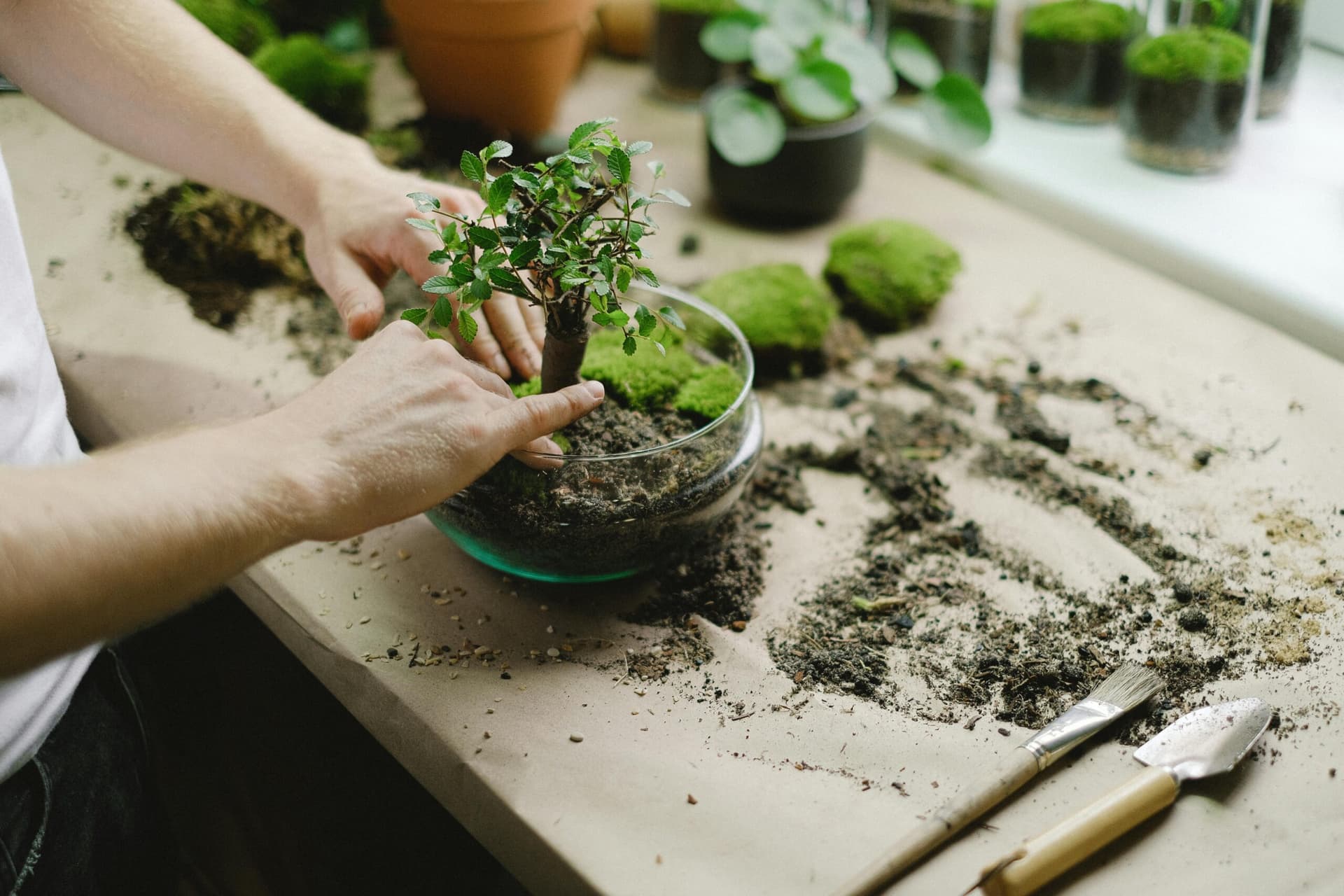
Prunus mume should be repotted when its buds are swelling; once its leaves or flowers open, the year’s window is gone. July is when growers decide which deciduous bonsai are ready for repotting and which flowering trees need to stay untouched until their cycle has moved on. The month is for getting winter repotting organized, reading the tree’s visible signals, and avoiding the kind of early intervention that can wipe out flowers or force weak growth.
Repot now or wait
The clearest benchmark is the repotting interval. The Bonsai Society of Australia puts deciduous bonsai on a general repotting cycle of two to five years, with the exact timing shaped by the vigor of the species and the age of the tree. Younger development trees usually need more frequent repotting, shaping and styling, while mature bonsai can often go longer with less wiring and less root work because the main structure is already set.
July is a decision month, not a blanket work month. If a tree is still within its normal interval and growing strongly, it may be a candidate for winter repotting prep. If it is a mature specimen with a settled structure, the better move is often to leave it alone unless the roots or the tree’s condition make intervention necessary.
Read the tree before you touch the pot
In July, observation comes first, especially for deciduous trees. The practical question is whether the tree is signaling that it needs repotting now, not whether the calendar simply says it is time for action. Healthy trees can tolerate a balanced approach, including root pruning paired with trimming back immediately after spring flowering, but that only works when the tree is strong enough to handle it.
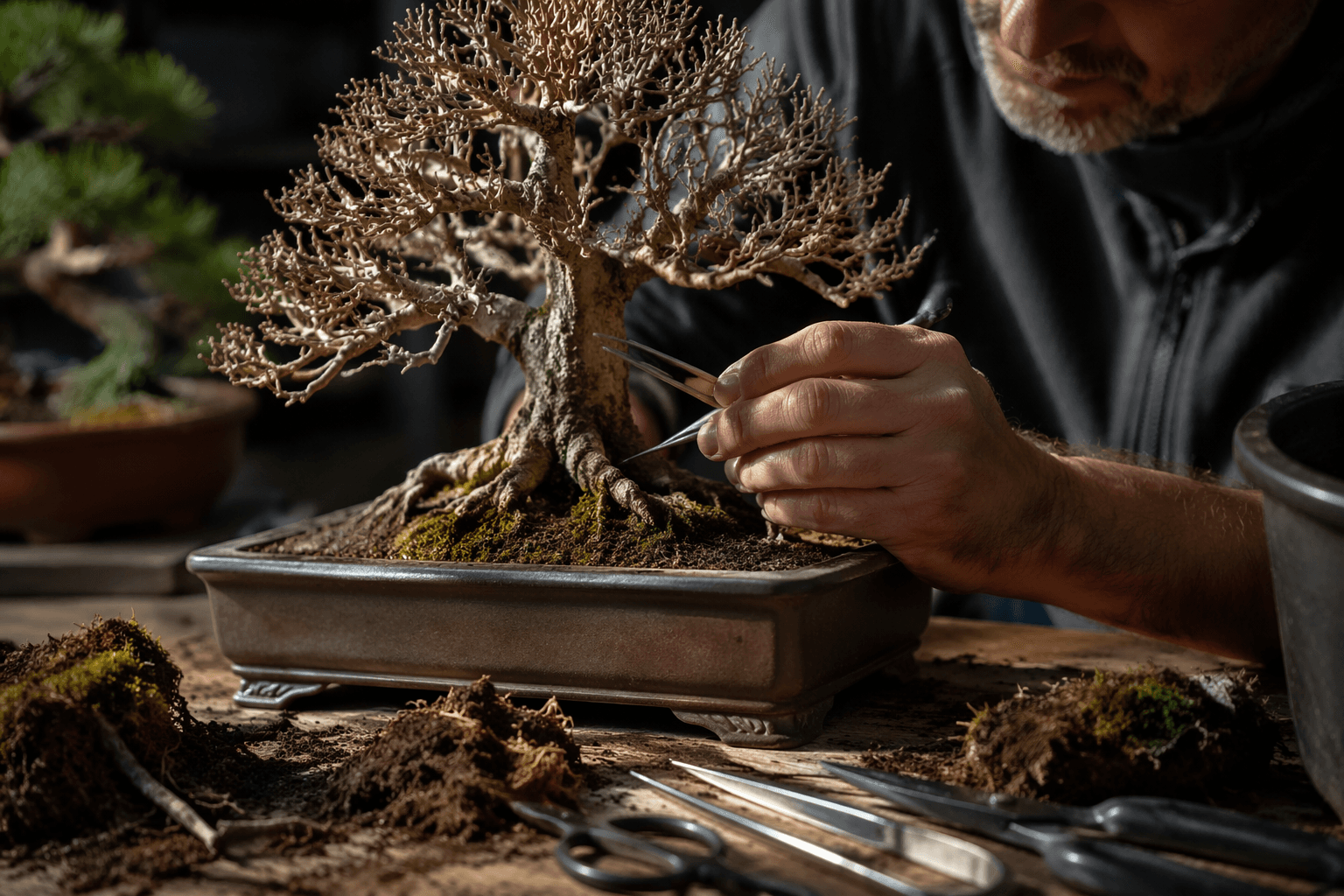
Flowering trees demand even more restraint. Trimming the tops of flowering bonsai reduces the number of flowers you will get in spring, and any severe pruning of the top should wait until flowering has finished.
Species that belong on the July bench
The society’s older July guidance names the species that belong in this careful midwinter workflow: crab-apples, maples, elms, wisteria, flowering prunus of all types, and ashes. The current seasonal note expands that practical list with liquidambars and deciduous conifers.
Bloomers need the same restraint. If you cut flowering tops too hard, you cut into spring performance as well. For trees being readied for repotting, combine only the work the tree can safely absorb and postpone the rest until the bloom cycle is over.
Prunus mume sets the pace
Prunus mume gets special treatment because it buds early. The Bonsai Society of Australia puts it at the front of the queue when the buds are swelling. If the buds are moving, the window is narrowing fast.
Missouri Botanical Garden lists Prunus mume, the Japanese apricot, as a fast-growing deciduous tree native to China, Taiwan, Korea and Japan and prized for its mid- to late-winter flowers. Miss the bud stage, and you lose the chance to repot on schedule without risking the season’s flowers.
Group plantings need shared rhythm
The society’s July note also turns to winter group plantings: trees in a forest planting should be the same species or at least share similar seasonal behavior so the composition reads well all year. Mixed material can weaken the visual rhythm if one tree is pushing ahead while the others are still dormant or flowering out of sync.
Bonsai Society of Australia Inc. was founded in August 1965 by Dorothy and Vita Koreshoff and describes itself as one of Australia’s first bonsai societies. Its older July guidance repeats the same flowering-tree caution.
This article was produced by Prism’s automated news system from verified source data, official records, and press releases, then run through automated quality and moderation checks before publishing. The system is built and supervised by the people who set the standards it runs under. Read our full AI policy.
Did this article answer your question?