Bonsai Soil Guide: Mixes and Roles of Akadama, Pumice, Lava
Soil recipes and roles of akadama, pumice and lava explained for better drainage, aeration and water retention.
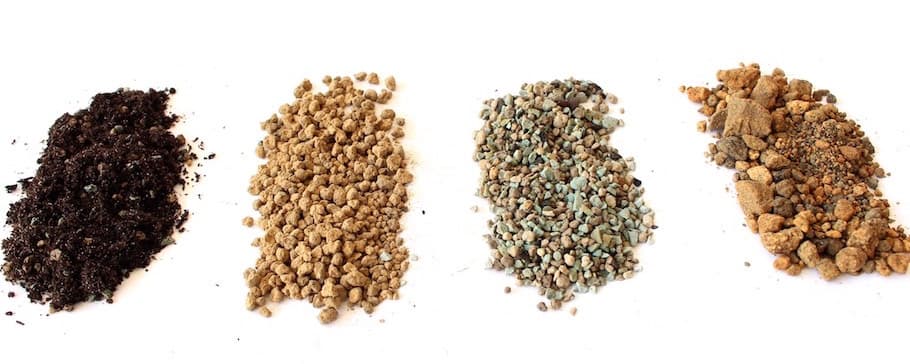
Particle-based, well-structured substrates - akadama, pumice and lava rock - give bonsai growers far more control over drainage, aeration and water retention than organic-heavy mixes. That balance matters because roots need oxygen as much as water; mixes that compact or break down quickly choke root systems and force more frequent repotting.
Start with the roles. Akadama is the moisture-buffering component: it holds water and offers fines that gradually break down over years, helping younger trees retain moisture while slowly changing porosity as the tree develops. Pumice acts like a sponge and a skeleton at once - it holds water and nutrients, resists compaction and improves substrate structure. Lava rock provides the structural backbone for drainage and long-term porosity, preventing channels from collapsing and keeping air pockets open around the root ball.
Use those roles to choose proportions. For trees that need more moisture between waterings - deciduous species, for example - aim for about 50% akadama, 25% pumice and 25% lava. For many conifers and trees that prefer faster drying, a balanced 33/33/33 akadama/pumice/lava mix gives consistent drainage while still retaining enough moisture and nutrients. These mixes are starting points; adjust based on pot size, style and your microclimate.
Maintenance and repotting follow from component behavior. Organic-rich soils break down and reduce aeration as they decompose; that translates to more frequent repotting and root work. Inorganic mixes are more stable, so you gain predictable performance and longer intervals between major root pruning. Akadama’s fines will decompose slowly, so expect porosity to change over several repottings; pumice and lava remain stable and maintain structure for many years.
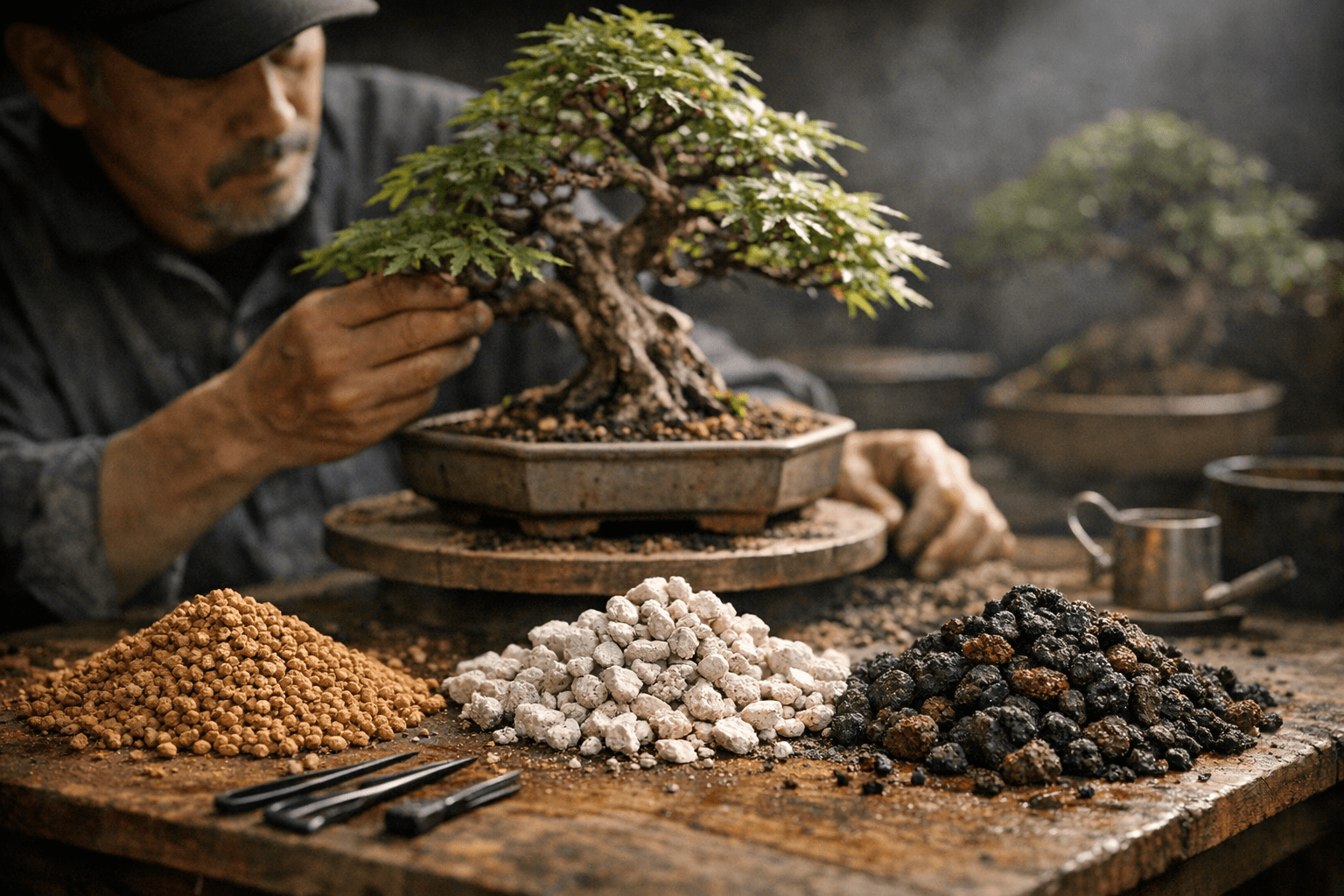
Preparation matters. Sieve media and remove dust and fines before potting to avoid clogging pore spaces and creating a perched water table. Clean, graded particles promote even wetting and drying and make watering and fertilizing responses more predictable.
Adapt mixes to climate and care routine. In dry climates or for trees you can only water sporadically, increase water-retentive components like akadama. In humid or rainy locations, increase lava and pumice to speed drying and lower root-rot risk. Small pots and open-grown bonsai often need coarser mixes than larger containers because root zone volume and evaporation rates differ.
This approach gives you practical, hands-on control: pick components for their roles, sieve for clean particles, adjust ratios for species and climate, and plan repotting schedules around how each component breaks down. With the right mix you’re not guessing at watering frequency - you’re tuning soil to the tree, and that makes every repot and watering session work harder for nebari, health and long-term styling.
Know something we missed? Have a correction or additional information?
Submit a Tip