Cairo flower fair spotlights bonsai as a gift for new homes, milestones
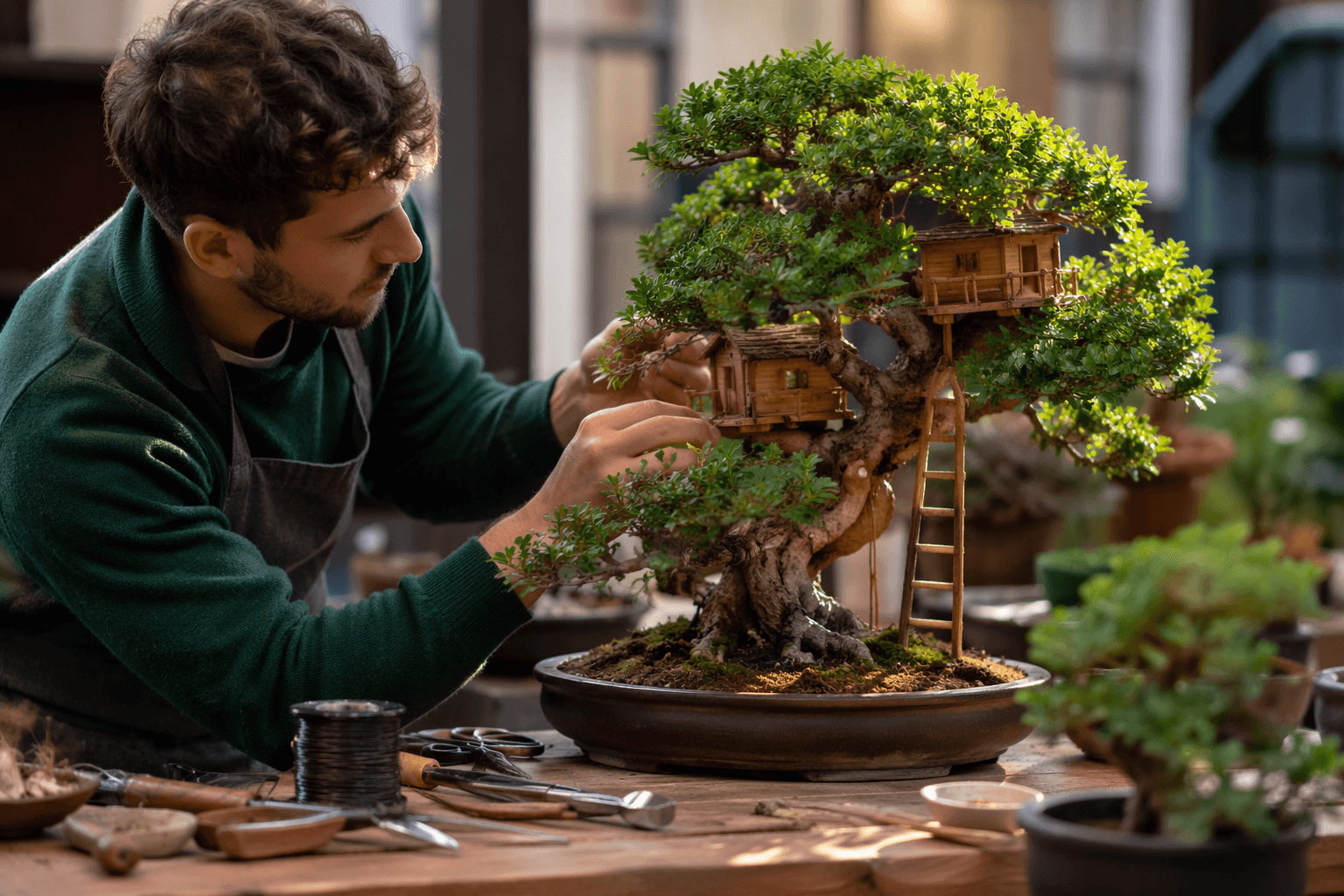
Bonsai at Cairo’s spring flower fair is selling as a housewarming plant, a milestone gift, and an easy way into the city’s biggest horticultural market.
A spring fair that keeps Cairo’s plant calendar moving
The 93rd Spring Flower Exhibition has turned the Agricultural Museum in Dokki into Cairo’s most visible plant market, and bonsai is part of the draw. The fair opened on Thursday, April 30, 2026, with more than 100 exhibitors, including major nurseries, landscape designers, ornamental plant producers, and suppliers of agricultural inputs, and the run was extended until the end of May after strong public turnout.
That scale matters because this is not a niche display tucked away for specialists. Cairo Governor Ibrahim Saber and Central Auditing Organization President Mohamed El-Faisal Youssef were among the figures present at the opening, alongside Agriculture Minister Alaa Farouk, a reminder that the show still sits at the center of Egypt’s spring horticultural season. At the same time, the exhibition is doing double duty: it is a sales floor and a temporary public garden destination while Orman Garden remains under restoration.
Where bonsai fits among roses, jasmine, and fruit trees
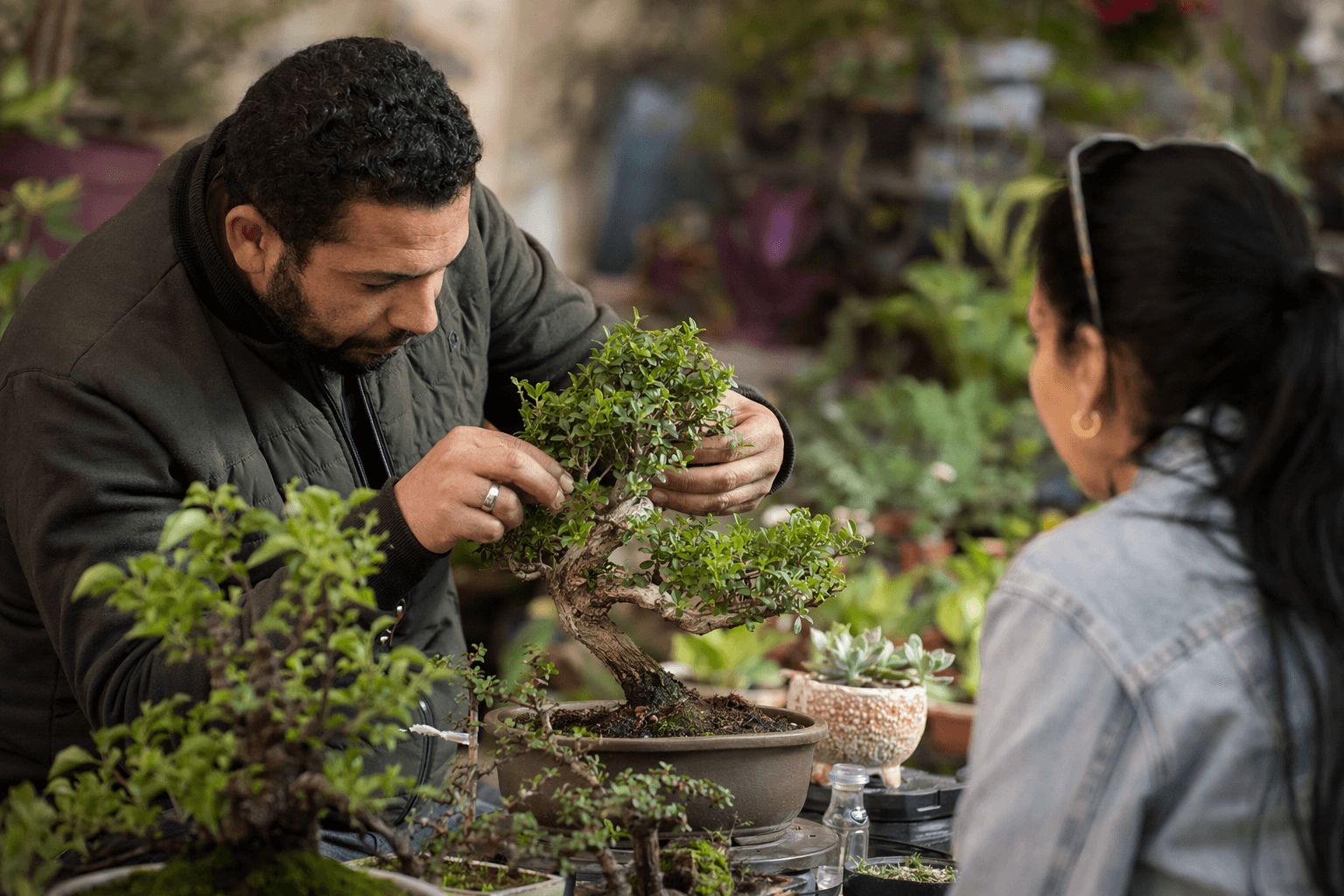
At the exhibition, bonsai does not appear as an isolated luxury object. It sits alongside roses, jasmine, fruit trees, fertilizer, pots, and vases, which is exactly why it works so well for a first-time buyer walking the aisles with family or arriving to browse without a shopping list.
That setting changes how the miniature trees are read. Bonsai becomes part of an ordinary home-and-garden purchase cycle, not a museum piece behind glass. It is something you can imagine on a windowsill, a balcony, or a desk, especially when the surrounding stalls offer the containers, soil inputs, and decorative pieces that make the tree feel finished and ready to live with.
Nermine, a mathematics teacher, captures that shift perfectly. She had wanted a bonsai for a long time, bought one after moving into a new house, and described it as her 50th birthday plant. She also worried about watering and maintenance, but still saw the purchase as worthwhile, which is exactly the kind of emotional logic that turns bonsai from a collector’s item into a personal milestone gift.
A fair that pulls in families, not just gardeners
The crowd at the Agricultural Museum shows how broad the appeal has become. Seasoned gardeners walk the same paths as first-time buyers, and the exhibition also pulls in parents bringing children and people who simply want to look at the displays.
That mix changes the feel of the bonsai tables. A visitor who said she regretted not coming earlier suggests the fair has enough variety to reward a second look, while another visitor said she brings her six-year-old daughter so they can draw flowers together and spend time away from smartphones. In that setting, bonsai becomes more than a purchase, it becomes a conversation starter, a drawing subject, and a way to teach children that plants can be small, shaped, and carefully kept.
This is where mass horticultural events do real work for the bonsai community. They lower the entry barrier by surrounding miniature trees with familiar flowers and practical supplies, which makes it easier for someone who has never owned a bonsai to ask questions, compare options, and leave with a plant they can actually keep.
Why the temporary venue matters for bonsai
The move from Orman Garden to the Agricultural Museum is not just a logistical footnote. Giza Zoo and Orman Garden were officially closed for renovation starting July 9, 2023, and the restoration effort is tied to a larger redevelopment plan that has been estimated at EGP 2.7 billion and linked to a phased reopening.
Orman itself carries a long horticultural memory. The garden was founded in 1875 during the reign of Khedive Ismail, and the spring flower exhibition has been held there annually since the 1930s before shifting to the Agricultural Museum during the restoration period. That history gives this year’s show a sense of continuity even in a temporary setting, because the fair is not replacing Orman so much as holding its place until the garden can reopen.
For bonsai, that continuity matters. Miniature trees depend on ritual, repetition, and an audience that learns to look closely, and a large spring fair is one of the few settings where a beginner can encounter them beside roses, jasmine, and nursery stock without feeling out of place. The temporary venue keeps the tradition visible, and visibility is how new bonsai buyers are made.
What visitors can actually expect to find
A trip to the exhibition is useful if you want more than inspiration. The fair is built for buying as well as browsing, and the presence of nurseries, ornamental plant producers, and agricultural-input suppliers means there is real support for taking a tree home and keeping it alive.
- Bonsai displayed with other ornamentals, which helps with comparison and sizing
- Pots and vases, useful for presentation and repotting decisions
- Fertilizer and related supplies, which matter once the tree leaves the fair
- Fruit trees and flowering plants, useful if you are building a mixed home collection
- A broad mix of exhibitors, which makes it easier to ask practical questions instead of shopping in isolation
That combination is what makes the Cairo fair so effective as a community on-ramp. It turns bonsai into something a new homeowner can buy for a fresh start, something a parent can point out to a child, and something a casual visitor can discover while wandering past roses and jasmine. In a year when Orman is still under restoration, the exhibition keeps Egypt’s spring plant tradition alive by widening the circle of people who feel welcome to stop, look, and begin.
This article was produced by Prism’s automated news system from verified source data, official records, and press releases, then run through automated quality and moderation checks before publishing. The system is built and supervised by the people who set the standards it runs under. Read our full AI policy.
Did this article answer your question?