Penn State Extension Explains Kokedama, a Japanese Art Related to Bonsai
Penn State's kokedama explainer makes a strong case for a moss-ball display as a lower-stress entry point to bonsai, with the same discipline in a simpler form.
Why kokedama belongs in a bonsai conversation
Penn State Extension gets to the useful part fast: kokedama comes out of the Nearai bonsai method, where plants are trained so tightly that roots and soil hold together outside a container. That detail matters because it shows kokedama is not a cute detour from bonsai, it is part of the same Japanese design lineage, only stripped down to a more accessible format.
For anyone who has stared at a raw nursery tree and felt the usual bonsai intimidation, that is the hook. Kokedama keeps the core lessons of the hobby, root control, moisture management, presentation, and plant selection, but removes some of the pressure that comes with a formal pot, wiring scheme, and long training timeline. It is small-space friendly, indoor-friendly, and much easier to experiment with on a kitchen table than a trunk-in-training bonsai that needs years of patience.
What kokedama actually is
Missouri Botanical Garden describes kokedama as the Japanese art of growing plants in a moss-covered ball of soil wrapped with string or mono-filament fishing line. Penn State Extension says the root ball is wrapped in moss and held together with twine or wire. That is the whole trick, and it is elegant precisely because it is so direct.
The finished piece can be read in two ways at once: as a plant-growing method and as a display object. That is where kokedama starts to overlap with bonsai in a very real way. Both depend on restraint, proportion, and the idea that presentation should sharpen the plant’s character instead of burying it under pot and ornament.
The Royal Botanic Gardens, Kew connects kokedama to wabi-sabi, the Japanese appreciation of beauty in imperfection and age. Kew also notes that the moss-covered roots are said to have inspired the first kokedama created in Japan around 750 years ago. That backstory gives the technique more weight than a passing home-decor trend, even if it is still being used today as something stylish and approachable.
Why it can be the easier indoor starting point
Kokedama is often described as the “poor man’s bonsai” or the “lazy man’s bonsai,” and that label makes sense only if you hear it as shorthand for lower maintenance, not lower value. Kew uses that language to explain why the style appeals so broadly: it needs much less attention than traditional potted bonsai. For a beginner, that reduced burden can be the difference between trying the hobby and never starting.
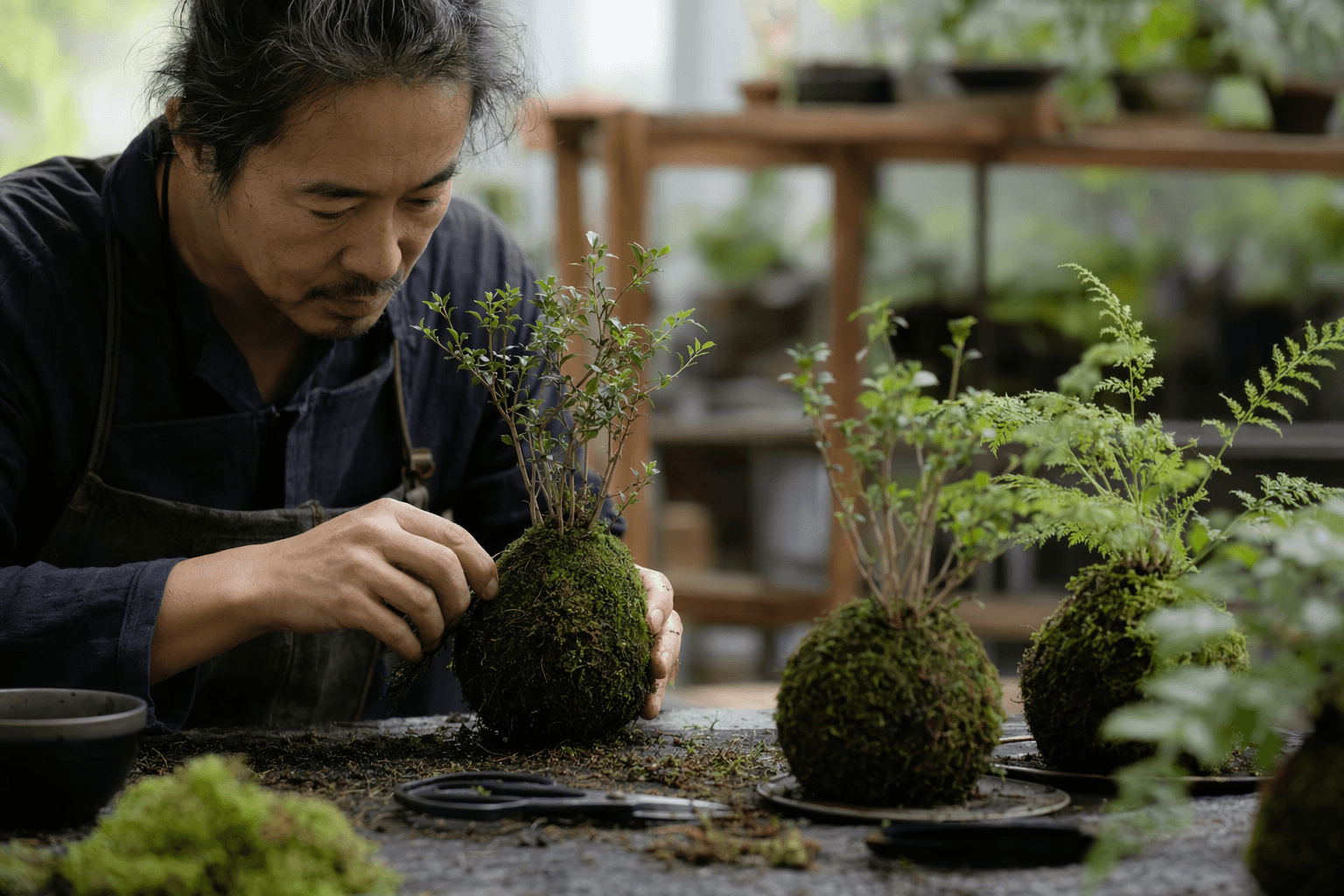
The practical appeal is obvious in small apartments and rooms with limited shelf space. Illinois Extension says kokedama can be displayed on decorative trays, antique bowls, saucers, driftwood, or hung from a window or ceiling. Missouri Botanical Garden also emphasizes hanging kokedama, which opens up vertical display in a way a conventional bonsai pot rarely does. If you do not have a dedicated bonsai bench, this is a real advantage, not a gimmick.
It also gives you a softer entry into the same skills bonsai asks for later. You still have to pay attention to roots, water, and plant health. You just get to do it without the added complexity of choosing a formal ceramic pot before you have even learned how the plant drinks.
What to grow in a kokedama
Illinois Extension says many different kinds of plants can successfully be grown as kokedama, which is one reason the technique works so well as a gateway. Penn State Extension points out that kokedama can be made with established houseplants, cuttings, or seasonal plants. That flexibility makes the method easy to test without committing a prized tree or an expensive specimen.
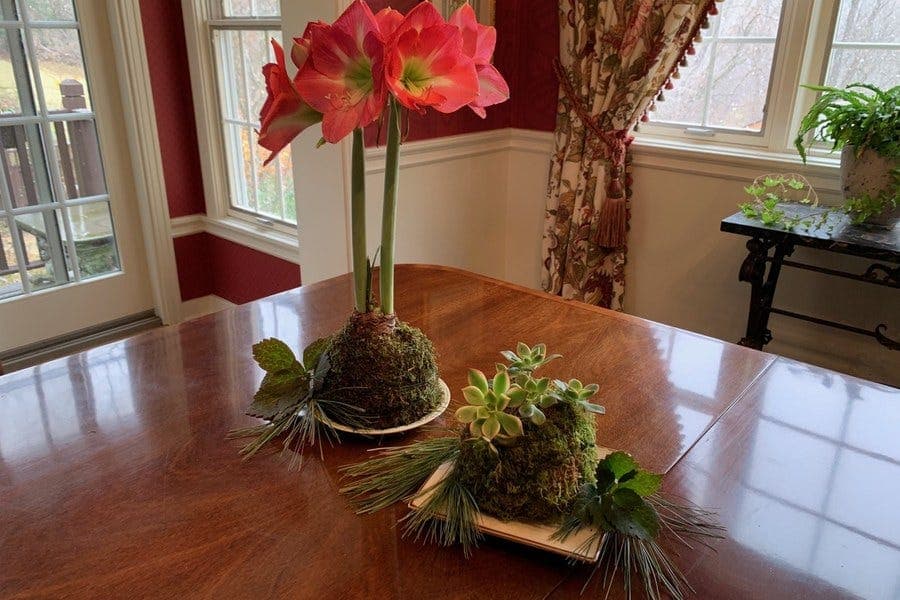
The examples are useful because they are ordinary, not precious. Penn State mentions pothos, succulents, and amaryllis bulbs, and that range tells you a lot about how forgiving the format can be when you choose the right material. Pothos gives you a dependable trailing houseplant, succulents bring a different moisture profile, and amaryllis bulbs show that kokedama can even be adapted for seasonal display.
That variety also matters for bonsai readers because it clarifies the boundary between kokedama and true tree training. A kokedama can absolutely become a serious exercise in discipline, but it does not have to start there. You can use it to learn the rhythm of moss, water, and form before you put a tree into long-term development.
How to display it without overthinking the finish
One of the smartest things about kokedama is that the display can be as simple or as styled as you want. A clay saucer works. So does a vintage bowl, an antique dish, or a piece of driftwood. Hanging it from a window or ceiling turns the moss ball into a suspended focal point, which is why the style has found a home both in plant circles and in interior design.

That flexibility is useful for bonsai people because it changes the way you think about the plant as an object. You are not just staging a specimen. You are deciding how the plant’s weight, texture, and silhouette read in space. If you already appreciate a tree on a slab or a rock planting, kokedama should feel familiar in spirit even if the materials are different.
The part that decides success: watering
The care advice is where kokedama stops being romantic and becomes practical. Penn State Extension stresses that the key is to meet the plant’s needs without leaving the moss constantly saturated. That is the line to remember, because overwatering turns the whole thing into a soggy mess fast.
Penn State recommends misting, soaking at the sink, or using a tray or vessel to manage moisture. That gives you options, but the underlying principle is the same as in bonsai: you are reading the plant, not following a mindless schedule. A kokedama should not live in wet moss all the time, and it should not dry into a brick either.
Humidity helps, and Penn State notes that kokedama does best in humid spaces like a bathroom. That is useful advice for indoor growers because it tells you where the technique naturally fits. If your home runs dry in winter, a bathroom, a bright kitchen, or another more humid spot can make a real difference.
Why bonsai readers should care
The best reason to try kokedama is not that it is easier than bonsai. It is that it teaches the same instincts in a friendlier package. You still work with roots, you still think about scale, you still manage moisture, and you still make deliberate choices about presentation. The difference is that the learning curve is gentler, and that matters for anyone who wants a real entry point instead of another project that sits untouched on a shelf.
Penn State’s explainer is valuable because it frames kokedama as a related art, not a novelty. For a first-time grower, it offers a cleaner way into the world of Japanese plant display. For a serious bonsai grower, it is a challenge worth taking on, especially if the goal is to sharpen judgment on soil, water, and form before the next tree goes into training.
This article was produced by Prism’s automated news system from verified source data, official records, and press releases, then run through automated quality and moderation checks before publishing. The system is built and supervised by the people who set the standards it runs under. Read our full AI policy.
Did this article answer your question?