Central Coast Bonsai Open 2026 Draws 100 Trees, Awards $5,000 in Prizes
A tree named for Australia's bonsai founding family placed second at the 2026 Bonsai Open, where 100+ trees competed for $5,000 in prizes.
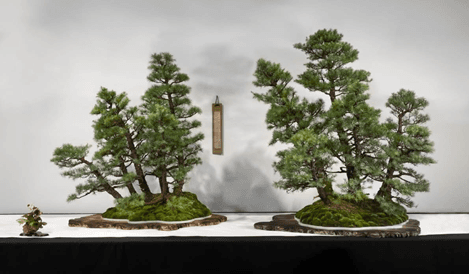
A bonsai can outlive the society founded to celebrate it. So when Ric Roberts brought his Koreshoff red pine to the 2026 Bonsai Open, the name on that tree said something specific: a direct line to Vita and Dorothy Koreshoff, who founded the Bonsai Society of Australia in August 1965, making it one of the first organisations of its kind on the continent.
Roberts' pine placed second in the Open category. First place went to Michael Hood's "Giant Cedar Forest," a large-scale multi-trunk planting that took the show's marquee prize at the event held March 14 and 15 at Mingara Recreation Club in Tumbi Umbi, New South Wales. More than 100 trees competed across six categories, with prize money exceeding AUD $5,000.
The Open result says something about Australian judging priorities. Hood's cedar forest, ambitious in scale and execution, beat a tree with exceptional historical provenance. Neither tree is native to Australia, which matters as context: Michael Kempson won Best Australian Native Display in its own dedicated category, acknowledged but separated from the Open's primary competition. Australian native species are respected, but the dominant aesthetic in Open-level competition still leans toward refined silhouettes built from imported material.
That pattern held throughout the other categories. Allan Harding's Chinese elm earned recognition in Penjing, and Bruce King's Himalayan juniper took the venue sponsor award from Mingara Recreation Club. The sponsor category itself reflects how an event drawing 100-plus trees and distributing $5,000 in prizes depends on venue partnerships to remain viable.

Dave McKeon's privet raft won the People's Choice Award and deserves a closer look. Privet grows wild across coastal New South Wales, dismissed as invasive scrub. As bonsai material it rewards patience and lateral thinking: raft style involves laying a trunk horizontally and allowing new vertical shoots to emerge from the lateral root line, training those shoots into a unified composition that reads as a grove from the front. The method turns opportunistic growth into deliberate structure. That McKeon's privet raft drew the popular vote signals that Australian audiences respond to resourcefulness as readily as refinement. The technique itself is accessible: sourcing naturalized material, committing to multi-year horizontal development, and resisting the urge to upright the tree prematurely.
Sean Hood won the Shohin category. Trish Armstrong took Creative. Both Penjing and Creative were new additions to this year's programme, and both attracted substantial entries, indicating that organisers are expanding competitive formats with purpose rather than simply padding the schedule.
The event ran concurrently with the Central Coast Bonsai Club's Annual Members Exhibition at Mingara, open to all Australian bonsai artists rather than CCBC members exclusively, giving the weekend national relevance from a regional base. For other Australian clubs assessing their own competitive programming, the 100-plus tree count and $5,000 prize pool set a concrete benchmark for what a well-organised regional open can deliver.
This article was produced by Prism’s automated news system from verified source data, official records, and press releases, then run through automated quality and moderation checks before publishing. The system is built and supervised by the people who set the standards it runs under. Read our full AI policy.
Did this article answer your question?