Leersum Spring Show Brings Over 100 Bonsai, Free Demos, and Market April 11
Bruno Wijman led the live demo as Bonsaivereniging Midden-Nederland's 100-tree spring show filled De Binder today, free of charge, with a market stocking substrate, wire, and pre-bonsai.
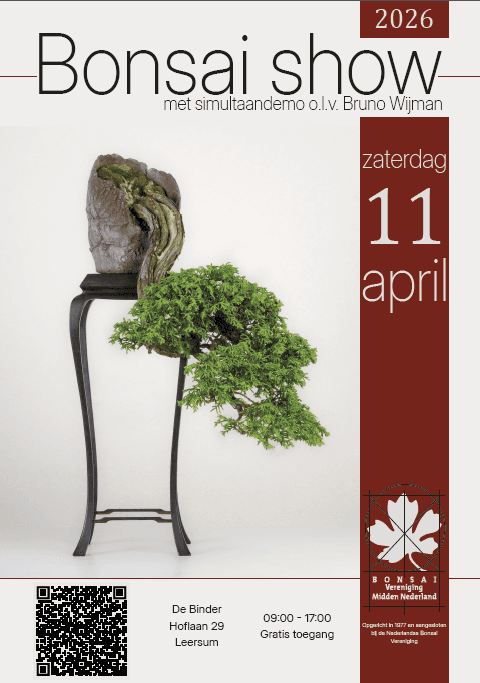
A bonsai tree can outlive the forest it was collected from. That's not metaphor; it's the practical reality that makes a room with 100-plus specimens something worth standing in. When Bonsaivereniging Midden-Nederland filled Sport- en Cultuurcentrum De Binder on Hoflaan 29 today, the accumulated growing time on display ran to centuries. That weight is invisible until you're next to it.
The association's spring show ran from 9:00 to 17:00 with free admission, a vendor market, a lottery, and a live demonstration by Bruno Wijman. The club has held this annual event at the same Leersum address since its founding in 1977. Nearly five decades of refinement show in the format: it runs multiple tracks for multiple audiences simultaneously without losing focus in any direction.
Wijman is a familiar name in Dutch bonsai circles, and his placement at the demonstration table was the show's clearest editorial statement. His previous club work has included taxus, cascade chamaecyparis, and cotoneaster, and for this show's tokonoma display, his cascade chamaecyparis and cotoneaster were paired with a larix from Wim Janssen, the larch's accent plant completing the composition. Bonsai Plaza, which lists the event in its European calendar, described the demo as unfolding "in a collegial and instructive atmosphere," which is the right register for a group demonstration: less performance, more apprenticeship. Watching Wijman work material in front of a mixed audience of longtime members and curious newcomers is teaching in the most direct form the hobby has.
Read across 100-plus trees and a full vendor floor, the Leersum show offers a useful state-of-the-hobby snapshot.
Native European species continue to dominate the display floor at Midden-Nederland shows for practical reasons. Larix europaea and taxus are both locally sourceable and climate-tolerant; they produce credible nebari over time and forgive the errors that new practitioners inevitably make. A larch back-buds reliably, tolerates hard pruning, and drops its needles in autumn rather than holding dead foliage through winter, making mistakes legible and correctable. At a club where 100-plus members each bring a tree, the species distribution reflects what actually works in the Dutch growing environment, not what photographs well in Japanese reference books.
The tokonoma selection is worth reading separately. A cascade chamaecyparis doesn't land in the club's primary display position by accident; the choice of downward movement as the visual anchor of the exhibition's most deliberate composition signals that refined han-kengai work is being taken seriously. More telling is the fact that it was paired with a properly scaled accent plant in a seasonal composition, completing a tokonoma in the traditional format. That practice has historically been confined to major national shows and specialist studios. Its appearance as the feature of a regional club show indicates that display literacy, not just styling technique, is being transmitted actively in Midden-Nederland's membership culture.
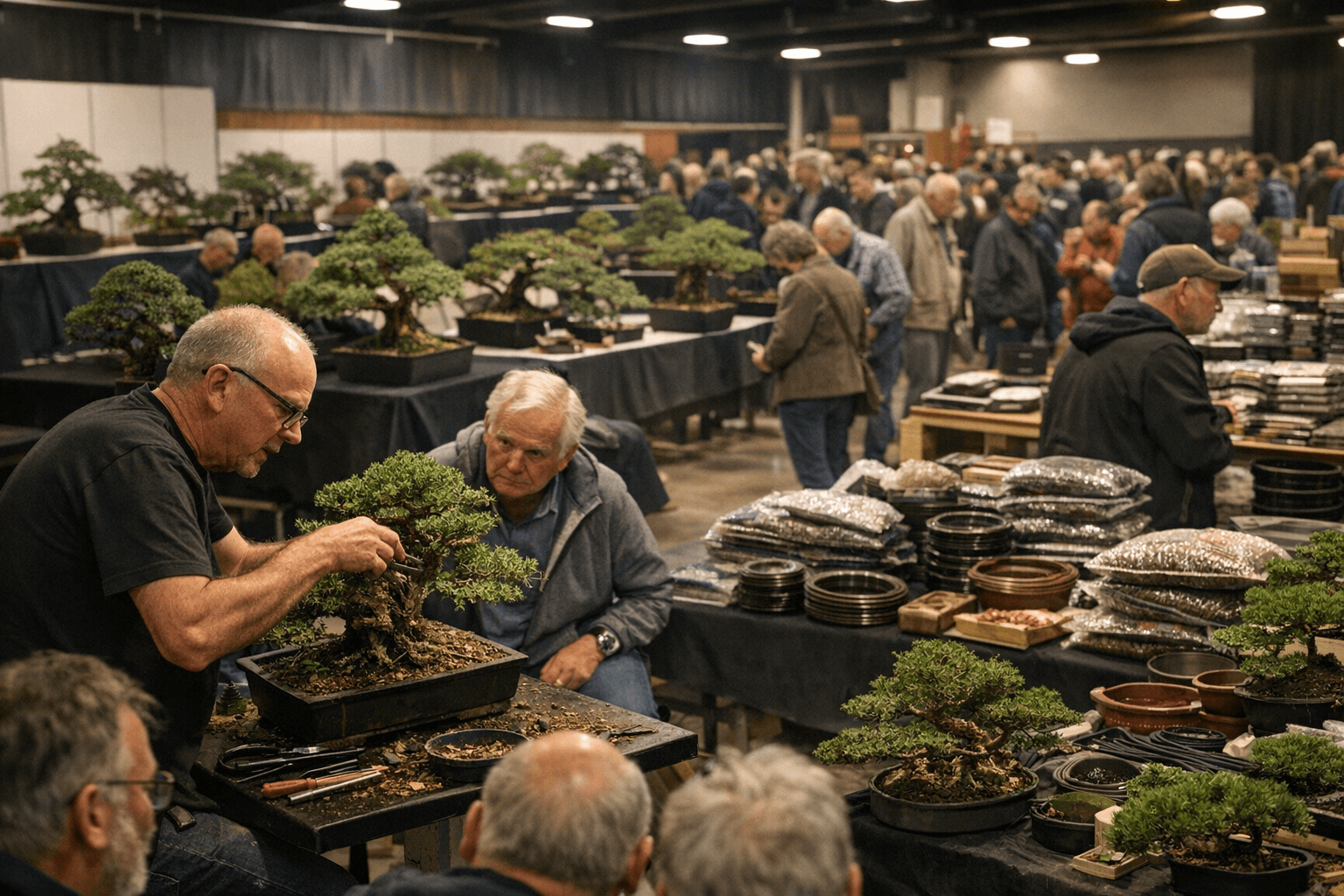
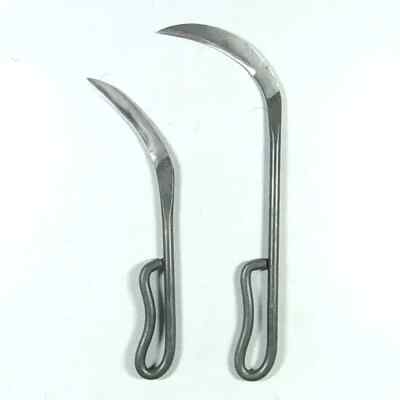
On the vendor floor, the composition of the market stalls is its own signal. Pre-bonsai material, pots, tools, copper and aluminum wire, substrate: all confirmed available. The substrate offering is the detail worth noting. Granular mixes based on akadama, pumice, and lava have moved from specialist supplier catalogues into mainstream club show tables. When a vendor brings substrate to a regional spring show and sells it alongside trees and pots, the demand is there. For a visitor arriving with limited budget, the concentration in one room is the entire point: buy a pre-bonsai, pick up the growing medium it needs, watch Wijman set wire on comparable material at the demo table three meters away, and leave with context that no online purchase provides.
The judging structure paired a professional jury, awarding best-in-category across the full exhibition, with a Publieksprijs decided by visitor vote. That dual-track format is becoming a standard approach at Dutch club shows and reflects a real tension the hobby has to manage: expert judgment raises display standards, but the public vote gives the first-time visitor a reason to actually look at the trees rather than drift through. Clubs that run only the jury model miss the second audience entirely.
"Many people only know bonsai from pictures," the show's framing put it directly. "Here you really see how much craftsmanship and feeling goes into it."
That is the argument the in-person show always has to make, and Leersum made it today with a century-old club culture, Wijman at the bench, a tokonoma stocked with a proper larch and cascade pairing, and a vendor market that covered the full spectrum from raw material to finished substrate. Bonsaivereniging Midden-Nederland meets on the third Saturday of every month at De Binder. The spring show is the year's public moment. Based on what was on the floor today, the club is still making it count.
This article was produced by Prism’s automated news system from verified source data, official records, and press releases, then run through automated quality and moderation checks before publishing. The system is built and supervised by the people who set the standards it runs under. Read our full AI policy.
Did this article answer your question?