Chicago Botanic Garden Hands-On Spring Bonsai Care and Soil Science Feb 13
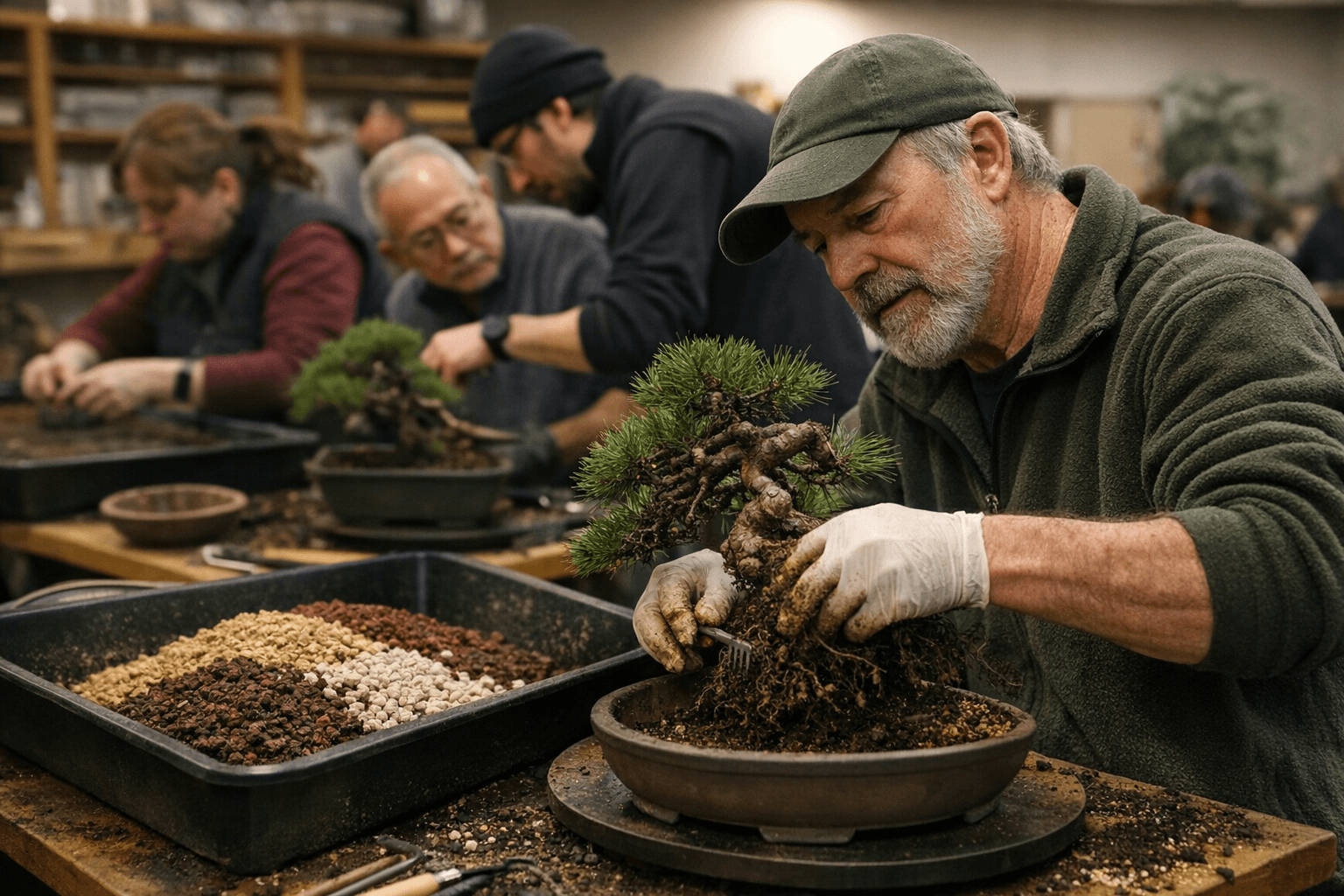
Attendees at the Chicago Botanic Garden’s Feb. 13 hands-on session saw the Garden’s base mix of akadama, pumice, and lava rock and learned step-by-step repotting prep for early-spring work.
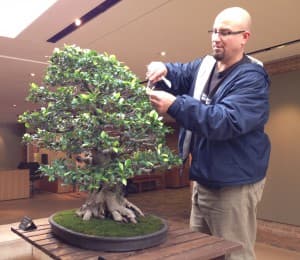
Attendees at the Chicago Botanic Garden’s hands-on program "Spring Bonsai Care and Soil Science" on February 13, 2026, got practical, soil-first instruction aimed at early repotting in temperate climates. The session showcased the Garden’s demonstration mix and a full repotting sequence designed to support vigorous root growth and reliable drainage.
The Garden foregrounded why medium choice matters. "Bonsai soil is one of the most important aspects of growing bonsai trees," the Garden’s materials state, and they underline the objective: "No matter what mix you choose, a good bonsai soil should support vigorous root growth, a healthy microbe balance, and have good drainage."
Hands-on demonstrations centered on a base mix the Garden uses for the example tree. "Here at the Chicago Botanic Garden, we use a variety of mixes based on tree species and stage of development," the program notes read, and "For this tree, we will be using our base mix of akadama (a clay-like material mined in Japan), pumice, and lava rock." Volunteers prepared and sifted the media on site; "Volunteer Dick Anderson sifts soil for repotting the bonsai collection," the Garden captioned.
The repotting workflow was shown in explicit sequence. "Our soil mix is sifted to remove any small particles and dust that could clog up the drainage holes, decreasing drainage," and "Once the pot has been cleaned, screens have been secured over drainage holes, and tie-down wires have been added, a layer of lava rock is placed to aid with drainage." Demonstrators then added a small amount of soil to bring the tree up to grade: "After the drainage layer is placed, a small amount of soil is added to bring the tree up to grade and help position it in place." The presentation included repeated visual emphasis on "bonsai drainage mixture" and "bonsai-repotting" in photo captions.
Timing was a key theme. The listing framed the Feb. 13 session as a "winter-to-spring timing that aligns with early repotting and soil preparation in temperate climates," reinforcing Midwest Bonsai Society guidance that "For many bonsai tree species, early spring is the best time for repotting."
Organizers and local clubs were connected in the program materials. Midwest Bonsai Society notes that "The most common question that we are asked is where you can buy bonsai in the Chicagoland area," and that "There are no dedicated bonsai stores in Chicago, and the best bonsai-specific shopping is still found at MBS’s shows in Spring and Summer at the Chicago Botanic Garden." The Society’s vendor list, "arranged alphabetically," included B. C. BONSAI with trees priced "$15 to $3000" and phone 630-690-0404; CHALET NURSERY at 3132 Lake Av., Wilmette, IL with phone 847-920-8200 and notes that quality is mixed; GESTHEMANE GARDEN CENTER at 5739 N. Clark St., Chicago, IL with trees from $40 to $350 and phone 773-878-5915; and THE HIDDEN GARDENS, noted as "Closed December through April."
Institutional details accompanied the program text. "The Chicago Botanic Garden has 385 acres of nature, beauty, and respite to discover," the Garden’s page states, but visitors should confirm hours: the Garden’s listing contained multiple, inconsistent hour lines such as "Members only: 8 a.m. – 10 a.m.," "Public: 10 a.m. – 4 p.m.," "8 a.m. – 3 p.m.," and "10 a.m. – 3 p.m."
The program listing did not include a start time, fee, classroom location within the Garden, or instructor names beyond the Garden attribution; those details will require direct confirmation from the Chicago Botanic Garden for anyone planning to replicate the techniques shown or to attend a future session.
This article was produced by Prism’s automated news system from verified source data, official records, and press releases, then run through automated quality and moderation checks before publishing. The system is built and supervised by the people who set the standards it runs under. Read our full AI policy.
Did this article answer your question?