Children’s Bonsai Book Bud the Brave Explores Patience and Self-Acceptance
A 29-page picture book turns a tiny bonsai into a lesson in patience, with a question that hits home for kids and parents alike: what if bigger is not better?
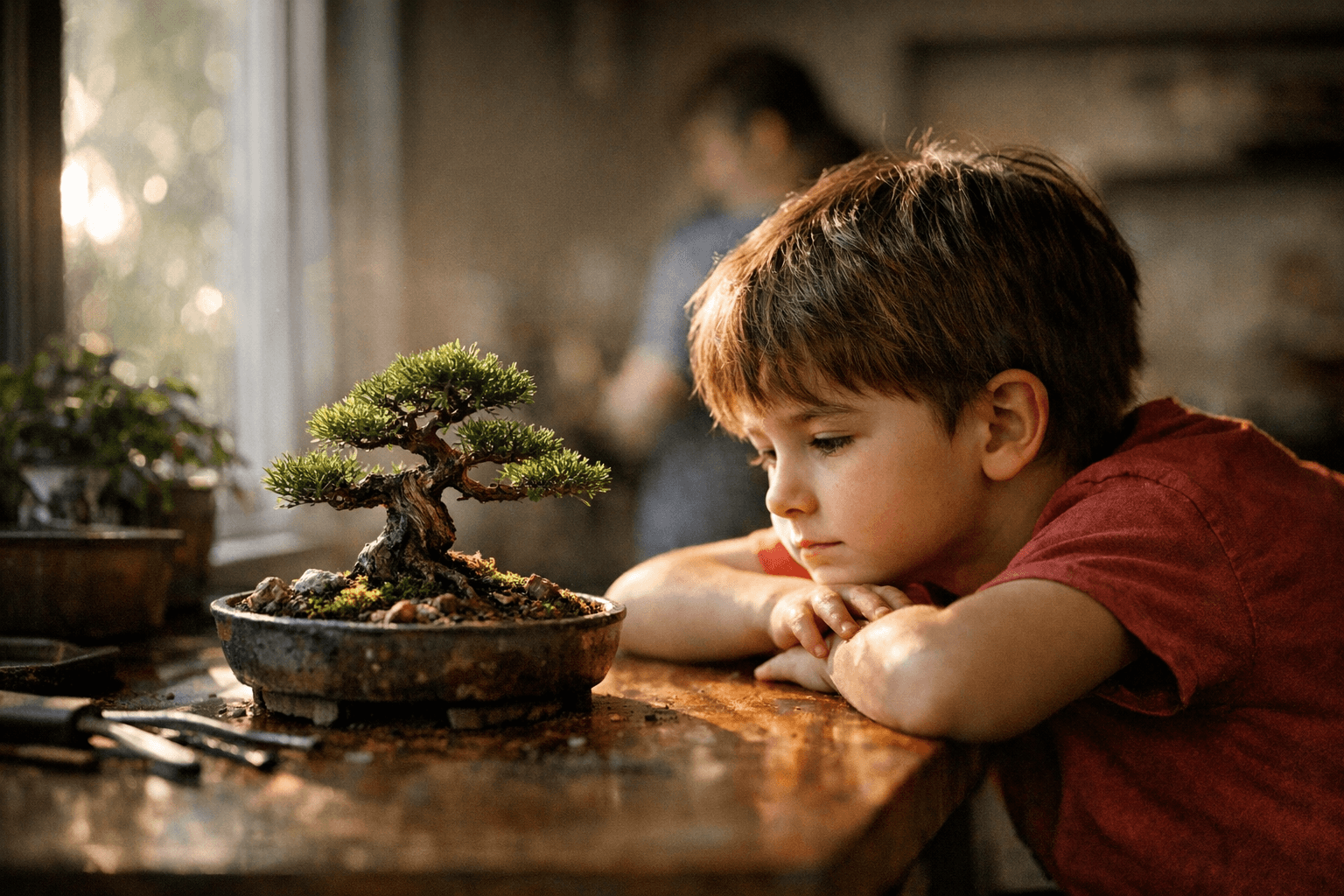
A bonsai that feels small beside towering forest trees is the whole point of Bud the Brave Bonsai: Strength in Patience, a children’s picture book that asks whether growth can be measured by resilience instead of size. Nicole Howdyshell wrote and illustrated the 29-page large-print paperback for ages 4 to 8, and the book’s central question, “What if growing bigger isn’t the same as growing better?”, lands like a compact bonsai lesson for families trying to teach children to slow down.
Howdyshell, described on the product page as a children’s author and illustrator inspired by nature, family, and quiet moments of growth, also says she is a stay-at-home mom raising two children. That detail gives the book a lived-in feel: this is not a distant morality tale, but a story shaped by the daily work of helping young children handle comparison, self-confidence, and the pressure to keep up. The listing identifies the paperback by ISBN 979-8254506737 and frames Bud’s story as gentle and encouraging, with watercolor illustrations aimed at children navigating their place in the world.
The bonsai world gives that message real weight. Bonsai Empire says timing matters in bonsai care because stressing the plant slows development instead of speeding it up, a principle every beginner learns sooner or later when pruning, wiring, or repotting. The same resource notes that watering depends on the species, tree size, pot size, time of year, soil mix, and climate. In other words, bonsai rewards attention, not haste. MasterClass puts it plainly too: a bonsai tree is a miniature potted plant that needs special care and attention to thrive.
That makes Bud the Brave Bonsai an unusually natural fit for classrooms, libraries, garden clubs, and family story hours. The metaphor reaches beyond a single bedtime read, especially when paired with bonsai’s long memory. MasterClass points to a white pine bonsai in Japan that is more than 500 years old, while Encyclopedia.com traces the art back to China as early as the fourth century, before it spread to Japan by the sixth and seventh centuries. Few children’s books can borrow that much history and still stay this approachable.
For bonsai groups looking for outreach that speaks to children without talking down to them, Bud offers a familiar truth in new packaging: steady care matters, size is not the same as strength, and the best trees, like the best habits, are built over time.
Know something we missed? Have a correction or additional information?
Submit a Tip