Currituck County Extension Offers Indoor Bonsai Class for Beginners This Spring
Most trees sold as "indoor bonsai" are temperate species that will die inside. Currituck County Extension's $35 April class teaches the kind that won't.
The phrase "indoor bonsai" appears on gift shop tags, big-box nursery benches, and holiday shopping guides every year, attached to junipers, Chinese elms, and maples. Most of those trees are dead within months. The biology behind why is straightforward; the retail labeling ignores it almost completely.
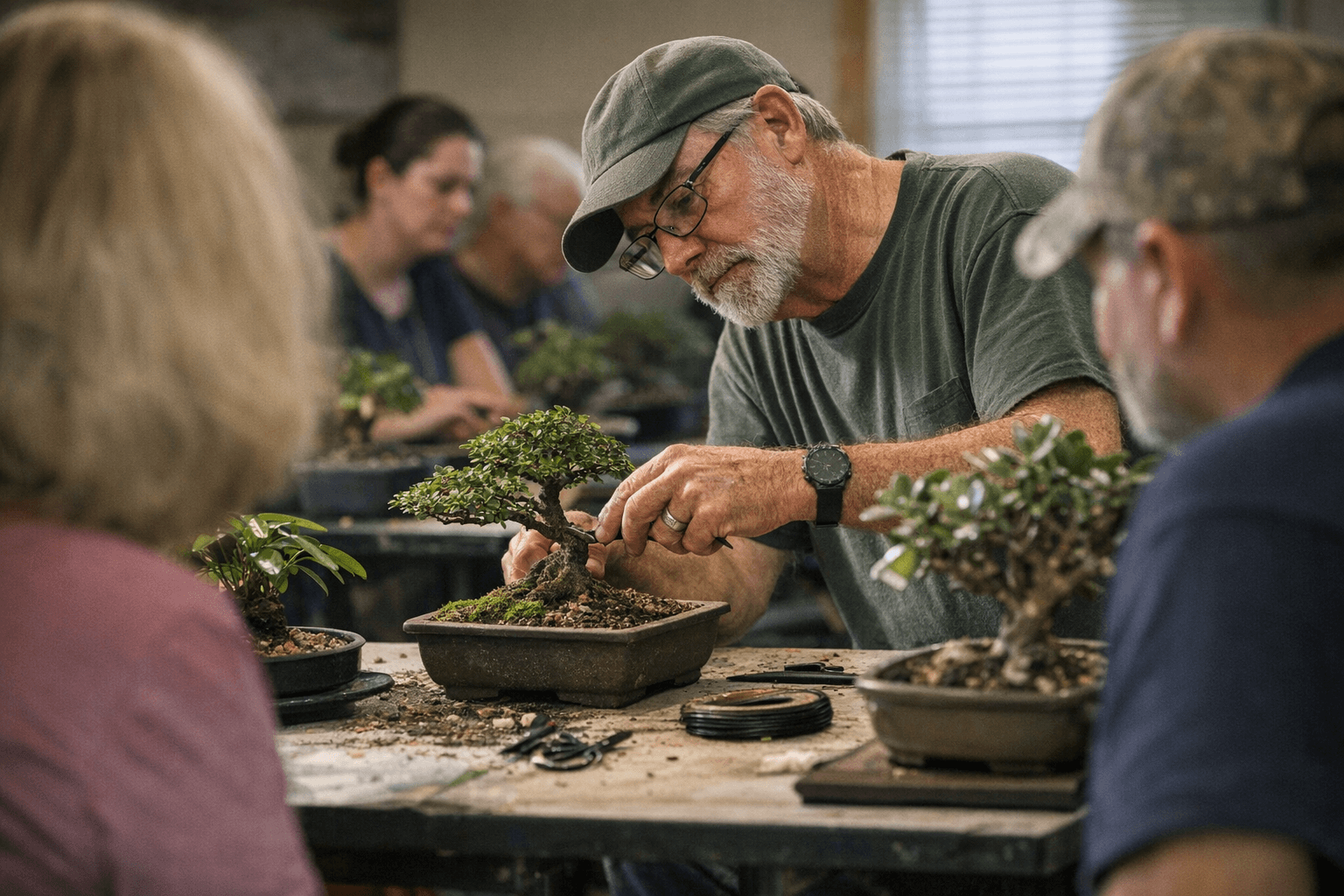
That gap between marketing and horticulture is exactly what the Currituck County Center of NC State University Cooperative Extension is stepping into with its Indoor Bonsai for Beginners class, set for Wednesday, April 29, from 2:00 to 3:30 p.m. at 120 Community Way in Barco, North Carolina. At $35 per participant, with all materials included, the class is one of the region's more affordable entry points into the practice. What's notable, though, is not just the price or the timing: it's what the class is teaching. The extension explicitly describes the program as focused on "indoor succulent bonsai," a distinction that most commercial vendors never bother to make.
The distinction matters enormously.
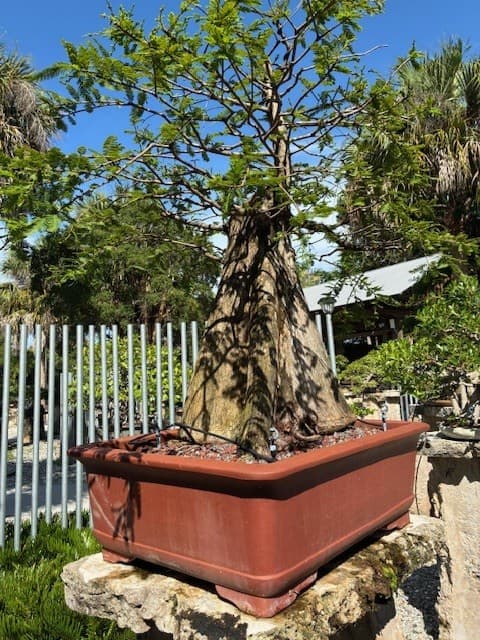
Temperate species, including junipers, Japanese maples, pines, trident maples, and Chinese elms, are the trees most commonly sold in the United States under bonsai branding. They are also the species that most reliably fail when kept indoors year-round, because they are biologically incapable of surviving without winter dormancy. Entering dormancy isn't optional for these trees; it's the mechanism by which they reset their growth cycle and prepare for another season. Horticulturists note that most temperate bonsai species require approximately 1,000 hours of temperatures below 40 degrees Fahrenheit to properly break dormancy and resume healthy growth in spring. Keep a juniper in a heated living room through winter and it doesn't rest: it slowly declines, dropping foliage, losing vigor, and eventually dying without ever signaling obvious distress until the damage is irreversible.
The species that can genuinely live indoors year-round are a narrow group of tropical and subtropical trees, primarily ficus varieties, carmona (fukien tea), serissa, and jade, which includes the portulacaria afra often styled as succulent bonsai. Unlike temperate trees, these species never evolved a dormancy requirement, because the climates they originate from don't impose one. They are not just tolerant of indoor conditions; they are adapted to year-round warmth. Tropical bonsai continue growing through winter, which means they continue needing adequate light, moisture, and nutrition even when a temperate tree would be resting under cold cover in a garden or unheated garage. The extension's choice to anchor its indoor class specifically to succulent bonsai reflects this biological reality with more precision than most beginner programming provides.
Even among species that can survive indoors, survival and thriving are not the same condition, and the line between them comes down primarily to light. A south-facing window in coastal North Carolina during spring and summer will deliver more usable photosynthetic light than most interior rooms, but even that can fall short of what vigorous tropical bonsai growth requires. Community discussions among experienced growers consistently put standard indoor shop-light setups at around 200 micromoles of photosynthetically active radiation per square meter per second, a metric abbreviated as PPFD, while direct outdoor afternoon sun in temperate latitudes delivers 2,000 to 2,500 PPFD. Higher-wattage full-spectrum LED grow lights can meaningfully close that gap, but hobbyists relying on fluorescent tubes or standard room fixtures are providing a fraction of what a healthy tropical bonsai needs across a full photoperiod. A tree that merely survives under poor light will show it: thin internodes, pale foliage, reduced vigor, and increasing vulnerability to the pests that healthy specimens resist.
Humidity compounds the problem, particularly through winter months. Central heating systems drop indoor relative humidity to levels that mimic arid climates, creating conditions that stress tropical and subtropical bonsai even when light and watering are otherwise adequate. Gravel humidity trays, room humidifiers, and deliberate placement away from heating vents are standard responses, but they require the kind of attention most people who receive a gift-shop bonsai never know to provide. Trees positioned in heated rooms without humidity management can look healthy in October and show severe decline by February, a timeline that makes the cause harder to identify after the fact.
Watering remains the most immediate failure mode for beginners regardless of species. Indoor bonsai do not follow a calendar. They respond to actual soil moisture, which varies with light intensity, temperature, container size, and substrate composition. The hands-on format of the April 29 class is designed to address this directly, giving participants experience assessing a living tree's needs rather than relying on a care card attached to a nursery pot.
The Currituck Center has been running bonsai programming for years, building a curriculum that now explicitly separates indoor and outdoor practice. The companion Outdoor Bonsai for Beginners class, scheduled for April 30 at the same 120 Community Way location, runs two hours at $40 and includes a juniper, the species that belongs outdoors with access to seasonal cold. Positioning both formats as back-to-back offerings in the spring program makes the species distinction structural rather than incidental. Beginners encountering both listings in the same week are being handed a lesson before they arrive in the room: the tree grown inside is not the same tree grown outside, and conflating them is where most early losses begin.
For the broader bonsai community in the region, the extension's consistent engagement with the practice represents an infrastructure that most hobby clubs work hard to develop independently. A university-affiliated horticulture program carries credibility with audiences who might never walk into a club meeting but will attend a county extension class. Those new practitioners, once exposed to correct foundational information on species selection and light requirements, enter the hobby with better chances of keeping their first tree alive, which converts more of them into long-term participants rather than people who tried bonsai once and lost the tree.
Registration and disability accommodation inquiries for the April 29 class go through Chris Blaha at the Currituck County Center: 252-232-2261, or ctblaha@ncsu.edu. Accommodation requests should be submitted no later than ten business days before the class date.
The underlying lesson of the extension's framing is the one that retail bonsai marketing consistently omits: "indoor bonsai" is not a species category. It's a description of where a tree will live, and whether that arrangement is viable depends entirely on the tree. A juniper labeled as an indoor specimen at a chain nursery will die inside. A portulacaria afra or ficus, given a bright window and appropriate humidity, will not. Getting that right before purchasing is cheaper than learning it after.
This article was produced by Prism’s automated news system from verified source data, official records, and press releases, then run through automated quality and moderation checks before publishing. The system is built and supervised by the people who set the standards it runs under. Read our full AI policy.
Did this article answer your question?