McMinnville Senior Center Hosts Hands-On Bonsai Pruning and Styling Workshop
When Part 2 fills up, a hobby has taken root. McMinnville's Senior Center bonsai series drew returning practitioners for hands-on wiring, pruning, and styling coaching on March 28.
Nobody drives to a community center on a Saturday morning for a sequel unless the first session was worth returning for. That logic, applied to bonsai, defines what happened at the McMinnville Senior Center on March 28, 2026, when a cohort of practitioners gathered in the facility's dining room for Japanese Bonsai Techniques Part 2, a hands-on pruning and styling session that ran from 10 a.m. to noon.
The "Part 2" in the title is not just a scheduling note. It is a retention metric. When a community venue builds a follow-on workshop with advance registration and limited capacity, it is responding to something already demonstrated: a group of practitioners who attended the first session, found it valuable, and came back. In a hobby where attrition among beginners is high, that kind of structured return is its own form of evidence.
The McMinnville Senior Center is not a dedicated bonsai space. Its dining room, pressed into service for the occasion, is the kind of general-purpose room shared by tax-prep clinics and community lunches. Bonsai instruction finding a home there reflects a documented shift in how the craft is spreading outward from specialized nurseries and established clubs into general community venues where the barrier to first contact is low. The workshop's listed age range, 21 to 100, is unusually explicit about who it wants to reach, and the senior center address is not incidental to that.
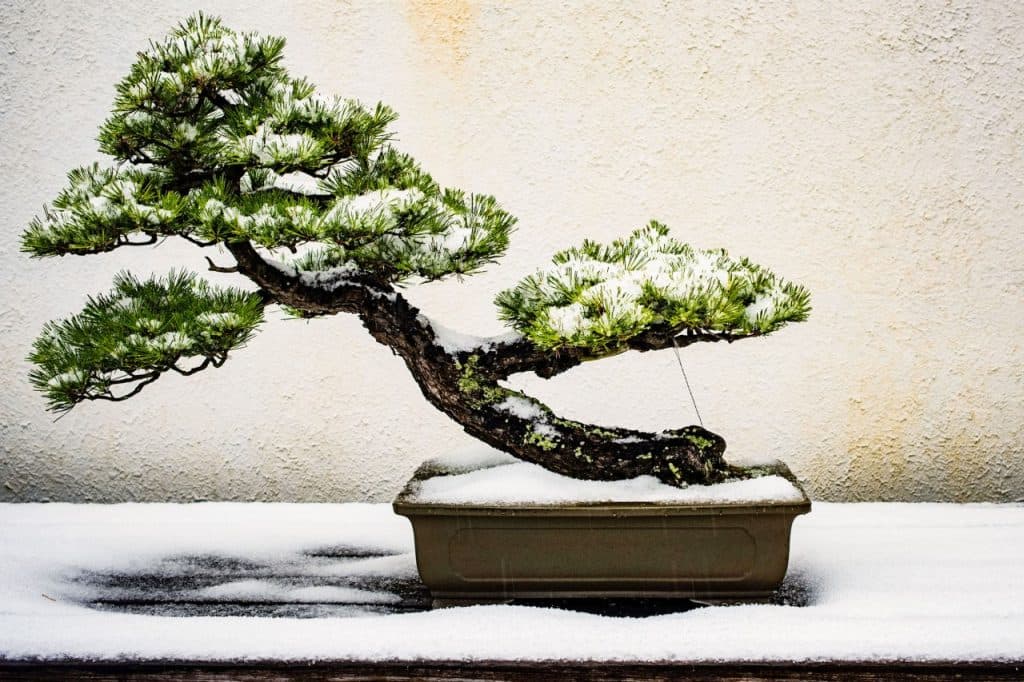
For older practitioners, bonsai occupies a particular kind of niche that relatively few hobbies manage. It is intellectually demanding without requiring physical endurance. It operates at table height, with tools sized for precision rather than force. Its fundamental orientation, measured in growing seasons and years rather than sessions and hours, aligns naturally with the kind of unhurried attention that experienced practitioners bring to sustained work. A peer-reviewed biomedical study measured the physiological effects of viewing bonsai on elderly patients undergoing rehabilitation, finding reductions in prefrontal cortex activity consistent with a relaxed state in participants aged 64 to 91. Working with one's own tree under hands-on coaching goes further still.
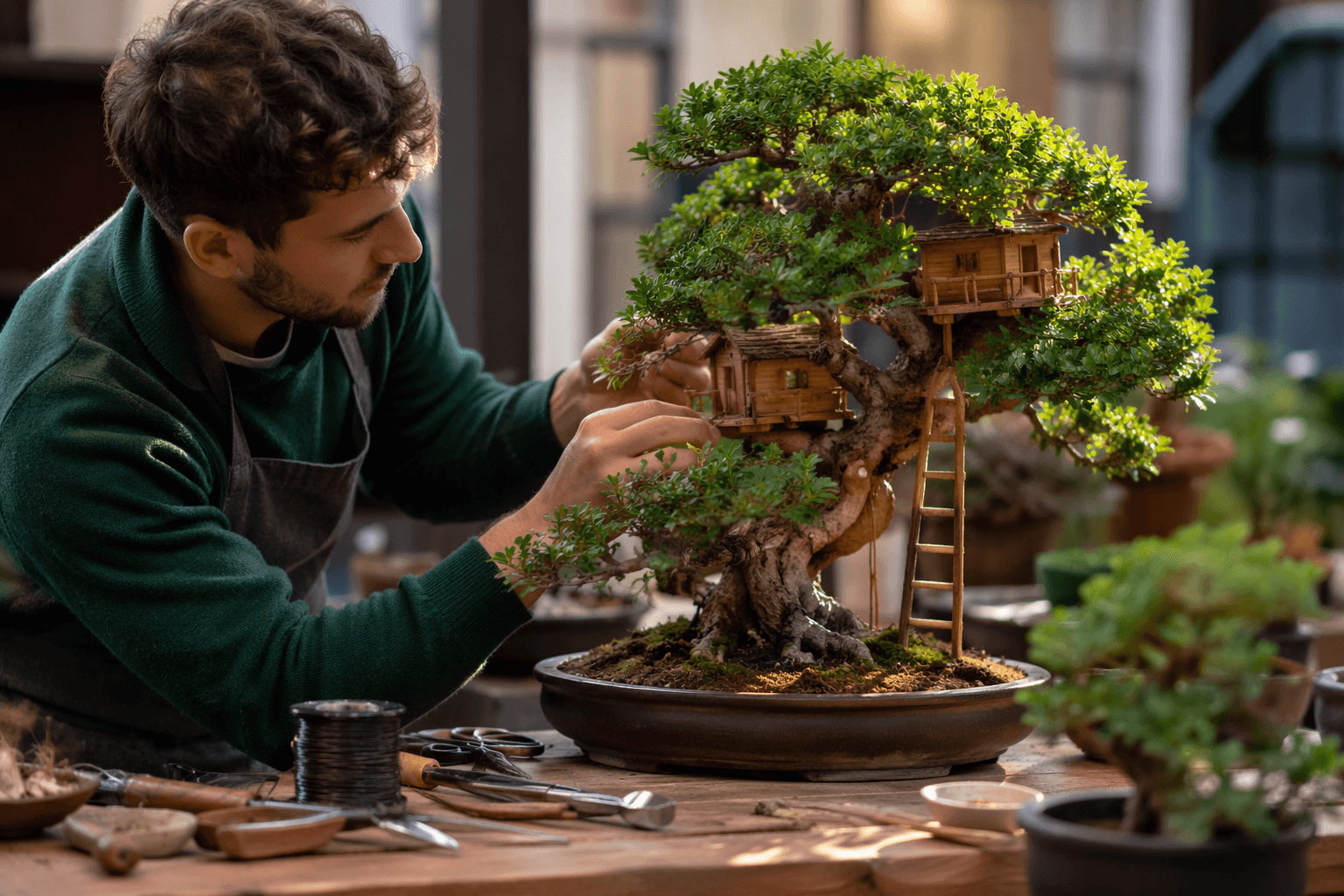
The March 28 session centered on that direct, tree-specific format. Participants were asked to bring their own trees and, through an interactive Q&A structure, received in-person coaching on pruning, wiring, repotting, and overall styling. When an instructor examines an actual branch on a student's actual tree and demonstrates a cut or a wire placement, it collapses the distance between conceptual knowledge and applied technique in ways that online tutorials cannot replicate. The Q&A dynamic also allows participants to surface problems specific to their own material rather than working through standardized examples.
Of the four core disciplines covered, wiring makes the most physical demands on a practitioner's hands. The technique involves wrapping wire around branches at a precise angle, with 55 to 60 degrees considered optimal, while simultaneously using the non-dominant hand to maintain contact with the branch and govern the direction of the coil. That supporting hand is actually the more critical of the two: when it fails to hold properly, wire spacing becomes erratic and angles lose consistency. For practitioners whose finger dexterity or grip strength has changed with age, this dual-hand coordination is the most demanding element in the entire skill set, and it is the one most likely to benefit from the kind of slowed-down, one-on-one instruction a small cohort format allows.
Wire choice intersects with this directly. Aluminum wire is better suited to deciduous species while the harder copper wire is best for conifers and pines. For older practitioners, starting on aluminum wire with a forgiving deciduous species is not a concession but a sound pedagogical entry point. The fundamental technique is identical; the physical demand is lower; and the tree is more tolerant of the beginner errors that are inevitable while coordination develops.
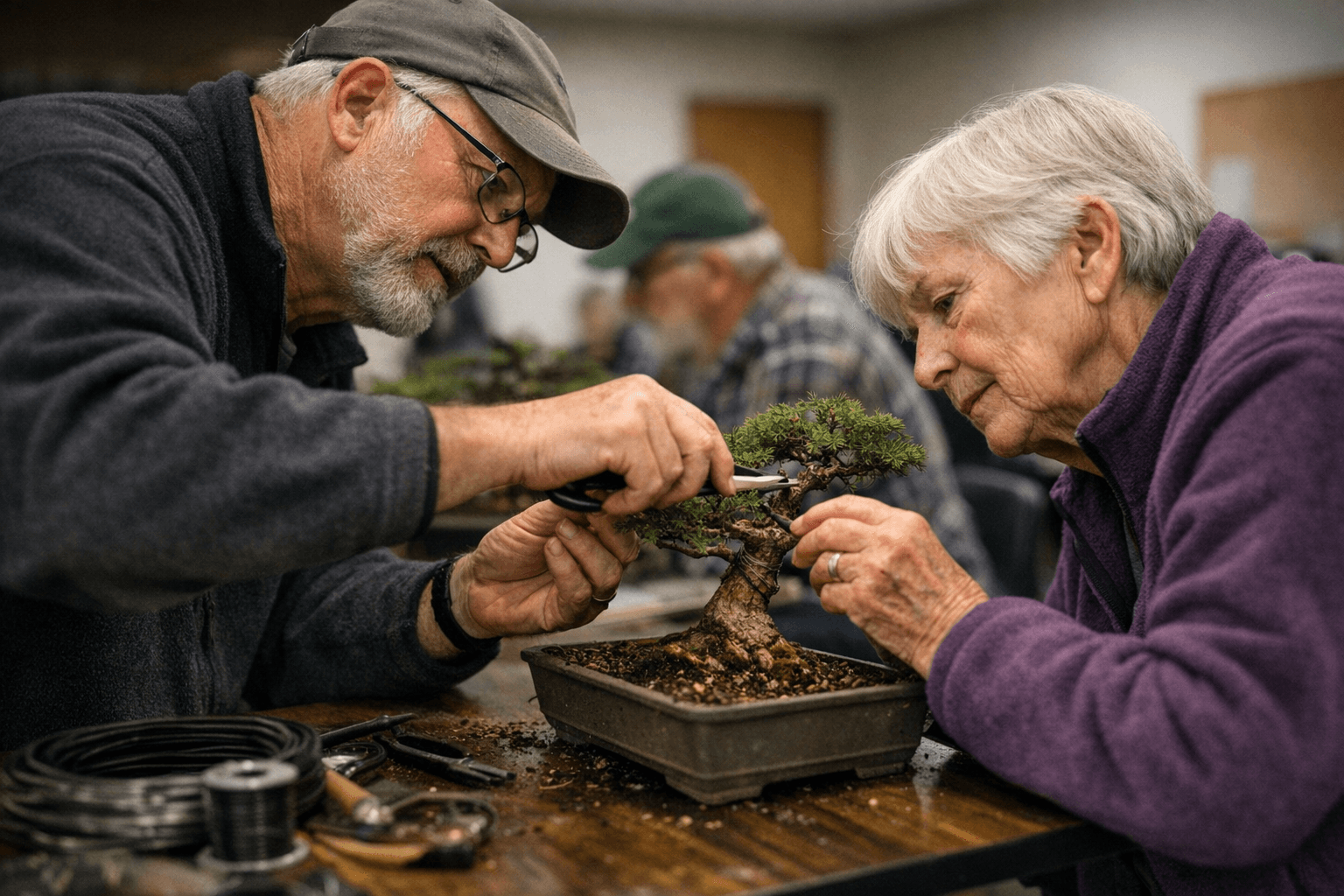
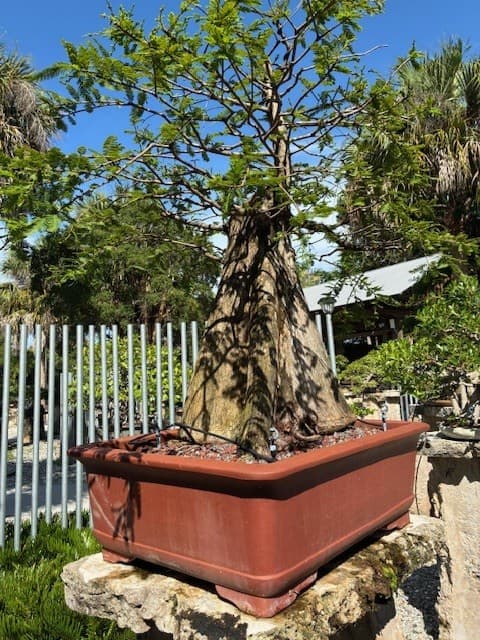
Species selection shapes the entire experience in other ways. A juniper or cotoneaster at an early stage of development offers legible, accessible branch structure. A more advanced specimen with dense secondary branching may demand complex wiring decisions under time pressure, since wire left on too long during active growth will bite into bark. Workshops that ask participants to bring their own trees rather than distributing standardized starter material acknowledge this reality: the relevant instruction is specific to the tree the practitioner will go home with.
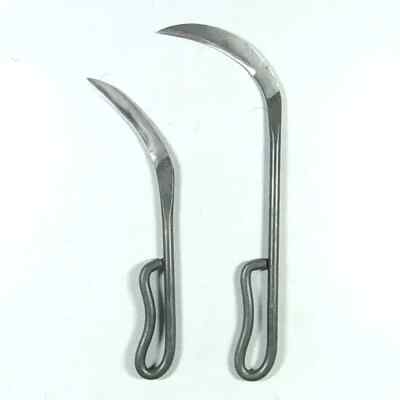
Tool ergonomics often go undiscussed in bonsai instruction but become consequential in mixed-age workshop settings. Hand pruners sized for bonsai work feature short handles and compact blades suited to precision cuts on small-diameter branches. With the right tools, senior gardeners can continue to enjoy their hobby for many more years without feeling the physical toll, and the same qualities that make bonsai-specific tools effective for fine detail work, weight distribution, handle geometry, blade clearance, also make them accessible to practitioners managing reduced hand strength or early-stage arthritis.
The bonsai community is alive and thriving, hosting workshops, exhibitions, and networking events globally, and elders involved in bonsai can interact with like-minded individuals, combating loneliness and fostering a sense of belonging. For older adults who may find specialized bonsai clubs geographically distant or socially unfamiliar, a senior center workshop offers a lower-threshold entry into that network, built around a familiar venue and a familiar peer group.
When community venues sustain multi-part bonsai sequences rather than offering isolated demonstrations, they build something harder to schedule: a pipeline. Practitioners who complete two structured sessions with hands-on coaching are substantially more likely to join regional clubs, attend shows, and develop the kind of sustained practice that produces the intermediate and advanced trees displayed at Pacific Northwest regional exhibitions. The registration requirement that limited access to the March 28 session signals not a shortage of interest but a program managing a committed cohort.
For that cohort, the most tangible outcome was direct feedback on trees they had been growing before any instructor saw them. In bonsai, that first moment of real diagnosis, where a knowledgeable set of eyes appraises the work and identifies the next step, is often the inflection point between a tree that stagnates and one that develops. McMinnville's Senior Center dining room, on a Saturday morning in late March, provided that inflection point for a room full of practitioners who had already proven they were serious enough to return.
This article was produced by Prism’s automated news system from verified source data, official records, and press releases, then run through automated quality and moderation checks before publishing. The system is built and supervised by the people who set the standards it runs under. Read our full AI policy.
Did this article answer your question?