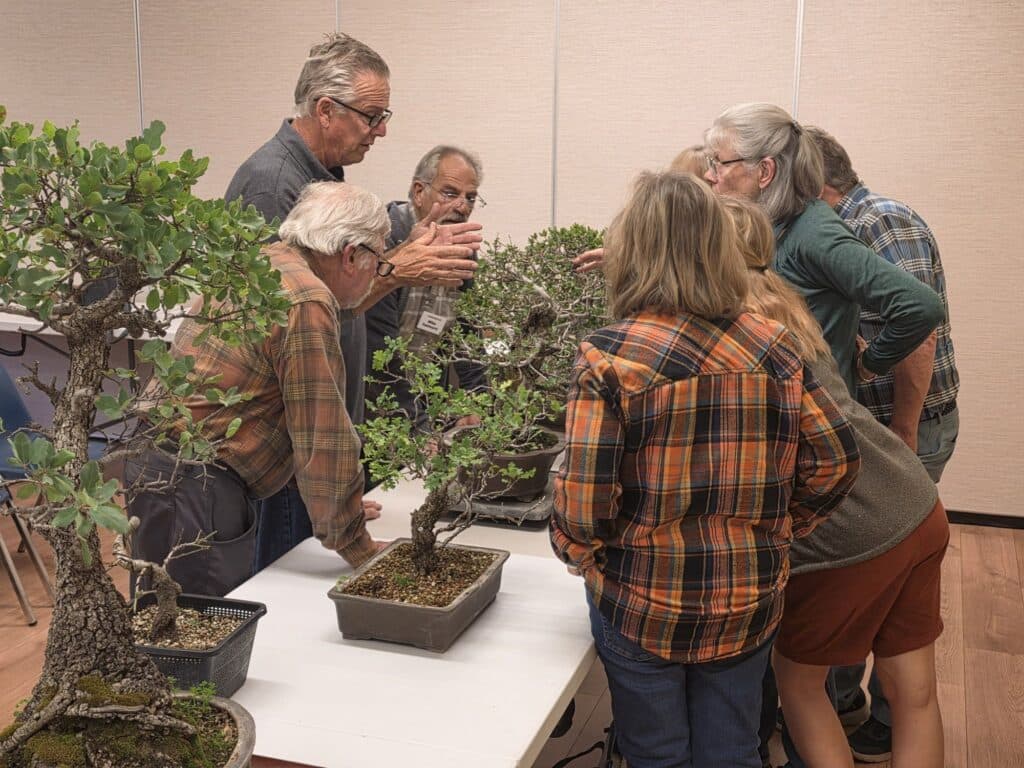
How Bonsai Pot Selection Shapes a Tree's Visual Story and Show Presence
At high-level exhibitions, the pot beneath a tree is formally evaluated alongside it. Getting that pairing right is what transforms good bonsai into award-winning work.

The container beneath a bonsai is never just a container. At every level of the hobby, from club tables to international exhibition halls, the pot is the final frame around an artist's intent, and judges, collectors, and fellow practitioners read it accordingly. Getting the pairing right is one of the most underrated skills in bonsai; getting it wrong can undermine years of patient development.
Scale and Proportion: The Foundation of Every Pairing
The first rule of pot selection is proportion, and it operates on three axes simultaneously: trunk thickness, canopy mass, and overall height. Standard practice in the hobby ties pot length to approximate trunk diameter and nebari spread. A pot that runs too long relative to the trunk visually dwarfs the tree, making it look like it was placed as an afterthought; one that is too tight creates a sense of compression that reads as constrained rather than refined.
Nebari plays a particular role here. The widest visible point of the root spread at soil level often acts as a natural boundary for the eye, and a pot that does not comfortably accommodate that spread disrupts the visual flow from roots to trunk to canopy. When in doubt, measure the nebari width first, then work outward to find a pot whose length creates breathing room without excess.
Color and Glaze: Support Without Distraction
Glaze choice is where many collectors make their first significant errors. The working principle is harmony: pot color must complement the tree's foliage color, bark tones, and seasonal expression rather than compete with them. In practice, this means that neutral, muted glazes, including earth tones, unglazed stoneware, and subtle celadons, carry the majority of exhibition trees because they place the tree at visual center and let the pot recede.
Strong glazes and decorative finishes are not wrong; they simply demand more deliberate handling. A vivid blue glaze can intensify the impression of white-flowering trees. Deep autumn reds in a tree's foliage can find resonance with warm red-brown glazes. But these pairings amplify: if the tree is not strong enough in its own right, a bold pot will highlight its weaknesses rather than complement its strengths.
Seasonal expression matters more than many newer collectors realize. A tree that you plan to exhibit in late autumn, when foliage has turned, calls for entirely different glaze considerations than the same tree displayed in early spring with fresh green growth. Thinking through the display calendar before committing to a pot is part of a professional approach to preparation.
Shape and Rim Form: Matching Pot to Style
Different bonsai styles have conventional pot shapes, and understanding those conventions helps both with creating harmonious compositions and with knowing when a deliberate departure might work. Rectangular and oval pots are the standard choices for formal upright (chokkan) and informal upright (moyogi) trees. Their clean geometry supports the composed, structured quality these styles project.
Cascade styles (kengai) and semi-cascade (han-kengai) use deeper, narrower containers, often round or square in plan, because the downward movement of the tree needs vertical container height to read correctly. Slanting styles (shakan) often work with oval or rectangular forms that allow the visual weight of the leaning trunk to settle into the composition without fighting the pot's geometry.
Rim profile is a subtler consideration that does not get enough attention at the club level. A refined, lipped rim adds formality and elegance to a display tree; a simpler, sharper rim reads as more rustic or naturalistic. For high-level exhibitions where every element is evaluated, the rim can be what tips a composition from competent to excellent.
Depth and Root Volume: Horticultural Reality
A pot's aesthetic credentials mean nothing if the tree cannot thrive in it. Depth is a horticultural variable as much as a visual one, and the two considerations do not always point in the same direction.
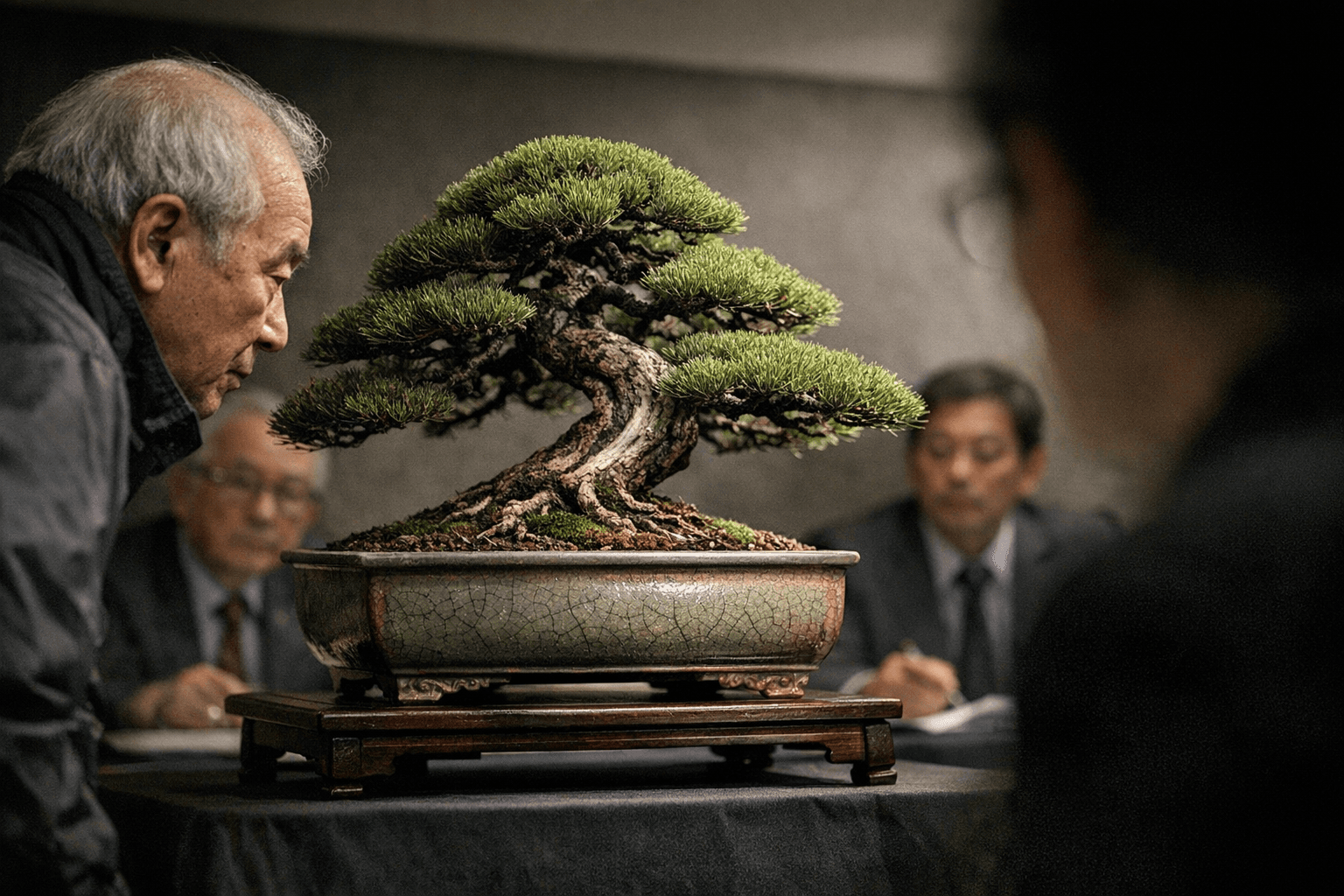
Shallow pots are preferred for many exhibition trees precisely because they emphasize nebari by placing surface roots close to the viewer's eye level and create a visual sense of the tree growing across the landscape rather than into it. However, shallow pots restrict root volume, which limits development and can create stress in trees with deeper root habits or high water requirements.
For yamadori and development-phase trees, deeper pots are the practical choice. They give roots space to establish after the disruption of collection or repotting and allow the tree to rebuild vigor before being transitioned to a shallower exhibition container. Species differences matter here, too. Conifers and many deciduous species used in refined exhibition work tolerate shallow containers when mature and well-established, but the same depth would be unsuitable for a newly collected tree still building its root mass.
Exhibition Context: Ceramics as a Parallel Art
At the highest levels of the hobby, pot selection does not just affect how a tree looks on a display table. It intersects with a distinct ceramics culture that runs in parallel with bonsai practice itself.
The European Bonsai Pottery Contest, organized by the European Bonsai Potter Collective, is one of the clearest expressions of that relationship. The contest runs alongside major bonsai exhibitions, including The Trophy in Belgium, and entries are evaluated on both craftsmanship and suitability for bonsai pairing. That dual judging criterion is significant: it acknowledges that a pot can be a work of ceramic art while also being functional bonsai ware, and that the two standards do not have to be in conflict.
These contests actively drive design trends in the hobby. The ongoing exchange between potters and bonsai artists that they foster means innovative glaze techniques, unconventional forms, and new approaches to rim and foot design get tested in real exhibition contexts before filtering into the wider collecting community. Following the outputs of events like the European Bonsai Pottery Contest gives a real-time read on where serious pairing aesthetics are heading.
Practical Steps for Finding the Right Pot
Moving from principles to practice requires a methodical approach:
1. Photograph the tree and print or display it at scale before testing pot shapes. This removes the distortion of viewing angle and lets you overlay pot proportions accurately.
2. Work with a local potter or dealer to trial multiple pairings. Many nurseries and potters will allow short trial pairings, and seeing a pot physically placed beneath your tree tells you things a photograph cannot.
3. Check exhibition rules before finalizing. Table dimensions, riser heights, and accent plant restrictions all affect how a pot reads in a show context. A pot that looks correct in your garden may not work within the spatial constraints of a competition display.
4. Invest in drainage quality regardless of the pot's aesthetic appeal. Glazed exhibition pots still require correctly sized drainage holes and mesh to prevent media loss and waterlogging. No pairing is worth jeopardizing root health.
The Pot as Final Statement
A tree can spend ten or fifteen years in development, move through training pots, and arrive at a stage where its movement, nebari, and ramification are genuinely refined. At that point, the pot is the final decision in a long sequence of decisions, and it carries the full weight of all that preceding work. A well-chosen container finalizes a bonsai's story, communicates the artist's intent, frames the tree's seasonal character, and signals to judges and viewers that every element of the composition has been considered.
The search for the right pot is not a finishing touch applied after the real work is done. It is a culminating act of design thinking, and the collectors who treat it that way are the ones whose trees consistently stand apart on the show bench.
Know something we missed? Have a correction or additional information?
Submit a Tip